




















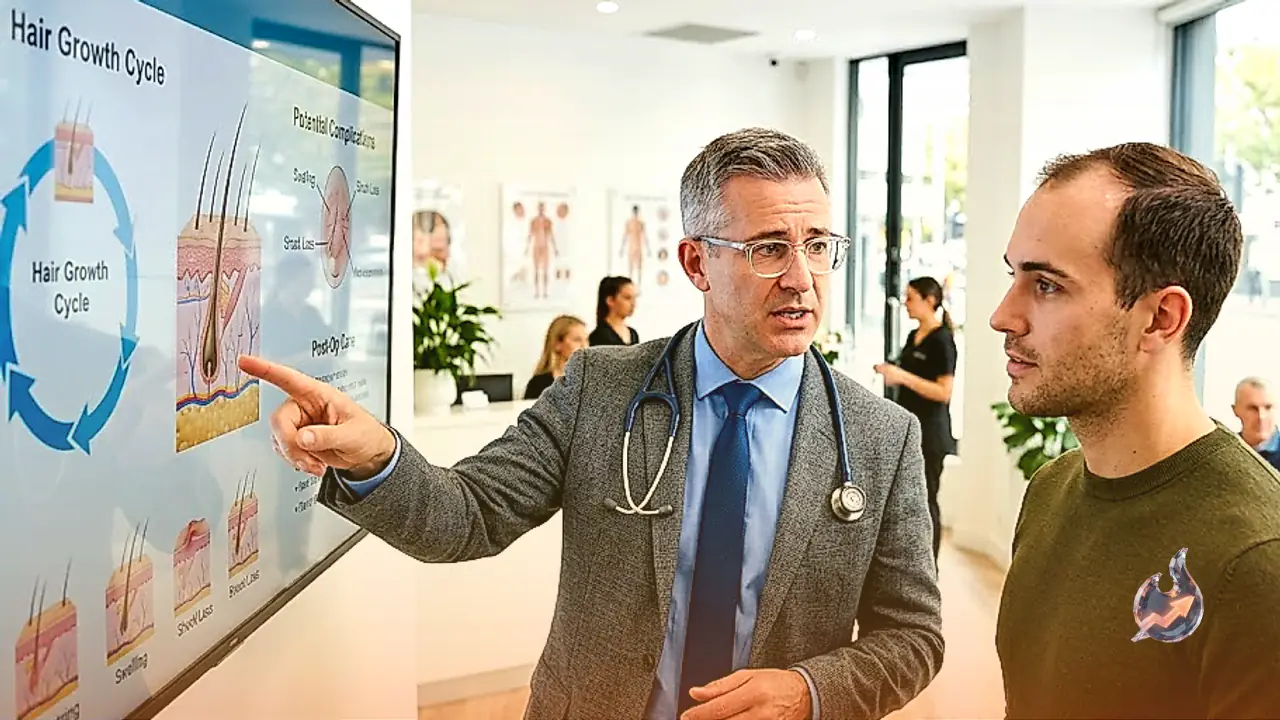

Hair transplantation has increasingly become a preferred clinical intervention for individuals seeking a dependable remedy for pattern hair loss and advancing baldness. For those struggling with receding hairlines or thinning patches, the procedure offers an established route toward regaining lost density. Nevertheless, medical experts emphasize that undergoing such surgery demands rigorous preliminary evaluations and execution by certified practitioners. Much like any invasive clinical procedure, hair restoration carries distinct side effects and potential complications that every candidate must carefully evaluate beforehand. Outlining these critical health considerations, Dr. Praveen Kumar B Y, Senior Consultant Dermatologist and Cosmetologist, detailed the frequent adverse effects patients face alongside vital measures required for a safe recovery.
Immediate Post-Surgical Reactions on the Scalp
During the primary recovery window immediately following surgical grafting, recipients commonly encounter a series of local reactions across the scalp tissue. These typical symptoms encompass mild swelling, noticeable redness, localized tenderness, low-grade pain, and overall physical discomfort. Small crusts or scabs routinely develop directly around the recipient sites where individual follicular units have been placed. As the underlying scalp tissue repairs itself over subsequent days, these temporary manifestations gradually dissipate on their own.
Pruritus or persistent itching represents another widespread complaint during the initial phase of recovery. Specialists warn that patients must strictly avoid rubbing, scratching, or picking at the scalp, especially when the healing tissue begins to itch. Any physical friction or pressure applied to the delicate grafts can dislodge them before they establish stable vascular connections, permanently damaging the final visual outcome.
Navigating Shock Loss, Infections, and Localized Numbness
Another complication frequently reported by patients is an occurrence known clinically as shock loss. In this condition, original native strands located adjacent to the newly transplanted zone begin shedding unexpectedly shortly after the operation. While witnessing sudden hair fall often triggers significant distress for the patient, the phenomenon is generally temporary. Once the disrupted hair follicles overcome surgical trauma and complete their resting cycle, healthy hair strands typically regrow in the treated region.
The surgical intervention also carries residual risks of cutaneous infection, folliculitis, and acute inflammation of hair follicles. Maintaining stringent hygiene protocols, following sterile washing routines, and adhering to prescribed post-operative care dramatically diminish these pathogenic risks. Furthermore, several candidates report localized numbness, altered sensations, or mild tingling over regions of the scalp. This sensory blunting occurs because micro-incisions momentarily affect superficial sensory nerve endings. In the vast majority of cases, these tiny nerve fibers regenerate steadily over time, fully restoring baseline sensation.
Addressing Root Causes Rather Than Relying Solely on Surgery
A crucial reality prospective candidates must grasp is that a hair transplant does not arrest the fundamental biological mechanisms driving ongoing hair thinning. The untouched, non-transplanted native hair across the scalp can continue to thin as time progresses. Depending on the exact diagnosis, a dermatologist may advise long-term topical or oral medications and supplementary therapies to safeguard the remaining indigenous follicles against progressive miniaturization.
Importantly, surgical restoration is not universally warranted or suitable for every person experiencing thinning hair. Diffuse hair shedding frequently stems from underlying systemic factors, such as dietary deficiencies, sudden hormonal shifts, thyroid dysfunctions, chronic emotional stress, or dermatological conditions affecting scalp health. Conducting thorough laboratory screenings and differential diagnosis is indispensable before committing to a transplant. When administered to an appropriately chosen candidate under clinical scrutiny, hair transplantation delivers enduring and aesthetically pleasing results, yet it must always be treated as a serious medical procedure rather than a casual cosmetic fix.