





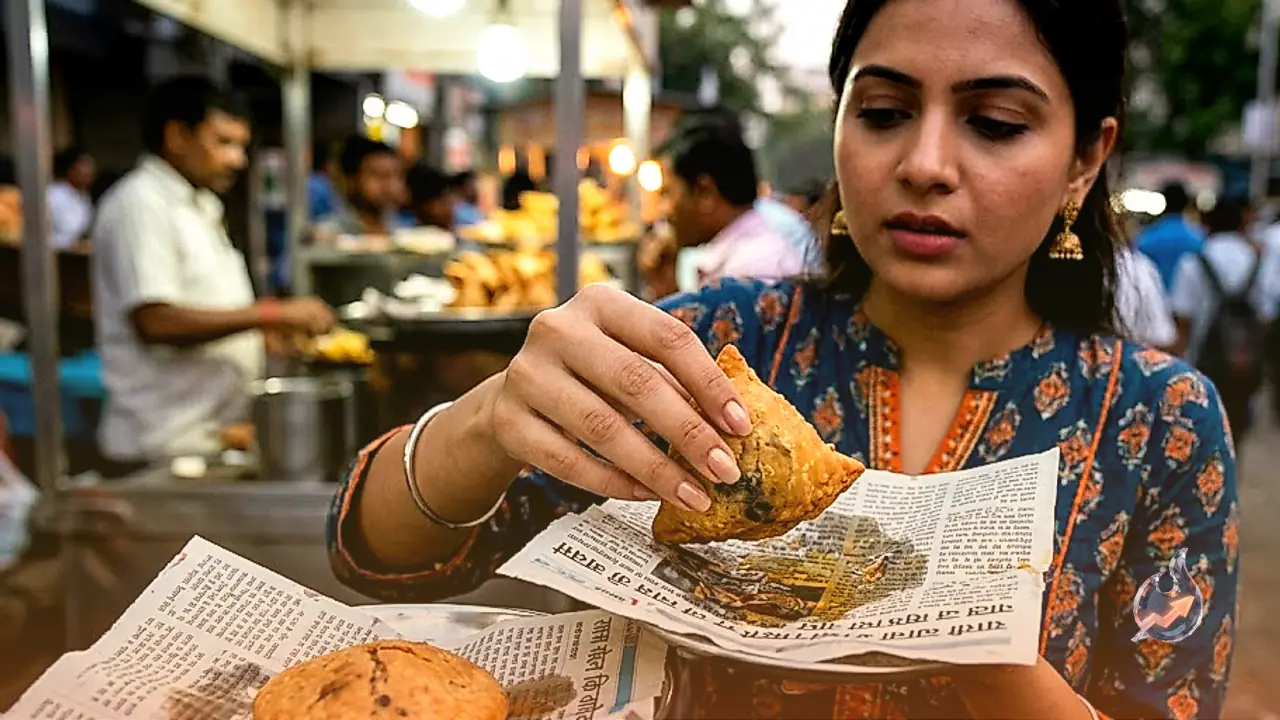
















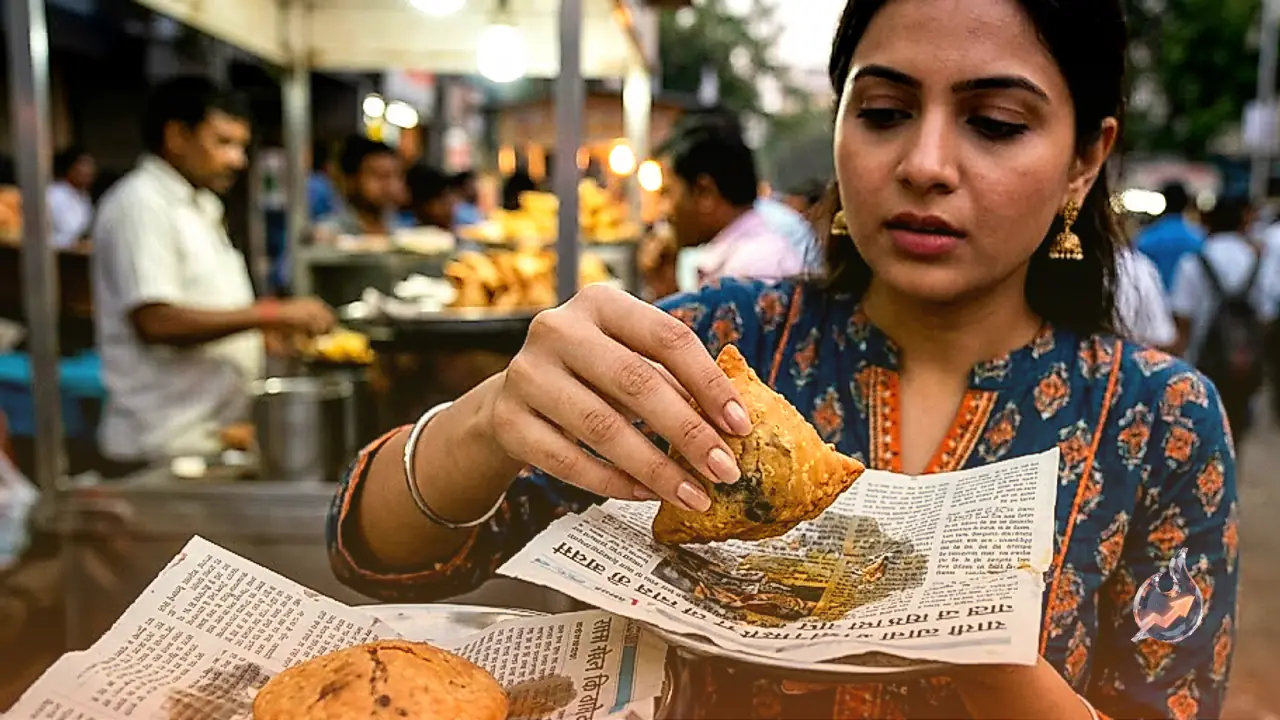

Across street stalls and local sweet shops, roadside snacks such as hot samosas, deep-fried kachoris, and fritters are routinely served wrapped in old newspaper sheets. While food vendors view newsprint as an economical and convenient packing material, medical and health specialists strongly discourage this practice. Placing freshly fried, oily snacks directly on printed newspaper can trigger substantial health hazards that many everyday consumers overlook.
Printing Ink Chemicals Dissolve Rapidly into Oily Food
The specialized industrial ink used for printing daily newspapers contains a potent mixture of heavy chemicals, pigments, and dyes. The moment scalding snacks straight out of boiling oil are placed on printed paper, the intense heat and grease break down the ink and accelerate the transfer of these chemical components directly into the food. Oil acts as an active solvent, causing toxic substances to seep into the edible portions within seconds.
Prolonged Intake Disrupts Digestion and Internal Health
Health experts warn that consistent exposure to printing ink chemicals over extended periods leads to their accumulation within the human body. This steady intake can cause significant distress to the digestive tract, resulting in chronic stomach inflammation, severe indigestion, and other gut disorders. While accidental consumption once or twice might not produce immediate severe damage, turning this into a regular dining routine is considered extremely dangerous for long-term health.
Bacterial Contamination Across Printing and Delivery Chains
A newspaper passes through countless physical touchpoints before landing at a food stall. From high-speed printing presses and transportation trucks to distributors and street delivery agents, the paper constantly picks up environmental dust, grime, and invisible pathogenic microbes. When food is set directly onto such exposed sheets, these contaminants transfer straight onto the meal, creating an immediate danger of bacterial food poisoning and acute gastrointestinal infections.
Higher Temperatures Amplify Chemical Leaching
The danger multiplies dramatically when snacks like samosas or kachoris are boiling hot. High temperatures drastically accelerate the migration of ink components into the food tissue. This heightened chemical transfer is the fundamental reason medical professionals insist on eliminating printed newspaper entirely from hot, oily food handling.
Safer Serving Alternatives for Stalls and Kitchens
Food handlers should shift entirely to certified food-grade wrapping paper to prevent toxic leaching. Butter paper sheets or designated clean paper cartons serve as far healthier and safer packaging options for fried snacks. For dining on site, serving food on properly sanitized stainless steel plates or clean reusable utensils remains the gold standard of hygiene. At home as well, cooks should refrain from draining excess oil onto newspaper, choosing clean serving platters and safe kitchen paper instead.