




















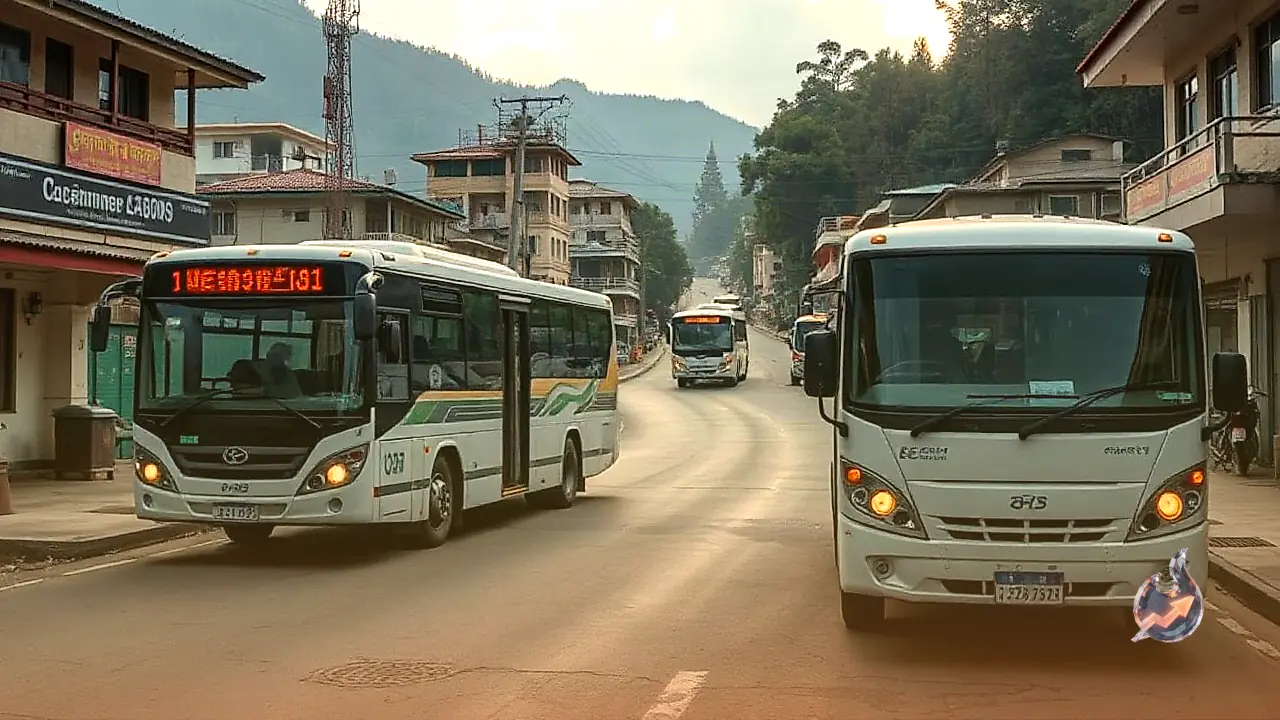

The strategic push to modernize the fleet of Himachal Road Transport Corporation with eco-friendly alternatives is yielding substantial financial and ecological dividends across Himachal Pradesh. A newly deployed contingent of 25 electric buses in Mandi district has not only transformed daily commuting with quiet and comfortable rides but is also acting as a vital catalyst in curbing operating losses. With the state administration targeting complete organizational self-reliance for the transport corporation over the next five years, the transition away from fossil fuels is proving economically viable. Compared to conventional diesel vehicles, the newly deployed battery-powered fleet is reducing energy expenses by roughly Rs 12 to Rs 13 per kilometer, significantly lowering day-to-day running expenditures.
Fleet Deployment Across Long-Distance and Local Circuits
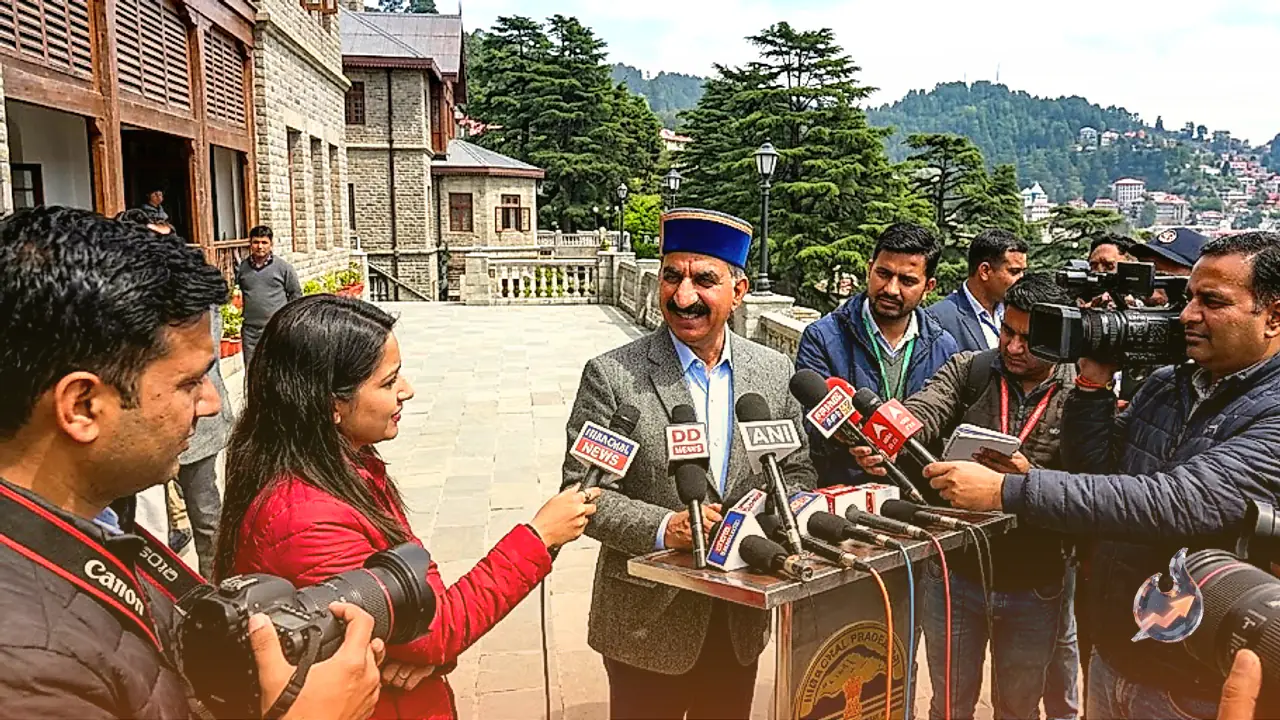
Chief Minister Thakur Sukhvinder Singh Sukhu officially handed over the 25 electric buses to Mandi district via a virtual ceremony on August 17. Following the rollout, regional depot authorities integrated the fleet across a variety of demanding inter-district and interior routes. Key long-distance connectivity includes routes linking Mandi to Shimla, Mandi to Palampur, Mandi to Chandigarh, and the Mandi-Shimla-Tulah sector. Alongside these trunk corridors, local connectivity has been established on routes including Mandi-Sundernagar, Mandi-Batahar, Mandi-Tandi, Mandi-Pali, Mandi-Ropa, Mandi-Rewalsar-Naina Devi, Mandi-Kot, Mandi-Kotli, Mandi-Mahan, and Mandi-Durgapur.
Commuters Welcome Quiet Cabins and Smooth Ride Quality
The public response to the electric services has been overwhelmingly favorable among daily passengers. Commuters accustomed to the engine rumble, vibration, and fumes of older diesel vehicles have noted a sharp improvement in ride quality. Inder Thakur, a resident of Jwalapur in Mandi who traveled on the Mandi to Shimla service, shared his experience: "The journey was very good and comfortable. It does not harm the environment. This effort of the state government is commendable, and I express my gratitude to the Chief Minister and the state government." He highlighted the critical importance of zero-emission transit in preserving the ecology of the hill state.
Vanshika Jamwal, who commuted on the Mandi to Durgapur route, described her journey as pleasant and noted that the seating arrangements and stability were far superior to conventional buses. She expressed hope that the transport corporation would expand electric coverage across more rural corridors in the coming months. Similarly, Jaswant Kumar, traveling between Mandi and Tulah, pointed out that the absence of engine vibration inside the passenger cabin created an exceptionally peaceful ambiance. Kiran Rana, hailing from Kotli, commended the authorities for introducing upgraded seating that provides a significantly more restful travel experience for passengers of all age groups.
Mandi Depot Registers Operational Savings of Rs 11.34 Lakh
A rigorous examination of operational data reveals remarkable cost efficiencies over an initial operational window of just over three weeks. Divisional Manager Uttam Singh noted that between August 17, 2026, and September 10, 2026, the performance of the electric units across both operational depots exceeded expectations. Under the Mandi depot, 15 electric buses clocked a cumulative distance of 60,060 kilometers. Electricity charging costs incurred during this period stood at Rs 7,95,795. Running traditional diesel buses over an identical distance would have required Rs 19,30,055 in fuel purchases. Consequently, the Mandi unit pocketed a net operational surplus of Rs 11,34,260.
Sundernagar Unit Achieves Strong Commercial Gains
The adjoining Sundernagar depot mirrored this financial success with its operational allocation of 10 electric buses. Over the identical 24-day operational stretch, these 10 buses traversed 35,044 kilometers. Total power recharging expenses amounted to just Rs 2,10,037, whereas diesel vehicles running the same schedules would have burned fuel worth Rs 10,07,732. This enabled Sundernagar depot to log net fuel savings of Rs 7,97,695. Combined across both units, the transport corporation saved Rs 19,31,955 in operating overheads during this short timeframe.
Charging Network Expansion Supports Green Transit Ambitions
To support regular schedules and prevent operational bottlenecks, charging infrastructure is being steadily expanded throughout the district. Dedicated charging facilities have already been commissioned at the Mandi bus stand, the Mandi workshop, and the Sundernagar bus stand, ensuring turnaround recharging during layovers. A new charging installation has also been proposed at Janjehli to support future penetration into higher-altitude sectors. Beyond ledger economics, this rapid electrification initiative marks a major milestone in curbing carbon footprints, cutting reliance on imported petroleum, and fostering a clean public transit network across the hill state.