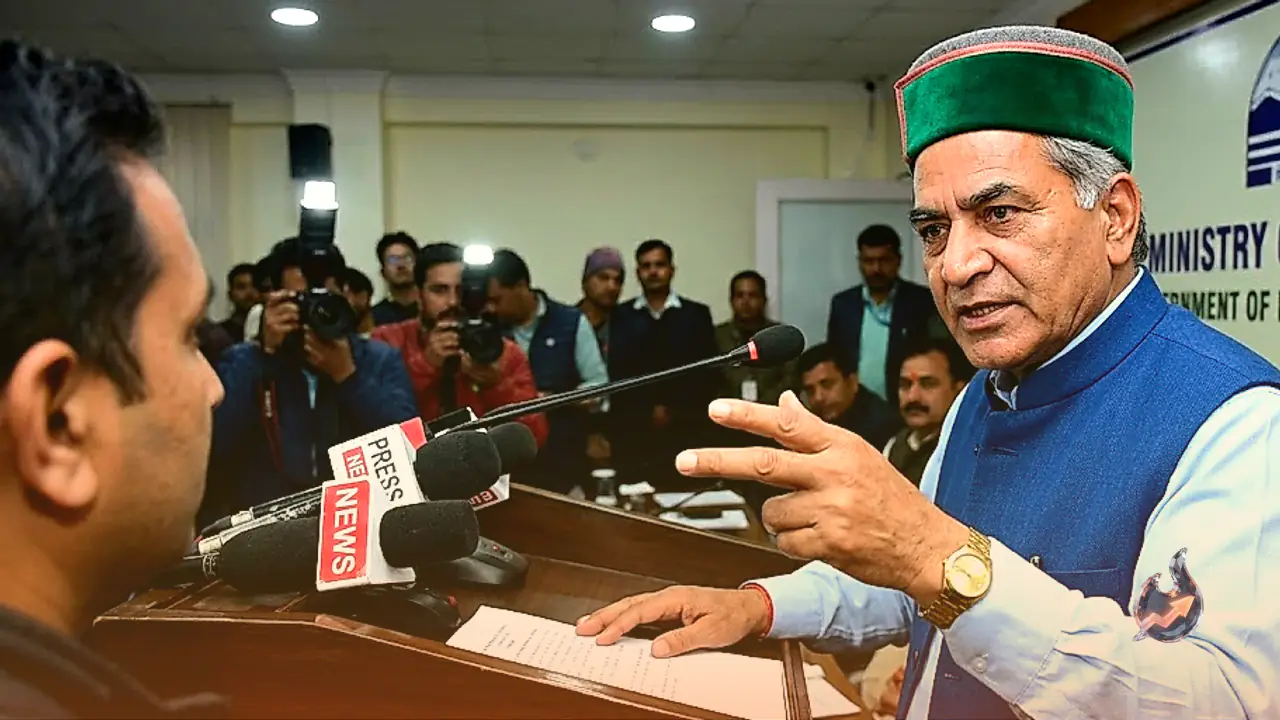
























During a high-level review convening leadership from party-governed states, Himachal Pradesh presented an extensive assessment of its educational transformations implemented over the past nearly four years. Chief Minister Sukhvinder Singh Sukhu led the delegation, outlining strategic changes spanning primary classrooms to university governing boards while balancing celebrated milestones against administrative and institutional friction.
Party Leadership Reviews State Progress Across Classrooms and Colleges
The review assembly drew key national figures including party chief Mallikarjun Kharge, Leader of the Opposition in the Lok Sabha Rahul Gandhi, Priyanka Gandhi Vadra, and General Secretary KC Venugopal. Representing the northern mountain state alongside the Chief Minister were Education Minister Rohit Thakur and Technical Education Minister Rajesh Dharmani, who both detailed structural updates within their respective departmental domains.
The administration highlighted that comprehensive development demanded simultaneous interventions at both foundational school levels and tertiary academies. Discussions explicitly covered policy successes, institutional boundary debates, and procedural complications encountered while modernizing state-run campuses.
Ascent in National Standings and Structural Classroom Upgrades
Among the standout achievements shared during the presentation was the state's dramatic upward trajectory across nationwide benchmarks, climbing from a lowly 21st ranking up to the 3rd position. State representatives also noted the territory's recognition as a fully literate region, presenting both metrics as indicators of sustained structural commitment.
To provide children from ordinary backgrounds an equal footing with private academy peers, English-language instruction has been systematically expanded across public institutions. Furthermore, more than 150 state-run schools are being formally affiliated with the CBSE board, aligning rural examination protocols and curriculum standards with national academic norms.
Rural Day-Boarding Campuses and Global Study Tours
Addressing the complex geographical barriers inherent to mountainous terrain, the state spotlighted its Rajiv Gandhi Day-Boarding school construction project. These purpose-built hubs aim to deliver advanced digital learning spaces, science facilities, and athletic grounds to remote and rural village populations that historically lacked modern scholastic infrastructure.
In parallel, the administration detailed outbound international exposure tours organized for both educators and students. According to government representatives, enabling teachers and learners to observe cutting-edge global pedagogies and modern technologies firsthand fosters innovative teaching practices and broadens intellectual horizons upon their return.
Legislative Stand-off Regarding Vice Chancellor Appointments
Moving beyond secondary education, the Chief Minister addressed critical policy confrontations regarding governance in higher learning. The leadership was informed about a statutory bill passed by the state legislative assembly aimed at overhauling how university vice chancellors are selected.
The proposed legislation initially ran into objections from Lok Bhavan, prompting procedural scrutiny before the assembly re-enacted and returned the measure for statutory consent. State officials characterized this legislative push as a necessary mechanism to establish open, transparent, and merit-centric appointments across state universities.
Commission-Based Recruitment for Academic and Support Roles
To eliminate discretionary patronage and guarantee equal opportunity across higher education institutions, the cabinet resolved to transfer hiring authority to autonomous testing bodies. University faculty positions will now be filled through the State Public Service Commission.
Simultaneously, all non-teaching and administrative staff vacancies are being redirected through the Staff Selection Commission. The administration maintained that routing recruitment through these formal statutory commissions ensures rigorous meritocracy, transparency, and public trust in the public university system.