



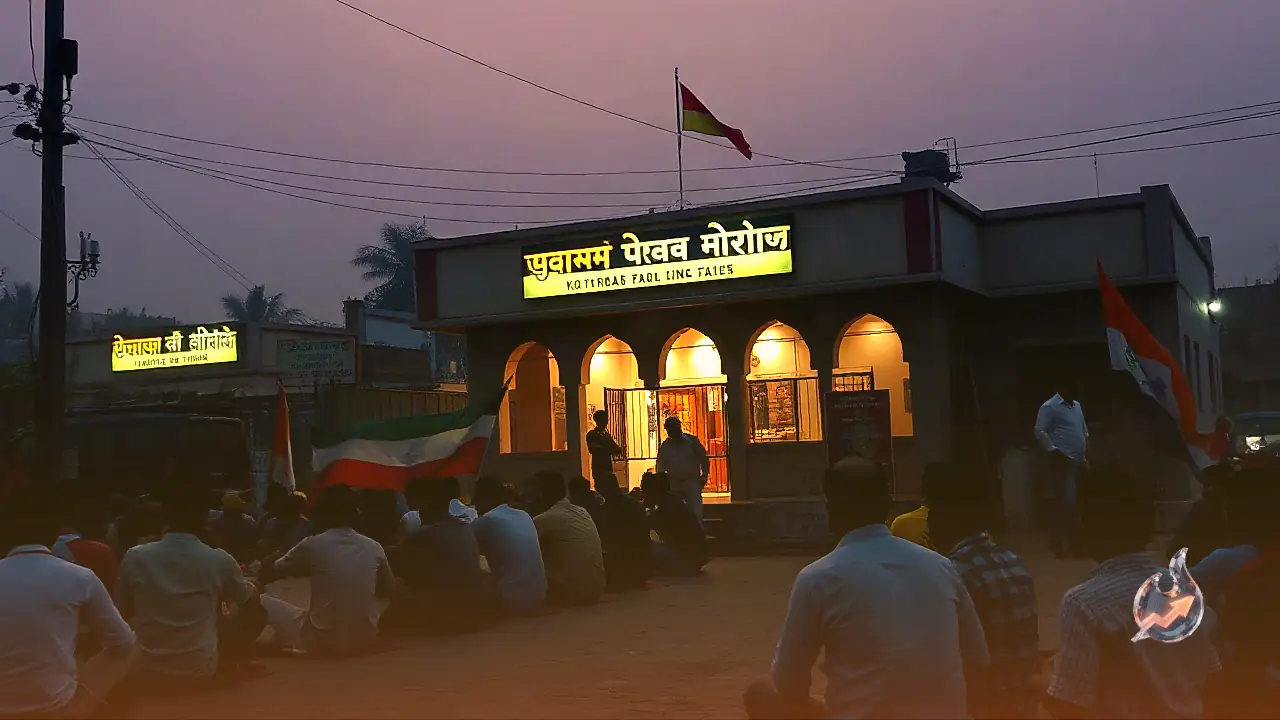



















Relentless monsoon rain is battering Himachal Pradesh, with conditions turning far worse than the first day of the red alert that had earlier appeared to have little effect. Heavy overnight rainfall through Monday into Tuesday forced authorities in Shimla district to shut all schools, colleges and educational institutions in Theog. The meteorological department has extended its red alert for extremely heavy rainfall to July 21 as well, and the past 12 hours have brought intense downpours across large parts of the state. Mandi, Kangra, Sirmaur and Chamba districts have kept schools and educational institutions closed for a second consecutive day.
Landslide in Chamba, bus trapped in Kandla stream
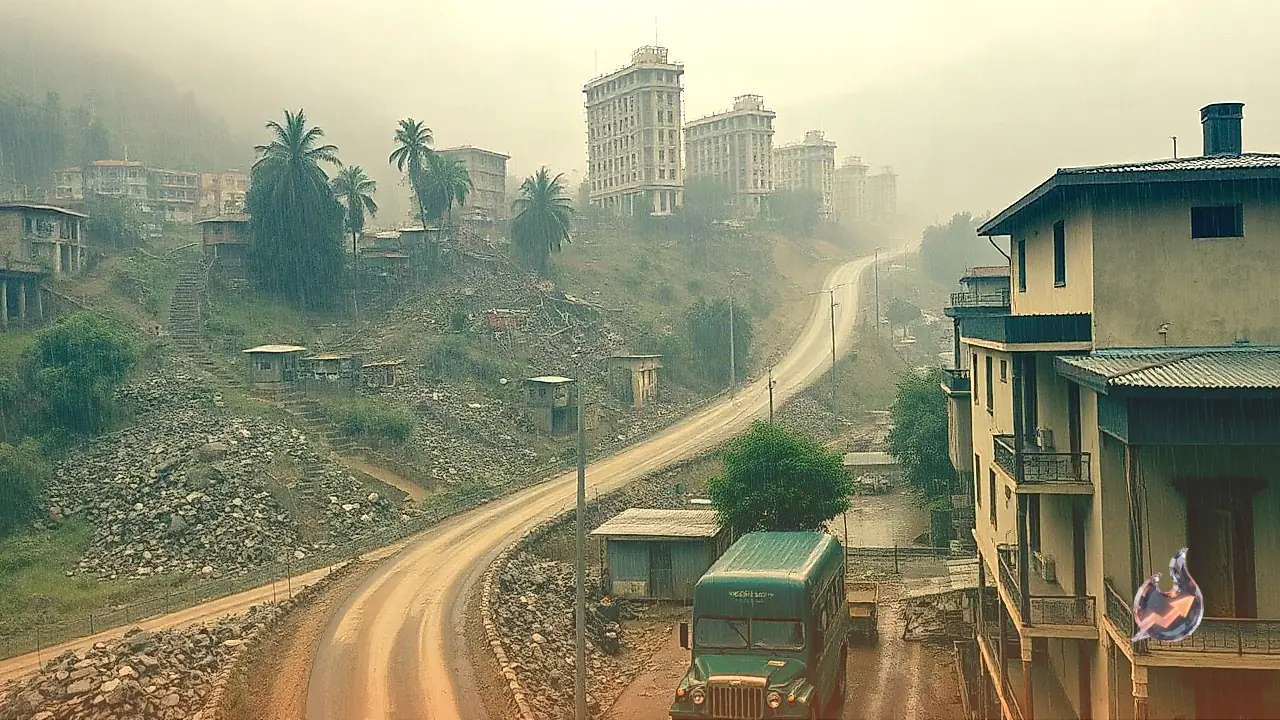
Chamba district bore the brunt of the damage. A major landslide struck near Tikkar Gala on the Lahru-Nurpur road in the Bhattiyat assembly constituency, tearing away a large stretch of the road that collapsed straight into the river below and shutting the route completely. Local residents managed to flee the spot just in time, averting a bigger tragedy.
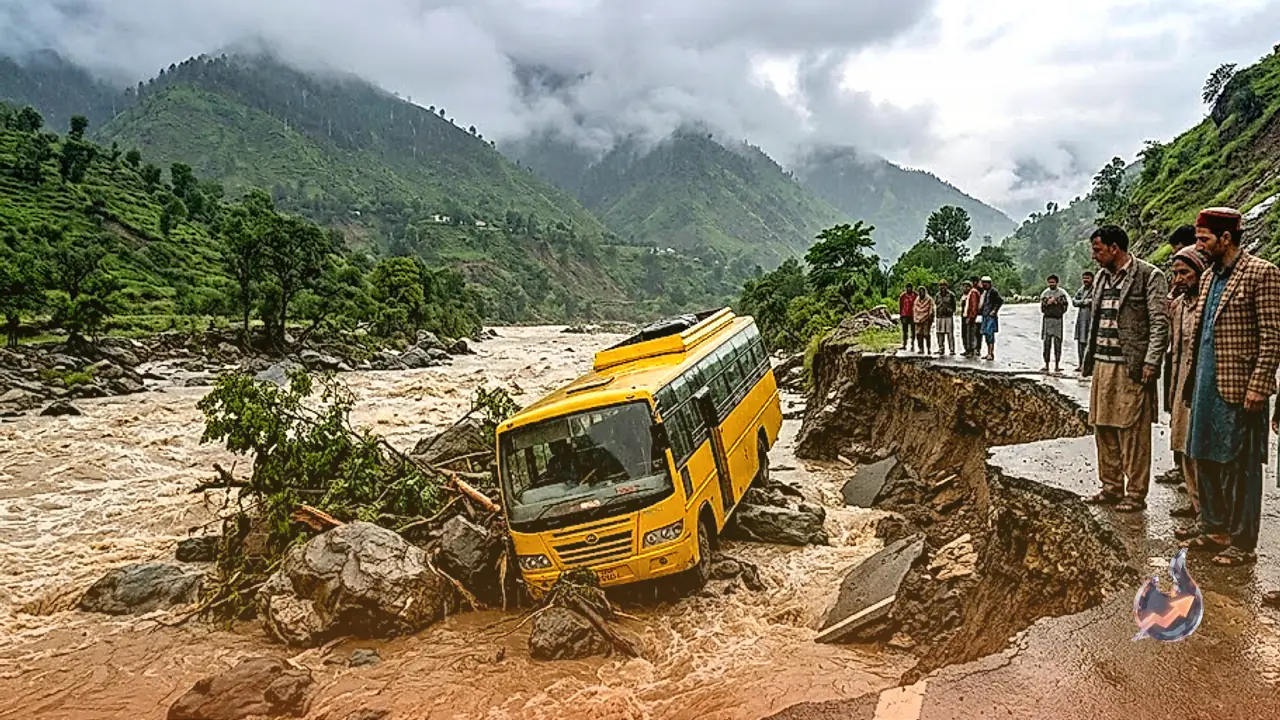
Meanwhile, on the Tissa-Chamba main road, a private bus travelling from Chanju to Chamba got stuck in the middle of the Kandla stream from around 8 am on Tuesday. Rising water levels in the stream prevented the bus from moving forward. Residents have demanded that the administration immediately dispatch JCBs and other essential machinery to the spot so the bus can be pulled out safely. Officials said the key route connecting the Tibet border area via Chitkul to Uttarakhand has also been completely blocked.
Bridge damaged in Kinnaur, cutting off Army and ITBP posts
In Kinnaur district, a bridge over the Tubar stream was damaged by the fast-flowing water, snapping road connectivity to forward posts of the Army and the Indo-Tibetan Border Police (ITBP). The route is considered strategically crucial since it is used to move troops and essential supplies to forward posts located near the Tibet border.
The situation in Lahaul Spiti also remains serious. District DC Kiran Bhadana said the flood in the Jalhama stream washed away the temporary road built across it, completely disrupting traffic on both sides. The district administration is continuously monitoring the situation, with officials from the concerned departments visiting the spot to assess the damage. To ensure farmers' and orchardists' produce reaches markets on time and ordinary people get quick access to transport, the DC has directed officials of the Border Roads Organisation (BRO) to restore the temporary road on a war footing as soon as the water level in the Jalhama stream normalises. She has also asked for work on the permanent bridge under construction over the Jalhama stream to be sped up, so such situations can be handled more effectively in the future.
DC Kiran Bhadana has appealed to farmers, orchardists and ordinary citizens in the area not to risk crossing the stream until the temporary road is restored. Because of the flood in the Jalhama stream, water in the Chandrabhaga river is flowing nearly two feet above the Jobrang bridge. Separately, the Shichling to Tabo road stretch in Spiti has also been flooded and blocked. The DC has urged people to prioritise their safety, follow the administration's directions to avoid any untoward incident, and avoid unnecessary travel, undertaking journeys only when absolutely essential.
Schools shut in Kangra, close watch kept on Pong Dam
The Kangra DC has ordered all educational institutions in the district to remain closed because of the bad weather. The water level at Pong Dam currently stands at 1321 feet, against a flood gate level of 1365 feet, meaning it remains within control for now, though the dam's water level is being monitored continuously regardless. The DC said she has shared information with the BBMB's chief engineer and the Indora SDM so that any action needed in the low-lying areas downstream of Pong Dam can be carried out in time.
Palampur records the heaviest rain, some relief expected from July 22-23
Sandeep Sharma, a scientist at the Meteorological Centre Shimla, said the monsoon remained fully active across most parts of the state over the past 24 hours. Palampur recorded the highest rainfall at 140 millimetres, followed by Dharamshala at 105 millimetres, while heavy rain was also recorded in areas including Rajgarh, Paonta Sahib, Chamba and Chuari. Kangra, Chamba and Sirmaur districts saw the biggest impact, while Shimla, Bilaspur, Lahaul-Spiti and other districts received light to moderate rainfall.
Chamba and Kangra are expected to see the heaviest impact of the rain on Tuesday as well. The intensity is likely to ease from July 22, when an orange alert has been issued for Kangra and Mandi, and a yellow alert for Chamba, Shimla, Solan and Sirmaur. Rainfall intensity is expected to drop further from July 23, with only a yellow alert remaining in place for heavy rain in a few districts.