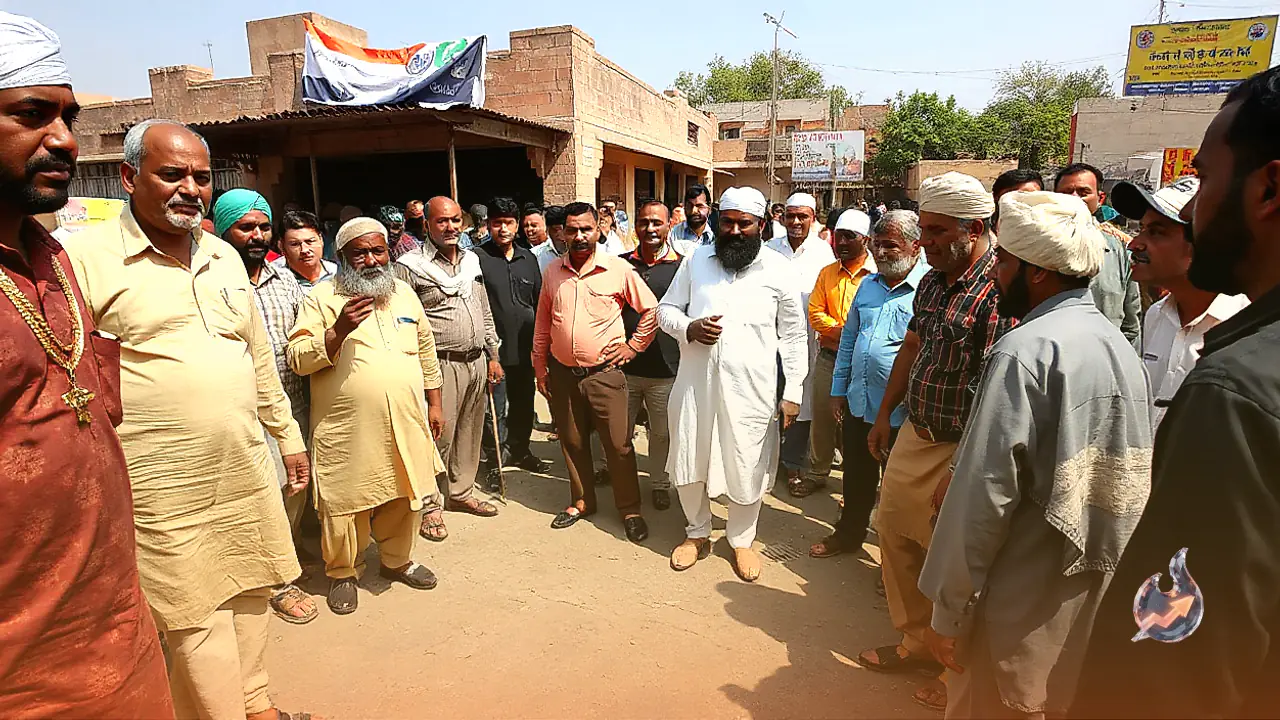

While delivering his Constitution Day address on 26 November, Prime Minister Narendra Modi alleged that the country's primary opposition party intends to reduce the existing quota for other backward classes in order to introduce Muslim reservations. However, reservations for specific Muslim communities are not entirely new within the Indian framework. Several Islamic communities already qualify for benefits under the standard OBC category, while individual states maintain distinct provisions for backward classes within their borders. Understanding this issue requires examining which communities currently qualify, whether the legal framework permits religion-based quotas, and how seat distributions might shift if such policies were implemented.
Constitutional Framework and Reservation Principles
Reservations are designed to improve educational and public employment opportunities for historically disadvantaged populations. Article 16(4) of the Constitution specifically addresses whether backward classes maintain adequate representation in government services. Legal experts note that creating a sub-quota within an existing category is fundamentally different from altering the overall reservation structure itself.
Historical Precedents and Party Manifestos
The closest national precedent occurred in December 2011, when the central administration earmarked 4.5 percentage points of the existing 27 percent central OBC quota for backward communities belonging to five specific religions, including Islam, Christianity, Sikhism, Buddhism, and Zoroastrianism. While the overall OBC ceiling remained untouched, other backward class candidates lost the ability to compete for that specific earmarked portion. The Andhra Pradesh High Court subsequently struck down that order in May 2012. In contrast, the 2024 Lok Sabha manifesto proposed a constitutional amendment to raise the 50 percent ceiling on reservations for Scheduled Castes, Scheduled Tribes, and OBCs without specifying a new cap or allocating a distinct percentage to Muslims.
Legal Standing of Religion-Based Quotas
Can a government legally reserve positions based solely on religion? Legal expert Amit Choudhary explained that Articles 15(1) and 16(2) explicitly prohibit state discrimination based on religion alone. Choudhary stated, “Reservation for Muslims merely on religious grounds is constitutionally impermissible, whereas reservation for identified socially and educationally backward Muslim communities is constitutionally permissible.”
Articles 15(4), 15(5), and 16(4) permit special provisions for disadvantaged groups. Furthermore, the Supreme Court established in the 1992 Indra Sawhney judgement that backward classes can exist across various religious lines. A Muslim weaving community, for instance, can qualify if concrete evidence demonstrates its social and educational backwardness. Religion alone cannot serve as the sole criterion for establishing such status.
State-Level Variations Across India
Reservation benefits for Muslim communities vary significantly across different states. In Uttar Pradesh and Madhya Pradesh, several Muslim groups qualify under the standard central OBC lists, subject to non-creamy layer requirements. Bihar adopted a different path following the Mungeri Lal Commission recommendations, establishing separate categories for extremely backward groups where different Muslim communities compete in designated brackets. Karnataka introduced a 4 percent quota for Muslims under Category 2B in the 1990s based on backward-class commission findings. Although the state government attempted to scrap this arrangement in March 2023, subsequent legal challenges and court orders maintained the status quo. Tamil Nadu follows another model entirely, having introduced a 3.5 percent internal quota for backward-class Muslims within its broader 30 percent backward reservation limit.
Potential Impact on Seat Distribution
Advocate Sachin Nayak explained that only socially and educational backward groups can be identified for inclusion in backward categories, and states retain the authority to compile their own lists. If eligible Muslim communities are integrated into the existing OBC framework without altering total capacity, the common pool remains accessible to a larger pool of applicants. However, earmarking specific vacancies for a new sub-group would restrict other candidates from competing for those particular slots. Ultimately, any changes to how different communities share reservation benefits depend entirely on the specific implementation model chosen by lawmakers.