























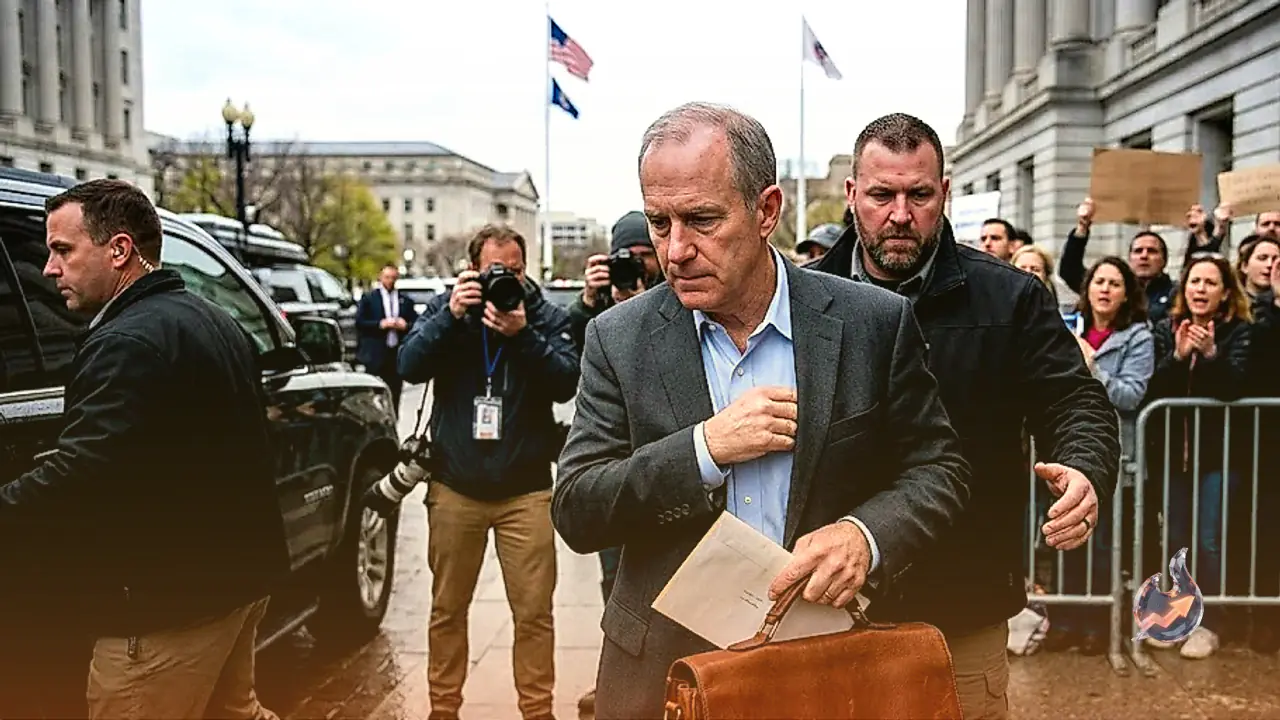

Intimidation and violence have increasingly penetrated the core of American civic life, transforming routine disagreements into volatile physical confrontations. In early July 2022, a harrowing incident brought this reality straight to the doorstep of Democratic Representative Pramila Jayapal of Washington. While relaxing in their Seattle home with her husband, a vehicle stopped outside as occupants screamed hostile racial and partisan slurs. Following an initial police intervention, one individual reappeared approximately thirty minutes later, blasting loud music and advancing toward the house. Law enforcement officers returned to discover the intruder armed with a loaded handgun featuring a chambered bullet. An adjacent resident had overheard the assailant issue deadly threats warning her to return to India. Rather than viewing this terrorizing encounter as an isolated aberration, Pramila Jayapal identified it as symptom of a poisoned national climate where personal grievances are treated as blanket authorization for real-world coercion.
Vulnerability to political intimidation is not confined to any singular party or philosophy. Representative Marjorie Taylor Greene of Georgia, long recognized as a fierce congressional champion of Donald Trump, endured an unrelenting barrage of death threats throughout her tenure, originating primarily from ideological adversaries. However, when she publicly diverged from Donald Trump over issues involving the Jeffrey Epstein documents, military conflict in Gaza, and conflicting definitions of the America First platform, the trajectory of hostility shifted dramatically. Donald Trump subsequently branded her with the derogatory moniker 'Marjorie Traitor Greene', prompting venomous messages that explicitly targeted her son. Other communications detailed assassination plans and claimed airline reservations had been secured to execute the act. Citing mounting perils surrounding her household, Marjorie Taylor Greene announced her resignation from Congress in November 2025, observing that the personal toll demanded of public servants had surpassed tolerable limits. Despite divergent viewpoints, both figures illustrate how physical coercion has migrated from fringe movements to become an everyday instrument of political pressure.
Resurgence to Levels Unseen Since the 1960s
Cross-referencing threat assessments by domestic intelligence services, databases cataloging violent incidents, and records maintained by Capitol security personnel reveals a complex, multi-faceted national crisis. Following the turbulent 1990s, politically motivated violence experienced a nearly two-decade lull across the United States. That trajectory reversed sharply starting around 2016. In the preceding eras, extreme ideological violence was predominantly the domain of hard-right networks. While activity on both wings has grown closer in volume in the modern era, the nature and execution of their actions remain starkly distinct.
Since 2016, right-wing violence has demonstrated markedly greater lethality and operational frequency, deliberately targeting electoral mechanisms, federal agencies, and prominent public servants. In contrast, left-wing actions have concentrated primarily within sprawling protest mobilizations, exemplified by the widespread demonstrations that followed the death of George Floyd in 2020 as well as skirmishes surrounding immigration controls. These encounters typically manifest through property defacement, arson, and volatile clashes against policing units rather than targeted assassinations. Researchers note that combined extremist activity on both sides has matched levels unseen since the historic domestic clashes of the 1960s, driven by tribal populism, deteriorating confidence in institutions, and political rhetoric that treats partisan rivals as mortal adversaries.
Definitional Challenges and Establishing Intent
The national conversation regarding the scope and accountability of political violence remains tangled in fundamental debates over classification. Academic consensus generally characterizes political violence as the actual deployment or credible warning of physical harm undertaken to achieve political objectives. Such ambitions frequently involve coercing officials, inflicting punishment, subverting democratic processes, or signaling defiance against government authority. Under this scope sit organized assaults against lawmakers, explosive devices, directed arson, violent intimidation, and coordinated storming of administrative buildings.
Equally vital are the precise boundaries of what should be excluded. Common criminal behavior devoid of ideological backing, interpersonal disputes, and lawful civilian protests do not qualify, even when demonstrations become rowdy, disorderly, or disruptive. Similarly, hostile rhetoric on its own remains outside the threshold unless accompanied by an actionable declaration of physical force. Conflating standard crime with ideological violence risks obscuring the structural drivers behind these events. Identifying the true motive behind an act is exceedingly complex. Determining whether an attack on an official building represents calculated ideological rebellion, opportunistic vandalism, or an intersection of both often elicits diverging answers across tracking agencies. Some research frameworks require explicit ideological proclamations, while others deduce intent through symbolic dates and targeted locations.
Statutory Limits and Law Enforcement Metrics
An overarching complication in measuring this phenomenon is the structural absence of a standalone federal statute criminalizing domestic terrorism. Under Title 18 of the United States Code, Section 2331, both foreign and domestic terrorism receive descriptive statutory definitions, yet this provision does not establish an independent prosecutable charge. Consequently, the FBI cannot simply tabulate an annual ledger of domestic terror convictions. Law enforcement tallies are instead divided across disparate tracking categories such as ethnically motivated violent extremism, anti-government agitation, and specific criminal offenses targeting civil infrastructure.
The lack of a unified benchmark has fostered partisan suspicion, with opposing factions regularly accusing law enforcement leadership of distorting or downplaying specific threats. Nevertheless, consistent findings persist across varied administrations and congressional briefings since 2016. Intelligence directors have repeatedly designated domestic violent extremism as an urgent, elevated national challenge. Within those parameters, white supremacist and ethno-nationalist violence has consistently ranked as the deadliest domestic peril, primarily carried out by isolated actors mobilized through radical internet channels. Concurrently, federal agencies such as DHS and the FBI have monitored unrest, municipal arson, and assaults against law enforcement emerging from left-leaning or anti-authority protests, though such incidents have historically produced far fewer mass casualties.
The Growing Strain on Democratic Norms
A persistent obstacle for analysts is the substantial reporting delay inherent to public law enforcement information. Detailed federal archives often lag significantly behind breaking developments, while active investigations restrict full visibility into emerging threat cycles. This analytical delay creates an acute friction between the real-time terror experienced by public officials and the standardized statistical record available to the wider public.
Yet, the steady continuity of warnings issued across multiple leadership changes underscores the objective severity of the crisis. When congressional security figures, academic tracking efforts, and federal threat data are analyzed concurrently, an unmistakable pattern emerges. The deepening normalization of intimidation against elected representatives poses an immediate hazard to democratic institutions, substituting raw coercion and physical dread for constructive governance and constitutional procedures.