























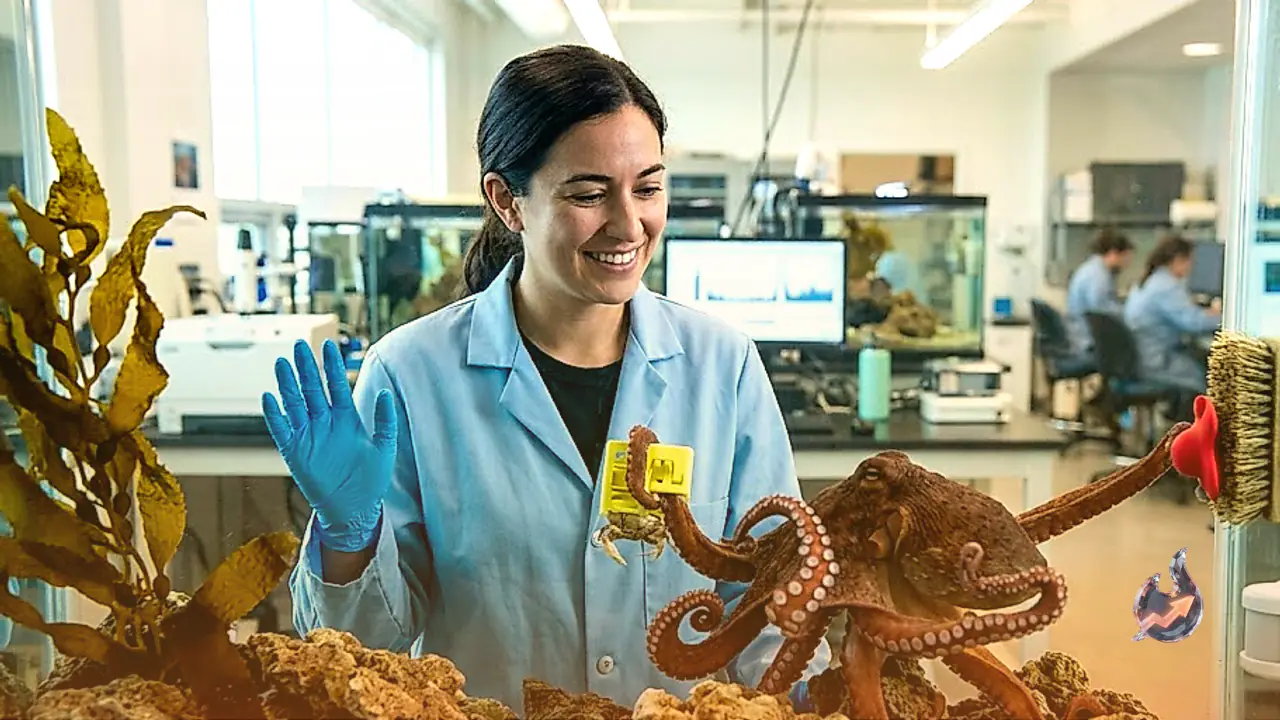

Octopuses have long fascinated researchers and marine enthusiasts alike due to their remarkable problem-solving skills, such as unscrewing jars from the inside or throwing debris at neighboring creatures. However, a significant portion of this intelligence does not originate from their doughnut-shaped central brains. Instead, a decentralized nervous system grants their limbs a high degree of autonomy in daily survival and exploration.
The Unique Distribution of Neurons
An octopus possesses roughly 500 million neurons across its entire body, and an astounding two-thirds of them are located directly inside its eight sucker-studded arms. This unique arrangement forms a form of distributed intelligence rarely seen in other creatures. Each powerful appendage possesses the ability to move freely in any direction while tasting and feeling its surroundings with extraordinary sensitivity.
Autonomous Movement and Central Control
Because the limbs house so many neural connections, they can perform complex tasks without waiting for instructions from the head. A specialized nerve ring connects all eight arms together, facilitating deep-sea foraging and exploration that operates semi-independently from the central brain located upstairs. This allows the creature to multitask efficiently while navigating complex marine environments.
Behavioral Wonders of Cephalopods
The remarkable independence of these limbs extends to various aspects of their lives, including specialized tasks like mating. Scientists continue to study how this decentralized nervous system coordinates complex behaviors, proving that these slippery marine animals possess biological adaptations unlike almost anything else in the animal kingdom.