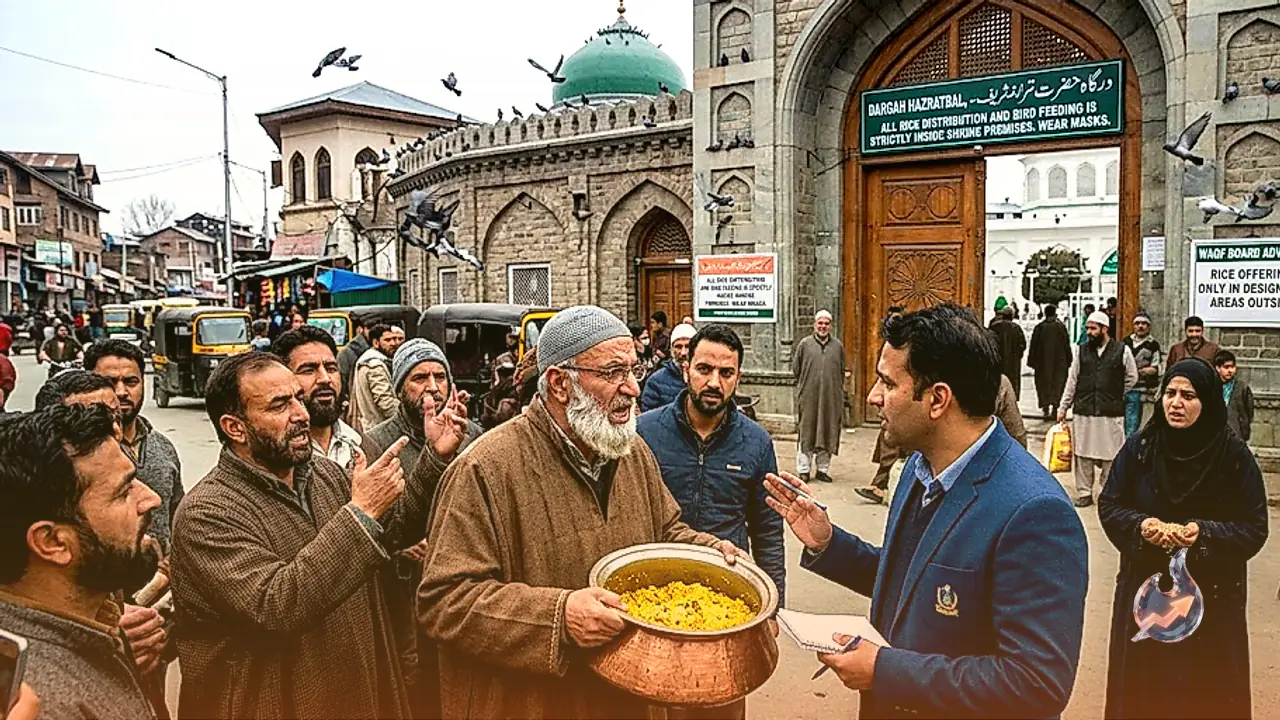























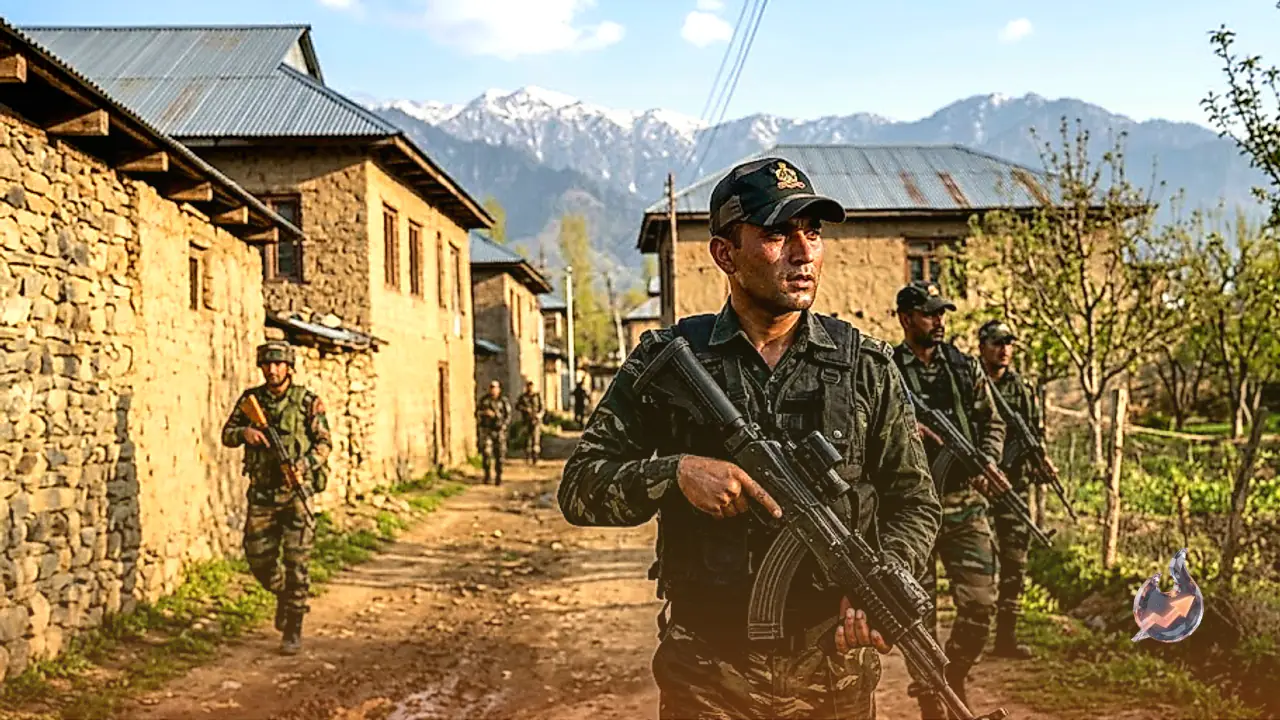

Jammu and Kashmir is witnessing a dramatic turning point in its security landscape, with indigenous militancy reaching near-total liquidation. Official security records reveal that following years of targeted counter-terrorism drives, only a single local militant remains active across the entire Union Territory. Security forces, comprising the Indian Army, Jammu and Kashmir Police, and the Central Reserve Police Force (CRPF), have mounted an intensive manhunt to track down and neutralize this sole surviving local operative.
Profile and Alleged Crimes of the UT's Last Local Terrorist
The individual identified as the lone active local terrorist is Mohammad Lateef Bhat, a resident of Kulgam district in South Kashmir. Intelligence and law enforcement agencies have placed Bhat at the top of their most-wanted list, connecting him to several high-profile terror incidents in the region.
Investigators state that Bhat entered radical networks during 2025 before aligning himself with the Kashmir Revolution Army (KRA), an active offshoot affiliated with the banned outfit Lashkar-e-Taiba. Among his primary charges is involvement in the killing of two migrant workers who had arrived from Chhattisgarh to earn a livelihood in the valley. Furthermore, Bhat stands accused in the murder of Jammu and Kashmir Police Head Constable Ashiq Hussain, who was fatally shot on July 22.
A distinct pattern has emerged across these targeted attacks. Eye-witness accounts provided to investigators show that during both the murder of Head Constable Ashiq Hussain and the lethal shooting of the two Chhattisgarh laborers, the assailant used identical methods. In each instance, the attacker wore a cap on his head, concealed his firearm inside a sack, approached his targets at extremely close range, fired point-blank, and escaped quickly from the scene before security forces could establish a cordon.
Foiled Amarnath Yatra Plot and Narrow Escapes
Apart from specific targeted killings, intelligence reports highlight that Bhat was actively engaged in planning large-scale terror strikes aimed at disrupting the annual Amarnath Yatra pilgrimage. He was collaborating closely with Category-A Lashkar-e-Taiba commander Zakir Ahmad Ganai to execute these planned attacks along the pilgrimage route.
Security forces came close to neutralizing Bhat during a recent multi-agency joint initiative known as Operation Sheruvali. Conducted in the dense forested terrain of Anantnag district, the operation involved combined assault teams from the Army, CRPF, and local police. While security forces successfully eliminated Category-A commander Zakir Ahmad Ganai in the gunfight, Bhat managed to break through the security perimeter and escape into the thick woodland undergrowth. Records show this was the second instance where Bhat successfully breached a security forces cordon and fled.
The Sharp Decline in Local Recruitment and Terror Data
The presence of just one local militant highlights a massive transformation when compared to terror statistics over recent years. Approximately five years ago, official estimates indicated that 50 to 60 local youths were actively operating within terror ranks across Jammu and Kashmir. Even as recently as May 2025, official agency records listed 17 active local terrorists, with 14 operating in the Kashmir region and 3 stationed in the Jammu division.
While local recruitment has practically dried up, intelligence estimates indicate that around 40 to 50 foreign terrorists remain active in the region. This is down from approximately 60 foreign militants who were recorded as active around May 2025, reflecting a steady decline across all foreign terrorist networks operating in the territory.
Factors Driving the Collapse of Local Terror Networks
Defense and police officials attribute this massive reduction in local militancy to a combination of persistent tactical strikes, actionable intelligence gathering, and robust measures against terror financing. Over the past two years, the National Investigation Agency (NIA) has led aggressive multi-layered operations targeting financial pipelines and narco-terror funding channels. By dismantling logistics networks, syndicate modules, and overground worker (OGW) structures, security agencies have effectively choked off funding and recruitment mechanisms.
Security officials believe that capturing or eliminating Mohammad Lateef Bhat will mark a landmark transition, virtually closing the chapter on local militancy in Jammu and Kashmir and bringing native violent extremism to complete zero.