




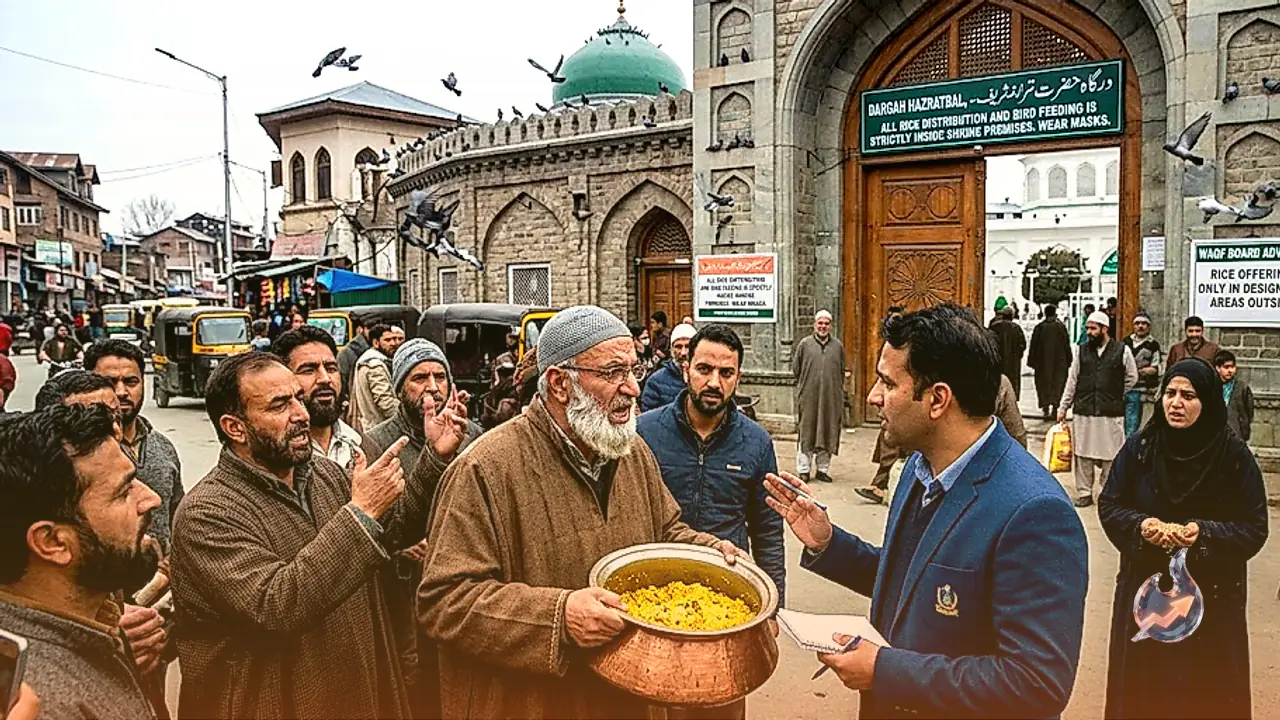















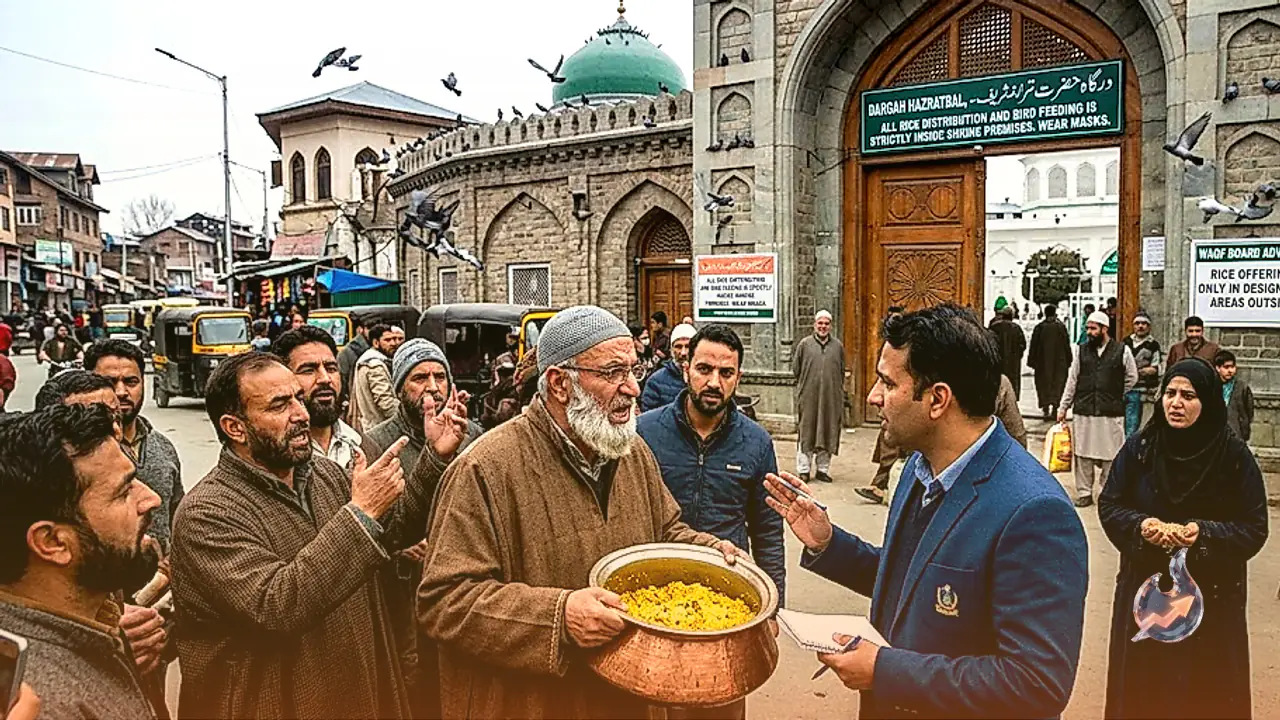

A fresh wave of discontent swept across Jammu and Kashmir following a directive by the Waqf Board prohibiting the distribution of rice-based offerings known as tehri and the feeding of birds within the premises of all religious shrines. The decision immediately ignited a heated debate across the valley, drawing sharp reactions from political figures, regular devotees, and community members who argued that age-old spiritual traditions in Kashmir should not be curbed in a manner that hurts public sentiments.
Social Media Outcry Over Viral Comments
The controversy began gaining momentum after a statement made by Jammu and Kashmir Waqf Board Chairperson Dr. Darakhshan Andrabi regarding the restrictions on tehri and bird-feeding inside shrines went viral on social media. A significant section of the public reacted strongly against the remarks, arguing that offering food at shrines and feeding birds are acts deeply rooted in faith, devotion, and centuries-old cultural heritage that deserve protection rather than restriction.
Clarification Issued by the Waqf Board
In the wake of mounting public pressure and criticism, Dr. Darakhshan Andrabi issued a clarification stating that there is no absolute ban on tehri itself. Instead, the restriction applies strictly to bringing and distributing these items inside the main shrine courtyards. She explained that devotees can continue to bring nazar-o-niyaz and other offerings, provided they use designated sheds and specific locations outside the shrine complex. According to the board, the arrangement is intended to maintain cleanliness and sanctity within the premises rather than interfere with religious rituals.
Deeply Rooted Traditions and Devotee Sentiments
Discussing the cultural significance of these practices, regular visitors to the shrines emphasized that distributing rice and feeding birds during difficult times has been a longstanding tradition for many families. Devotees noted that these rituals offer them immense inner satisfaction and a sense of continuity with practices followed for generations. Despite official clarifications, the incident sparked a broader conversation on how religious rituals at shrines can be managed without alienating the sentiments of worshippers.
PDP leader Iqbal Tramboo expressed strong disagreement with halting centuries-old customs, advocating for improved cleanliness and management as the proper solution instead of outright prohibitions. Tramboo remarked that practices like feeding birds and distributing food can be witnessed at prominent religious sites worldwide, noting that even at Mecca and Medina, feeding birds is a common sight. He argued that authorities should focus on proper management rather than suppressing practices tied to deep religious emotions.
Tariq, President of the Chamber of Commerce, suggested that the Waqf chairperson remarks might have been misinterpreted and that the intention was likely not to cause distress. He asserted that devotees should be permitted to distribute rice while ensuring cleanliness is maintained. Emphasizing that feeding birds is an integral part of religious duty, he maintained that no one should prevent people from performing such acts, while advising citizens to be mindful of where they feed birds to avoid creating hygiene issues.