






















An innovative and highly cost-effective agricultural method is currently turning heads in the Bokaro district of Jharkhand. A young local farmer has successfully slashed production costs while maximizing profits through sheer ingenuity and a clever desi jugaad. Moving away from conventional farming practices, this method has not only eliminated heavy expenses but has also resulted in an abundant harvest from a single plot of land. This unique experiment serves as an inspiring practical example for other agriculturalists looking to make farming a more profitable venture through resourcefulness.
Using Standing Maize Crops as Natural Support
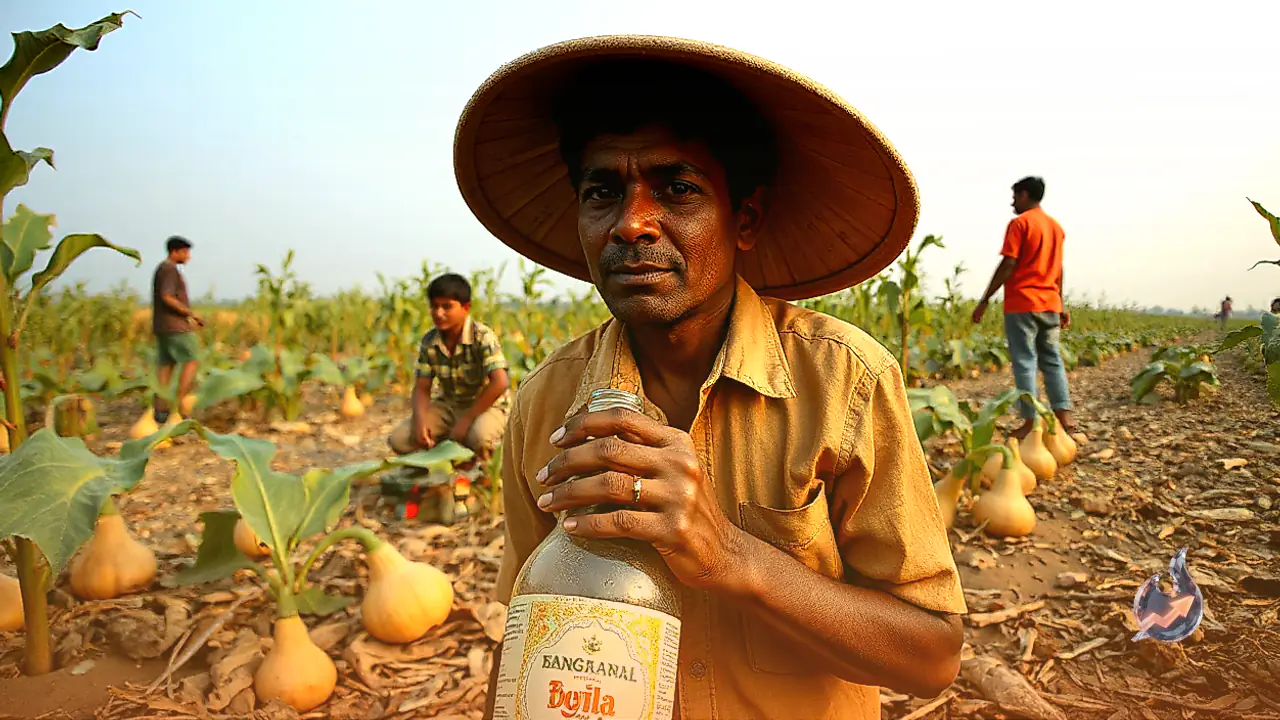
Traditionally, cultivating bottle gourds or similar creeping vegetables requires building a structured scaffolding system using bamboo poles, wooden pillars, and strong ropes, which incurs significant expenses. However, to bypass these traditional costs, young farmer Nandlal came up with a brilliant alternative. On his 70-decimal plot of land, he utilized the already standing maize crop to provide natural structural support for the bottle gourd vines. Where extra support was needed, lightweight wooden sticks were added in between. This allowed the bottle gourd plants to climb naturally without investing in a costly traditional structure, drastically cutting down cultivation expenses while providing sturdy physical support to the growing crop.
Low Investment and High Yield Mathematics
Nandlal planted the bottle gourd seeds back in the month of September. According to his practical experience, harvesting begins within approximately 70 days of planting the seeds. The total financial investment incurred in this farming method has remained around 12,000 rupees so far. Harvesting of the gourds is carried out on alternate days, which prevents heavy weight accumulation on the individual plants at any single time. The farmer states that throughout the entire harvesting season, the total production reaches approximately 50 quintals, yielding a remarkable return for such a modest land area.
Strong Market Prices During Festive Seasons
Vegetable market prices fluctuate constantly based on consumer demand, and Nandlal capitalized on these market dynamics effectively. During the festive season, when the market demand for bottle gourds experienced a notable surge, he managed to secure strong rates ranging between 30 and 45 rupees per kg. Meanwhile, standard market prices hover around 25 rupees per kg during regular days. Calculating conservatively at an average rate of 25 rupees per kg for the total 50 quintals produced, gross earnings can reach approximately 1,25,000 rupees. Deducting the initial investment of 12,000 rupees leaves a net profit of around 1,13,000 rupees for the entire growing season.
Double Yield and Dual Earnings From One Plot
The primary advantage of this modern and resourceful farming technique is that the farmer secures double benefits from the exact same plot of land. First, financial returns were generated from the initial maize harvest, and subsequently, the same land produced a bountiful crop of bottle gourds. Traditional farming methods demand extensive labor and capital to procure bamboo, wooden poles, and ropes, but utilizing maize plants as natural support completely eliminates the need for those extra materials. Additionally, Nandlal points out that when the bottle gourd vines trail down and touch the ground, secondary roots develop naturally, helping the plant absorb extra nutrients. The maize stalks keep the vines elevated while providing ample horizontal space for expansion.
Balancing Farming With Higher Education
Nandlal is not just an innovative agriculturalist; he is equally dedicated and focused on pursuing his academic goals. Despite spending his entire daytime managing heavy agricultural chores, he continues his higher education uninterrupted. Currently, he is pursuing a graduation degree majoring in mathematics. Speaking about his daily routine, he explains that while daylight hours are entirely dedicated to farm work, he consistently carves out dedicated time during the evenings and nights for his studies. He believes that with proper time management, balancing demanding agricultural work and formal education simultaneously is entirely achievable.
Guarding Crops Against Destructive Pests
Just like any other agricultural venture, bottle gourd cultivation carries the constant risk of damage from specific agricultural pests. Nandlal notes that fruit flies and a few other destructive insects can become a major headache for cultivators. Because of these harmful pests, developing bottle gourds face the constant risk of internal decay, which can severely impact overall production quality. Therefore, maintaining regular and strict surveillance over the crop health is absolute essential. By paying careful attention to these small yet crucial details, cultivators can successfully secure high profits from this unique farming method.