






















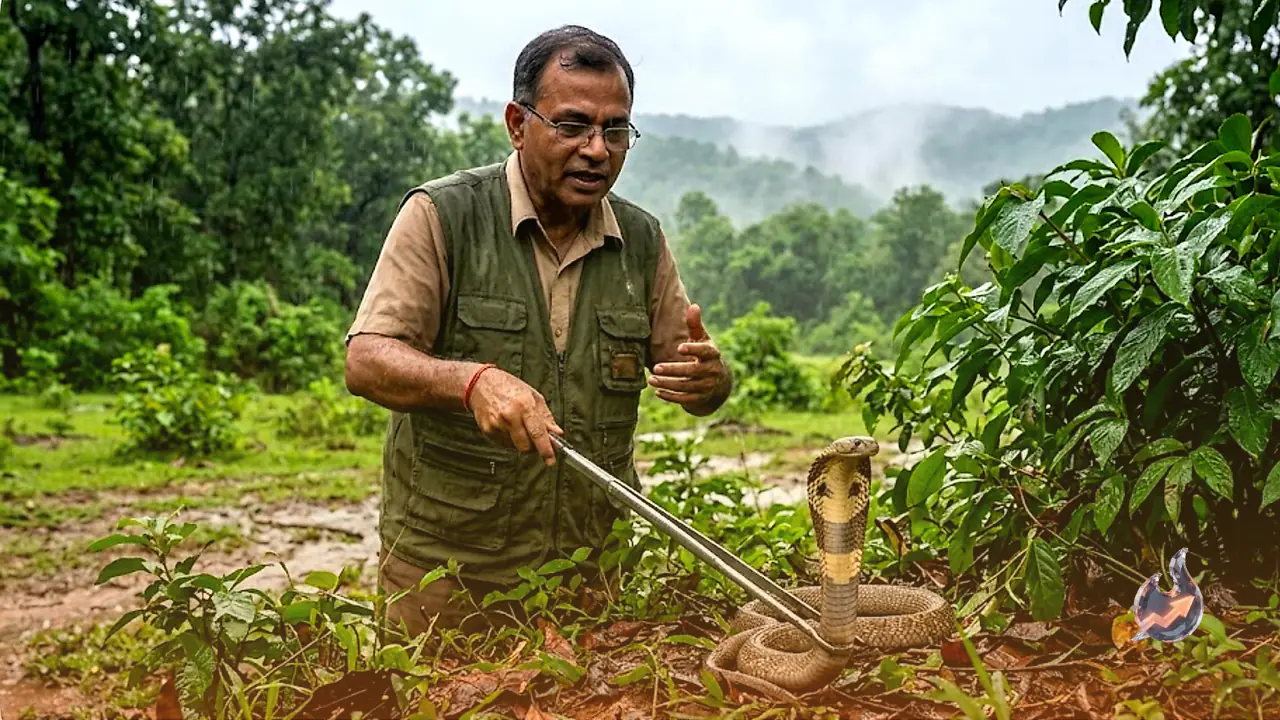

The onset of the monsoon season has brought a sharp rise in snake sightings across the fields, gardens and residential localities of Palamu district. Along with this increase in activity, several rumours and myths about snakes have also begun to spread among residents. Snake expert Dr. D S Srivastava from Palamu has now explained the real science behind this seasonal surge and dismissed some widely believed misconceptions.
How snakes sense their surroundings
According to Dr. Srivastava, snakes possess an extremely sharp ability to detect scent. They pick up on microscopic chemical particles in the air and vibrations in the ground to sense every movement around them. This is precisely why snakes appear far more active during the rains, a period that coincides with their search for food and their breeding season. He clarified that snakes do not smell the way humans do. Instead, they repeatedly flick out their forked tongue to gather chemical particles from the air and the ground. These particles are then carried to a special sensory organ inside the mouth known as the Jacobson's organ, which gives the snake information about prey, potential mates and its surrounding environment. Additionally, several snake species have specialised heat-sensitive pits on their heads, called pit organs, which allow them to detect the presence of warm-blooded creatures nearby.
Why the monsoon is peak breeding season
Dr. Srivastava explained that most snakes enter their breeding period during the monsoon months. During this time, they rely on chemical signals called pheromones to identify a mate. However, he firmly rejected a widely circulated belief, that killing a snake leaves its scent on a stick or on clothing, and that another snake then tracks that same scent all the way to the person responsible. He said this claim has no scientific backing whatsoever. His advice to people is to stop believing such myths and rely only on verified, scientifically sound information.
Snakes are a farmer's quiet ally
Dr. Srivastava also pointed out that snakes are extremely beneficial to the environment. By keeping the population of rats and other harmful creatures in check in the fields, they help protect farmers' crops from damage. His recommendation is that if a snake is spotted anywhere, people should avoid trying to kill it and instead maintain a safe distance while immediately informing a trained snake rescue team or the forest department. Attempting to catch or kill a snake without proper knowledge or experience can turn out to be extremely dangerous.
Precautions to take during the rains
During the monsoon season, it is important to keep homes and their surroundings clean, trim bushes and shrubs regularly, and avoid leaving grain or garbage lying out in the open. Dr. Srivastava noted that a little caution combined with the right information can go a long way in reducing the risks associated with snakes.