






















Securing an empty plot or residential property with a sturdy perimeter often strains personal finances due to soaring material costs and steep labour charges. Addressing these practical hurdles, Varun Kunal from Mahakay Buildtech, situated on Jharna Kund Road in Indarwa Basti at Jhumri Telaiya, highlighted that precast reinforced cement concrete boundary systems deliver perimeter fencing at significantly reduced expenses and far shorter project turnaround. Adopting this structural approach eliminates the lengthy delays and heavy staffing typically associated with masonry work.
Substantial Cost Relief Over Traditional Brick Fencing
Outlining the financial advantages, Varun Kunal cited the example of a standard one-kattha land parcel in Koderma measuring 1740 square feet. Enclosing this area through conventional construction methods using red bricks, coarse aggregate, river sand, cement, and reinforcement steel demands an overall expenditure ranging between 1.40 lakh and 1.50 lakh rupees. In striking contrast, achieving an identical perimeter barrier with prefabricated RCC slabs costs approximately 80 to 85 thousand rupees. This translates into massive direct savings for landholders while achieving dependable physical security.
Structural Architecture of Interlocking Pillars and Slabs
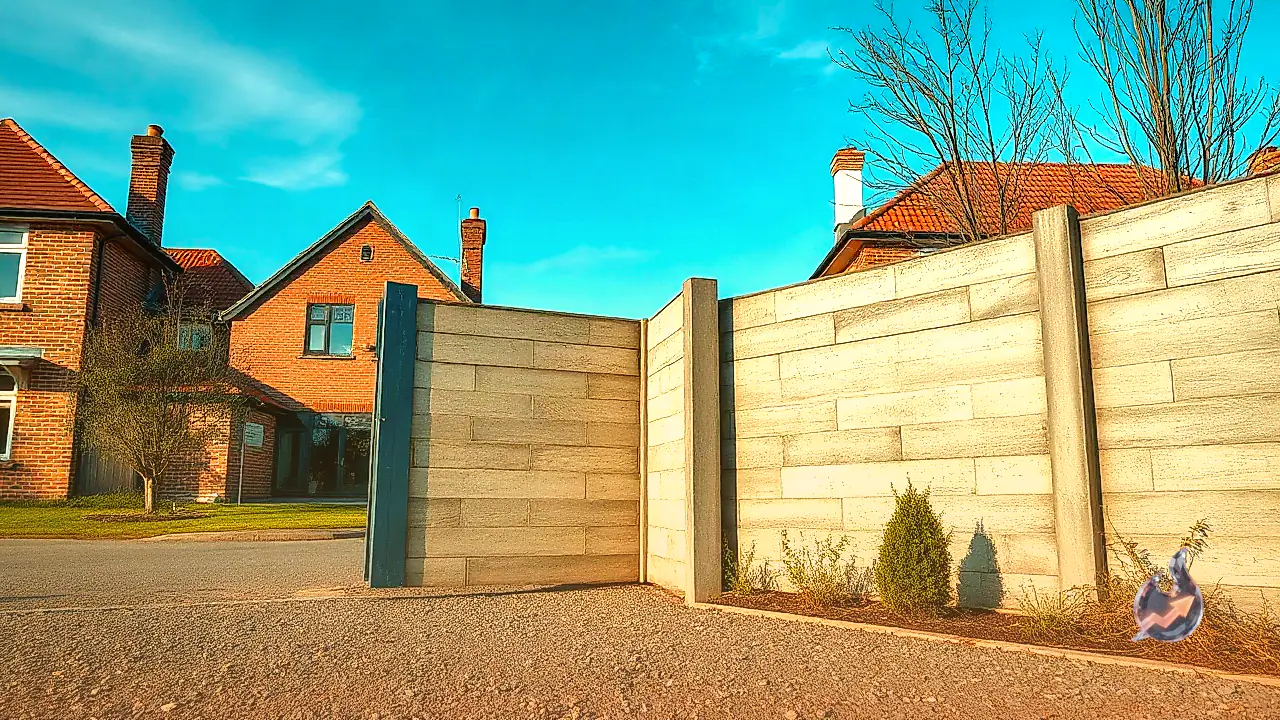
Explaining the engineering mechanics, Varun Kunal detailed that the entire layout relies on a sequence of precast concrete columns placed precisely six feet apart. Each column measures roughly eight feet in overall height, with about two feet firmly anchored underground to guarantee foundational stability. The remaining exposed framework features built-in vertical grooves where precast panels slide securely into place. Individual concrete slabs measure around six feet in length, one foot in vertical height, and approximately two inches in thickness. Based on perimeter height requirements and aesthetic choices, multiple panels are stacked sequentially above one another to reach the desired boundary elevation.
Rapid Assembly, Water Conservation, and Daily Work Velocity
Conventional brickwork requires multiple skilled masons, lengthy labor cycles, and continuous daily water curing to develop requisite compressive strength. Precast elements, on the other hand, arrive on location fully cast, cured, and ready for swift placement. Varun Kunal noted that installation crews can easily erect nearly 100 feet of boundary length within a single working day. Because wet masonry on site is almost negligible, water consumption drops drastically, making this technique ideal for regions facing water scarcity or limited site infrastructure.
Reusability and Customizable Visual Layouts
A key operational benefit of prefabricated concrete walls is their modular mobility. Whenever property demarcations shift or owners decide to repurpose materials across a different parcel, the panels and vertical supports can be systematically disassembled and relocated without structural degradation. In contrast, standard brick walls must be demolished into useless debris. Furthermore, these reinforced slabs are cast using quality cement, sand, graded gravel, and steel rebar, ensuring durability against external weathering. Available in varied mold profiles, they can also be tailored to complement property aesthetics rather than looking like an ordinary utilitarian wall.