


















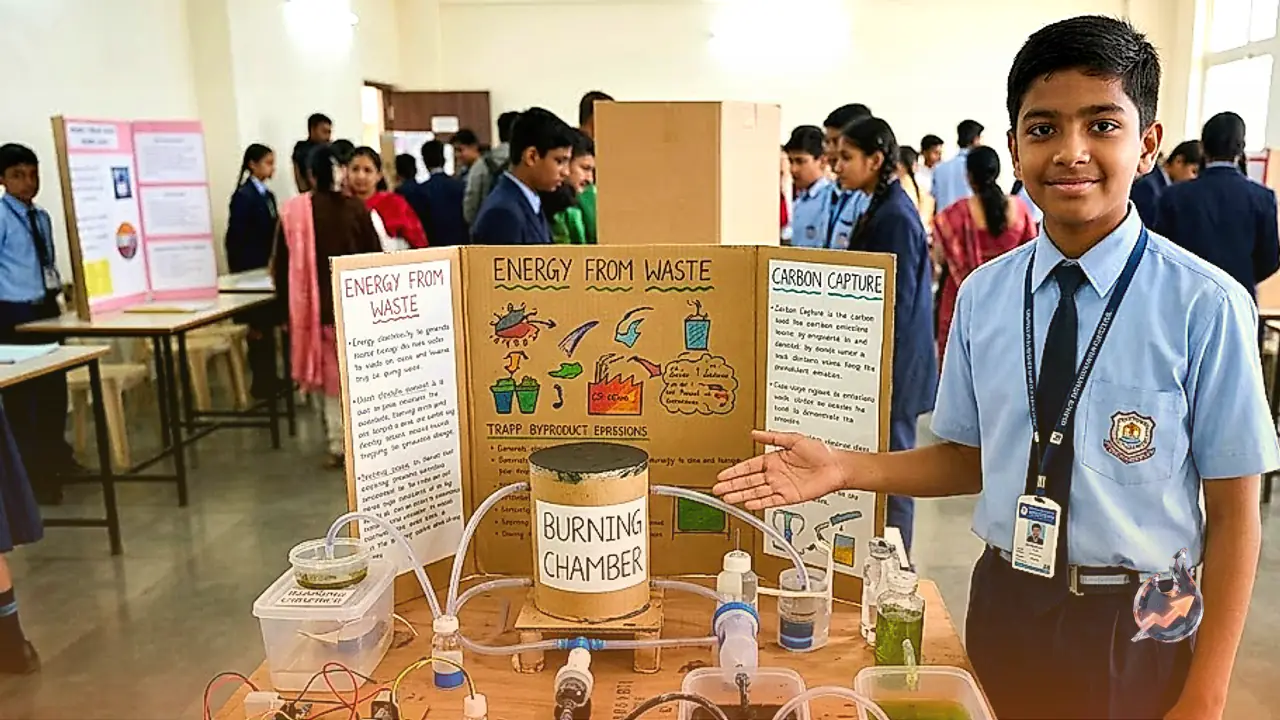

Abhishek, an eighth-grade student at JVM Shyamali in Ranchi, has created an innovative burning chamber model aimed at addressing waste management through practical energy production. Notably, he constructed this working model within just two weeks by utilizing a common rat trap wire mesh. Explaining the mechanism, he noted that this system will prove highly effective in industrial settings where massive quantities of waste are regularly generated. The core function of the model involves burning waste to produce intense heat, which subsequently charges batteries and powers street illumination.
Generating Electricity and Street Lighting
Detailing the operational process, Abhishek explained that the burning chamber is the primary unit where all collected waste is incinerated. The intense heat produced from this combustion charges an integrated battery system, which in turn provides the necessary power to light up roadside street lamps. Additionally, he has incorporated a solar panel on top of the street light structure to supplement energy capture and enhance overall efficiency.
Transforming Residual Ash into Ink and Algae
The utility of the model extends beyond simple energy generation, as the remaining black residue after combustion is completely repurposed. A designated pipe transports the leftover ash to an alternate section where cotton is used to separate the carbon particles. This recovered carbon can be processed to manufacture ink suitable for writing pens. Furthermore, the carbon plays a crucial role in supporting pond ecosystems by facilitating the cultivation of algae. This algae supplies vital vitamins, minerals, and nutrients, ensuring that aquatic organisms receive adequate nourishment and demonstrating a comprehensive approach to waste utilization.