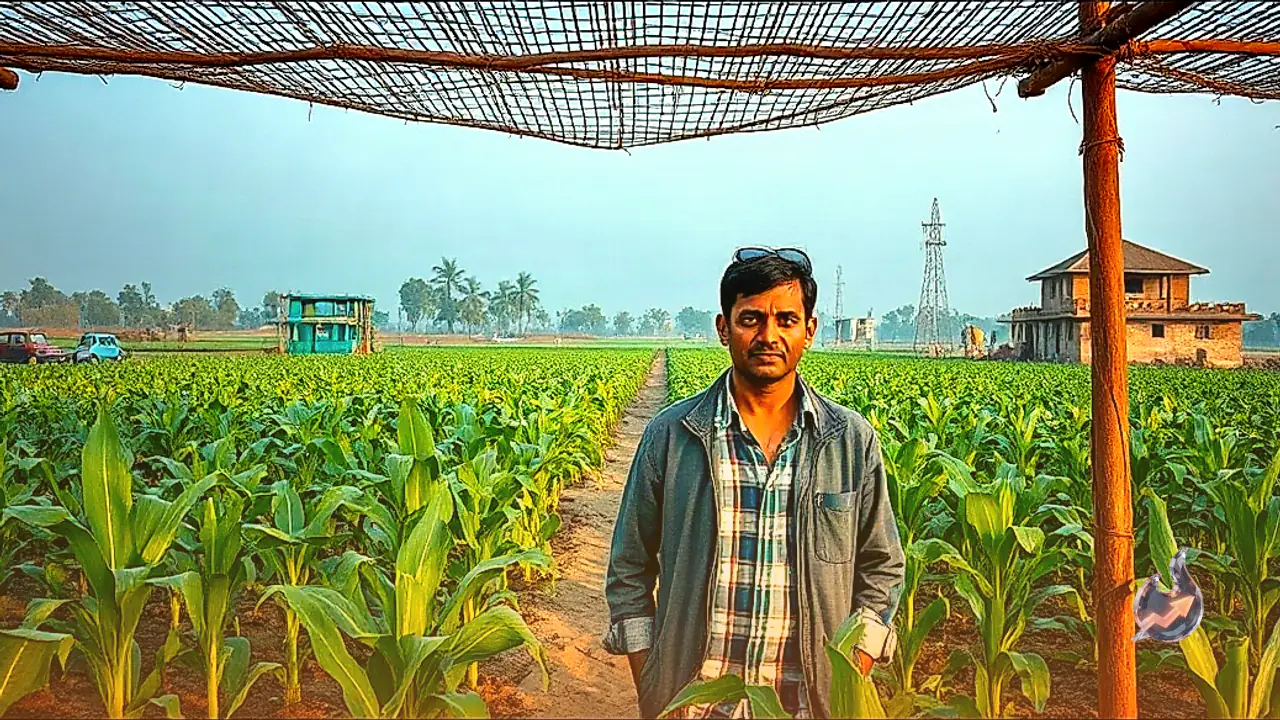

























In an effort to promote chemical-free agriculture and restore soil vitality, Vakeel Yadav, a resident of Padanbeda village in Jharkhand's Deoghar district, has launched an innovative organic farming initiative. Concerned by the long-term degradation of agricultural land caused by the heavy usage of chemical fertilizers and synthetic pesticides, he decided to shift toward eco-friendly alternatives. Yadav established a BRC center that produces organic fertilizers and botanical pesticides, encouraging local cultivators to adopt sustainable practices while using these products on his own fields.
Government Support and Krishi Vigyan Kendra Training
Driven by central and state government schemes advocating natural farming, Vakeel Yadav turned his sustainable vision into an enterprise. He enrolled in an organic farming training program conducted at the Krishi Vigyan Kendra in Deoghar. During the training, he learned scientific methods for formulating bio-fertilizers, measuring component ratios, and preparing botanical pest repellents. Armed with this knowledge, he setup a BRC center to manufacture and distribute organic agricultural inputs directly to nearby farmers.
Jeevamrut: A Natural Bio-Tonic for Soil Health
To replenish soil nutrients, Yadav produces Jeevamrut, which serves as a potent bio-tonic for agricultural land. The formulation relies on readily available natural ingredients, including fresh cow dung, cow urine, gram flour, jaggery, and fertile soil collected from beneath banyan or peepal trees.
These ingredients are blended in precise proportions and allowed to ferment for approximately three days. Once prepared, Jeevamrut is applied to the soil, where it stimulates the activity and proliferation of beneficial microorganisms. Regular application restores the natural fertility of the land and ensures that crops absorb essential nutrients effectively without relying on synthetic chemicals.
Agnyastra and Brahmastra: Botanical Pest Solutions
To protect crops against harmful pests and insects without toxic chemicals, Vakeel Yadav formulates traditional herbal mixtures known as Agnyastra and Brahmastra using cow urine and medicinal leaves.
- Agnyastra Preparation: Agnyastra is formulated by infusing cow urine with neem leaves, pungent tobacco, hot green chillies, and crushed garlic. This potent mixture acts as an effective natural pest repellent when sprayed on vulnerable crops.
- Brahmastra Preparation: Brahmastra utilizes a blend of bitter and medicinal leaves, specifically neem, karanj, custard apple, castor, and datura, processed in cow urine. This strong botanical extract targets a wide variety of crop pests.
Yadav emphasizes that farmers must follow precise ingredient proportions, safety precautions, and expert agricultural advice when preparing and applying these natural solutions.
Overcoming Misconceptions and Promoting Sustainable Farming
Transitioning farmers away from conventional chemical fertilizers presents significant challenges. Having relied on synthetic inputs for decades, many local farmers harbor the misconception that shifting to organic inputs will cause immediate crop yield declines. Yadav works actively to dispel these fears, explaining that consistent organic practices rebuild soil health over time, yielding sustainable, high-quality harvests.
Furthermore, because these natural inputs are prepared at low costs, they drastically reduce overall farming expenditure. Yadav's ultimate goal extends beyond cultivating his own land; he aims to mentor neighboring farmers in adopting cost-effective, ecological agriculture. His efforts have earned widespread praise across the region, establishing his venture as a model for rural sustainability.