






















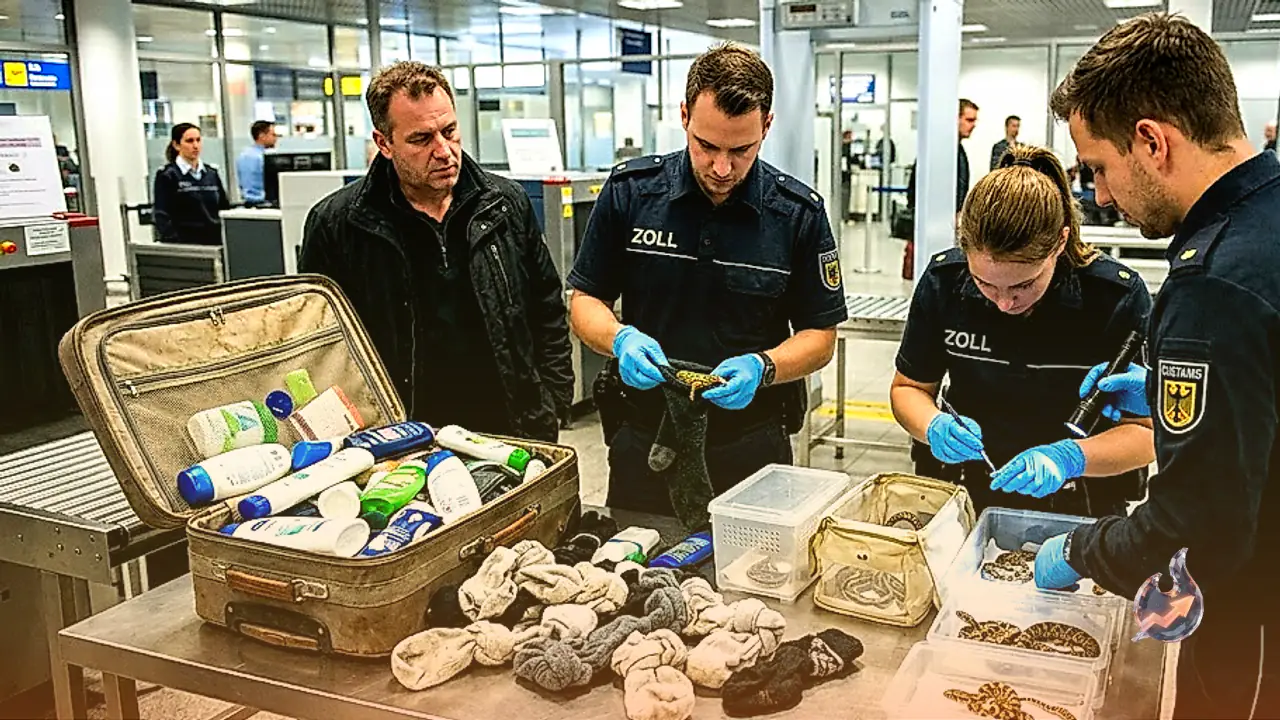

A severe case of international wildlife smuggling was uncovered by customs officials at Cologne Bonn Airport in Germany after a traveler arriving on an overseas flight was found transporting dozens of dangerous reptiles in his checked luggage. The passenger had concealed more than 90 individual snakes and lizards inside cosmetic containers and everyday personal garments. Many of the reptiles were highly venomous, and several had perished under harsh transport conditions before the plane reached German soil.
Nervous Demeanour and Positive Narcotics Screening
The incident unfolded when a 45-year-old Mexican firefighter attempted to walk through the airport customs hall using the green exit corridor designated for passengers with nothing to declare. Border personnel observed that the traveler appeared conspicuously nervous and anxious as he approached the checkpoint. Prompted by his agitated body language, officers pulled him aside for additional scrutiny.
Before searching his baggage, authorities administered a rapid chemical screening test, which produced a positive result for cocaine. Suspecting that the passenger might be operating as a narcotics courier, customs inspectors proceeded to conduct an exhaustive physical search of his luggage.
Dangerous Vipers and Iguanas Concealed in Personal Items
Upon unzipping the suitcase, inspectors found no hidden narcotics, but rather an extensive menagerie of live and dead reptiles packed into cosmetic supplies and clothing. Smugglers had stuffed vipers, rattlesnakes, iguanas, and various other lizard species into plastic food containers, hollowed-out bottles of shampoo and moisturizing cream, as well as tightly rolled balls of socks.
Speaking on the nature of the discovery, Cologne Customs office spokesperson Jens Ahland noted that while airport staff frequently encounter unusual souvenirs in passenger luggage, they had never before recorded a single seizure containing 37 live venomous snakes and 55 lizards originating from Mexico.
Grueling Transit From Mexico City and Reptile Care
The animals had been subjected to severe distress throughout an extended intercontinental journey that originated in Mexico City and passed through an intermediate transfer in Istanbul before arriving in western Germany. Ahland explained that the reptiles had been packed in inhumane conditions lacking adequate space and ventilation, which directly caused several of the creatures to die en route.
The surviving reptiles were promptly removed from the dangerous containers and transferred to a specialized snake farm in Germany, where trained reptile handlers are overseeing their recovery and medical care. When questioned by investigators, the traveler, whose name was withheld by authorities, claimed he had agreed to transport the luggage merely as a favor for an acquaintance from Brazil. German immigration and customs authorities rejected his entry into the country and placed him on a return flight to Istanbul.
Underground Market for Protected Wildlife in Germany
The seized consignment was intended for private buyers residing in Germany who seek exotic and dangerous pets through illegal trade networks. The case highlights an ongoing struggle by European environmental and customs agencies to stem the illicit cross-border wildlife market.
Ahland underscored the broader scale of this enforcement challenge, stating that across Germany last year, customs authorities logged more than 1,300 distinct seizures involving upwards of 56,600 protected animals, plants, or derivative wildlife goods. The intercept at Cologne Bonn demonstrates how traffickers continue to utilize complex passenger flight paths to bypass strict international conservation mandates.