




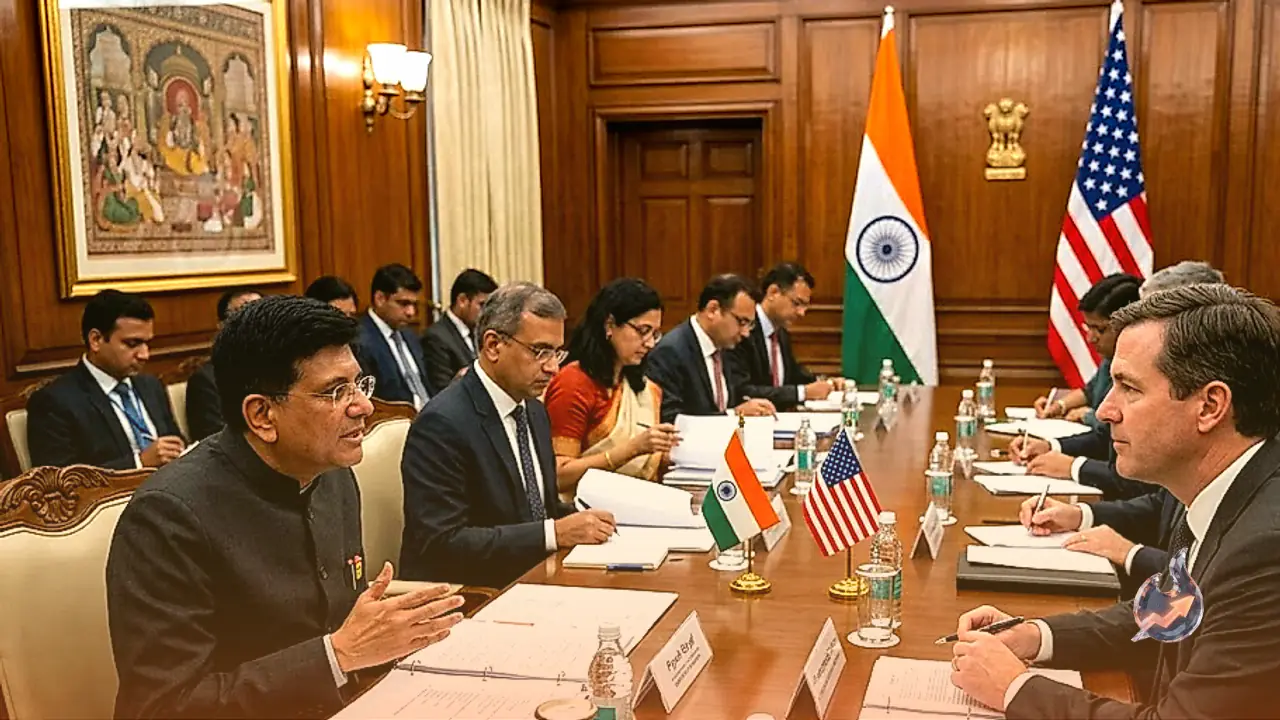















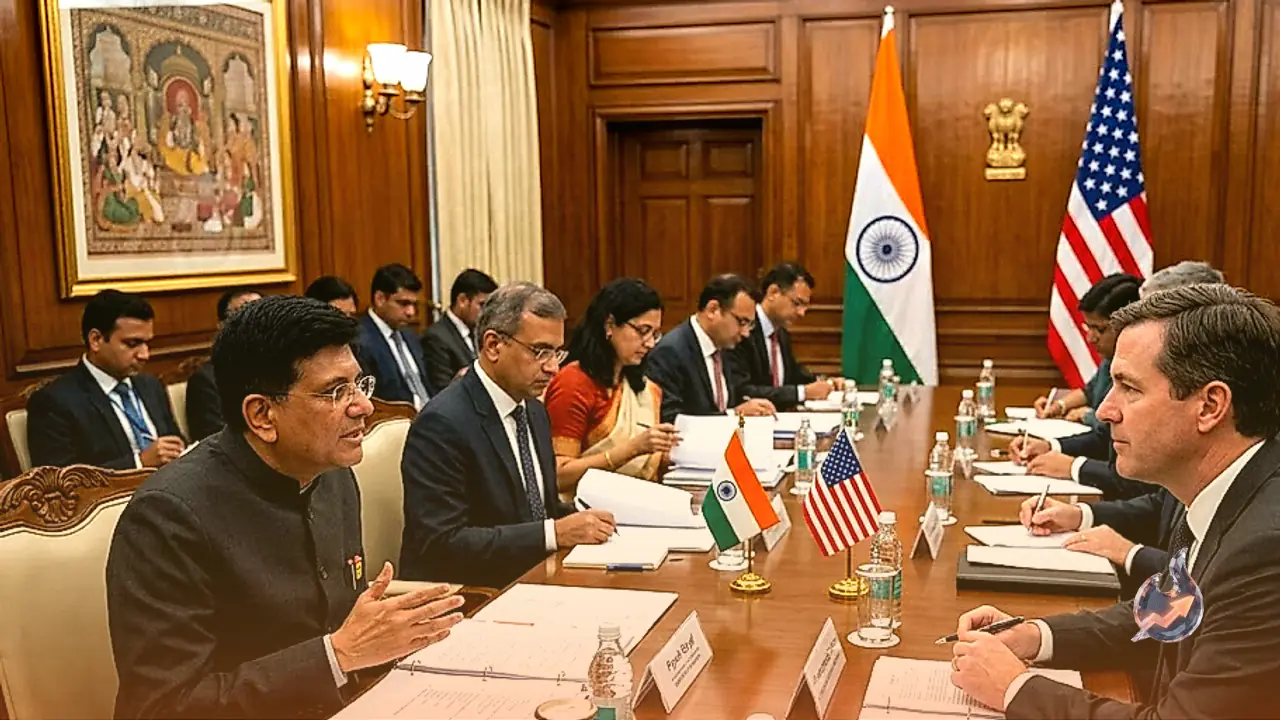

Negotiators from New Delhi and Washington have completed the foundational architecture for the opening segment of a comprehensive bilateral trade pact. Union Minister of Commerce and Industry Piyush Goyal confirmed that the first tranche of the agreement has been finalized and is currently undergoing formal legal scrubbing. Speaking at the SRCC Centenary Conclave, the minister explained that bringing the treaty into force will hinge on India securing meaningful tariff advantages over regional and global competitors in the American marketplace.
Legal Drafting Commences for First Tranche of the Accord
Addressing delegates at the conclave, Piyush Goyal highlighted that India's policy stance regarding the pact has remained consistent across months of deliberate diplomacy. He stated that the broad contours of the initial package are now firmly established. Piyush Goyal noted,
"US bilateral trade agreements first tranche has been finalised, and it is going through final contours, the legal drafting, and we hope to be able to finalise that soon and operationalise that once we get the comparable advantage or competitive advantage over our peer countries,"His remarks underscored that New Delhi is unwilling to settle for basic reciprocity unless Indian merchandise secures a decisive edge over rival exporting nations.
Commerce Secretary Emphasizes Favorable Zone in Negotiations
Reinforcing the minister's outlook, Commerce Secretary Rajesh Agrawal briefed reporters, affirming that discussions with Washington have moved into a constructive phase. Rajesh Agrawal stated,
"Probably we are in a very good zone. We anticipate closing the deal and signing the deal at the earliest possible time,"He explained that the actual calendar for signing and ratification depends closely on administrative steps within the United States to formalize its overarching global tariff mechanisms, which run alongside bilateral talks.
Section 301 Investigations and the Quest for Preferential Access
Rajesh Agrawal observed that parallel efforts are underway across American regulatory agencies to restructure import duties, which will directly dictate how the bilateral agreement is sequenced. Rajesh Agrawal said,
"So, there is parallel work being done in the US also to get back the tariff structure and based on some of the outcomes under Section 301, we will progress towards signing the deal at a mutually agreed time,"He elaborated that preferential market access is the true litmus test of any consequential trade treaty, distinguishing it from conventional trade channels.
The Commerce Secretary stressed that competitive parity alone is insufficient for Indian manufacturers facing stiff international rivals. Rajesh Agrawal explained,
"So in that context, India has to get preferential market access with their competitors. And that is something which will come as a part of the new tariff framework that the US is working on,"New Delhi has consistently argued that lower entry barriers for its goods must be formalized within Washington's emerging schedule of external levies.
Addressing Industrial Overcapacity and Non-Market Distortions
When questioned about ongoing Section 301 inquiries regarding excess manufacturing capacity, Rajesh Agrawal expressed confidence that those technical frictions would be resolved under the treaty umbrella. Rajesh Agrawal remarked,
"I think all other issues will get settled as part of the deal,"His comments come in the wake of a joint diplomatic move earlier this month, where India joined 14 other nations in demanding coordinated international action against subsidized factory overcapacity.
Articulating India's firm objection to state-directed trade distortions, the Commerce Secretary observed,
"Excess capacity due to non-market forces or non-market interventions has been something which India has also been opposing in a big way,"He added that artificial support mechanisms distort healthy commercial demand, disrupt cross-border supply chains, and inflict long-term damage on fair market economics across developed and developing nations alike.
Sanctioning Russia and Iran Act of 2026 and Energy Considerations
The dialogue also touched upon potential complications arising from the Lindsey O Graham Sanctioning Russia and Iran Act of 2026. This US legislative measure grants US President Donald Trump sweeping authority to levy penalty duties of up to 100 per cent against significant importers of Russian crude oil and natural gas. Commenting on the legislation, Rajesh Agrawal noted,
"Hopefully when it pact is signed, hopefully we will have more clarification on that."While he declined to confirm whether exemptions or formal definitions would be directly integrated into the upcoming tariff schedule, the secretary affirmed that New Delhi's primary objective remains securing predictable duty structures and immune supply corridors.
High-Level Diplomatic Engagements and Ambassadorial Assessment
The pacing of negotiations has drawn varied public assessments from American officials. Earlier this month, US Trade Representative Jamieson Greer offered a more measured perspective on the timeline. Jamieson Greer stated,
"At the same time...I dont think theres something imminent, but we truly have identified the universe of items that are sticking points. Were working diligently towards them,"Indian officials, however, maintain that persistent engagement has steadily narrowed the volume of unresolved disputes between both capitals.
Diplomatic momentum is set to accelerate further as US Secretary of State Marco Rubio is scheduled to arrive in India next week for high-level deliberations. While the baseline parameters for the first tranche were initially announced in February, later recalibrations in American tariff policy prompted subsequent rounds of talks. On October 5, Finance Minister Nirmala Sitharaman acknowledged that negotiations remained active, even as both sides navigated a temporary plateau in discussions.
Offering an optimistic take, US Ambassador to India Sergio Gor recently stated that bilateral deliberations were moving with considerable speed, with principal differences already resolved. Sergio Gor said,
"I wont like to get into too many details at this stage, and let the ministers announce that. But in the grand scheme of things, big items are done."Negotiators now await final clarity on Washington's broader tariff framework to bring the historic compact to formal execution.
Trade Trajectory and Current Economic Realities
The diplomatic push unfolds against a backdrop of resilient but shifting bilateral trade flows. Official customs figures indicate that despite prevailing duty hurdles, India's outbound shipments to the United States grew by 0.92 per cent during the previous financial year, reaching USD 87.3 billion. Simultaneously, inbound shipments from the US surged by 15.95 per cent to touch USD 52.9 billion.
Driven by this sharp uptick in American goods entering the Indian market, India's bilateral trade surplus contracted to USD 34.4 billion in 2025-26, down from USD 40.89 billion recorded in the preceding fiscal cycle. Policymakers on both sides anticipate that a formalized trade architecture will establish greater equilibrium, curb arbitrary tariff shocks, and expand commercial opportunities across vital industrial sectors.