























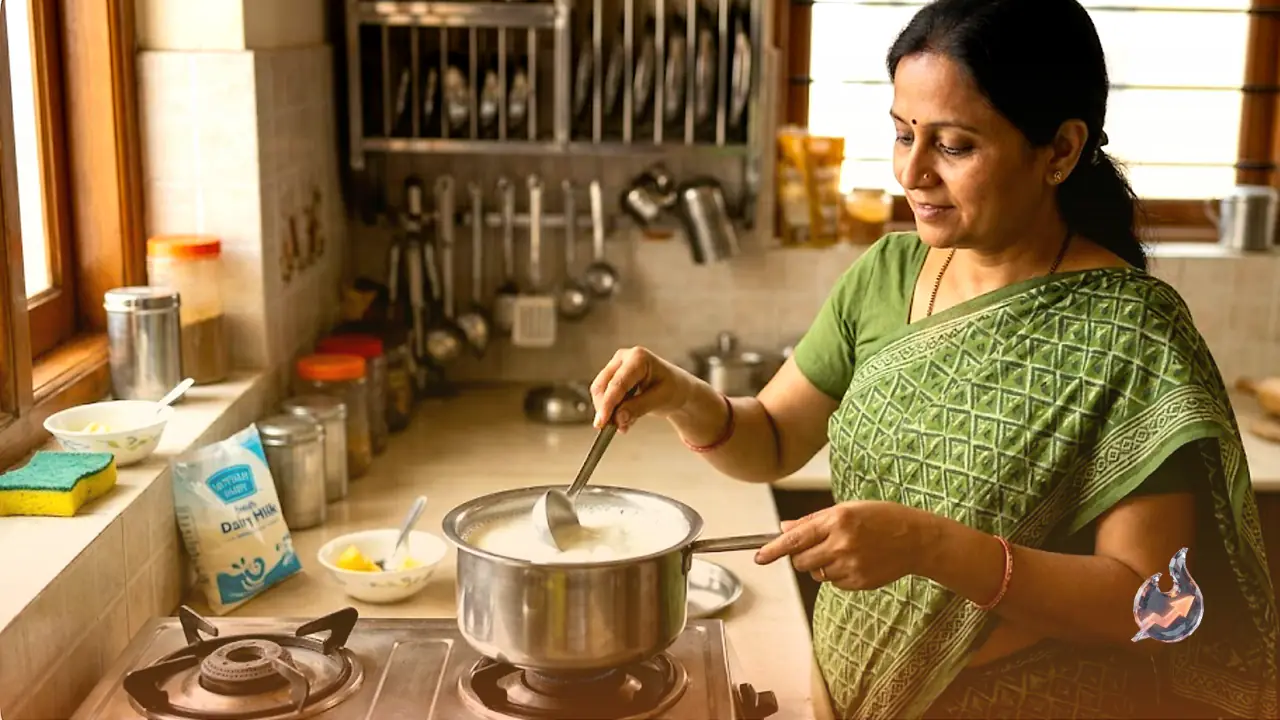

Daily kitchen chores like boiling milk might seem routine, but they often present significant challenges. A momentary lapse in attention is enough for the milk to spill over onto the stove or, worse, scorch at the bottom of the vessel. Once milk burns, it develops a sharp, unpleasant odor that ruins the entire batch, making it unsuitable for tea, coffee, or desserts like kheer. While many people stand by the stove stirring continuously to avoid this, such constant supervision is rarely practical in a busy home.
Why milk sticks to the bottom
The burning phenomenon occurs because milk contains solids, including proteins and fats. When milk is heated over high heat for extended periods without movement, these solids gradually settle and accumulate on the base of the container. The concentrated heat at the bottom causes these particles to burn quickly. Once scorching begins, the smell permeates the entire liquid, compromising its taste. Using high-quality stainless steel or heavy-bottomed vessels can help, but it is not always a foolproof solution.
The effectiveness of a small clay lamp
A traditional home remedy involves placing a small, clean clay lamp (diya) inside the milk pot while boiling. The theory is that as the milk begins to boil, the lamp shifts slightly, creating subtle movement within the liquid. This constant, gentle activity prevents the milk solids from settling and burning on the surface of the vessel. By breaking the static nature of the boiling process, it minimizes the risk of scorching. While this is a time-tested technique, the results may vary depending on the stove heat, the material of the vessel, and the total volume of milk.
How to implement this trick correctly
To use this traditional method effectively, follow these specific steps. First, ensure you have a clean, unused clay lamp. Before adding it to the milk, soak the lamp in fresh water for 10 to 15 minutes to remove any dust or debris from the clay. Once prepared, place the wet lamp into the vessel with the milk. Bring the milk to a boil over low or medium heat. For the best possible results, you can also gently stir the milk with a spoon occasionally.
Essential precautions while boiling milk
Beyond using the clay lamp, several other factors contribute to success. Avoid boiling milk on high heat; while it boils faster, it significantly increases the risk of burning. Always prefer heavy-bottomed vessels, as thin metal pans heat up too quickly. Do not leave the milk completely unattended, even if you are using the trick. Furthermore, ensure the vessel is spotless; any remnants of previous burns or residual food particles can negatively affect the flavor of fresh milk.
Is this method always guaranteed to work
This is a domestic tip derived from years of household experience, but individual kitchen conditions vary. Factors such as the intensity of your burner, the thickness of the pot, and the fat content of the milk can influence the outcome. Therefore, while this remedy is highly effective, it should be combined with general common sense and active monitoring. By choosing the right cookware, keeping the heat controlled, and staying attentive, you can easily avoid the frustration of burnt milk and enjoy fresh, high-quality dairy every time.