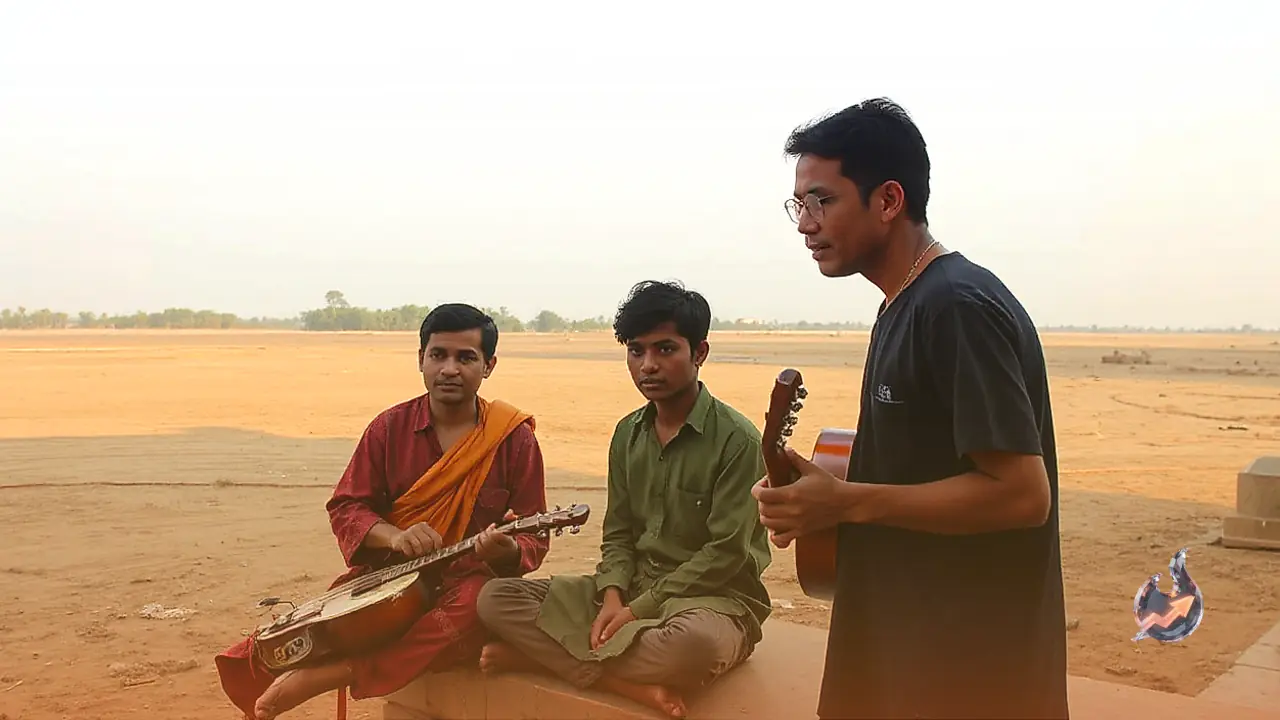















Folk arts and musical traditions hold a deeply revered position within the cultural landscape of Bihar. Among these traditions, the ancient ensemble known as 'Rasanchauki', locally referred to as 'Panchbajna', represents a unique heritage rooted in the cultural hubs of Mithila and Magadh. The defining feature of this traditional musical group lies in its seamless synchronization, where five distinct indigenous instruments are played in absolute harmony and rhythm. Far beyond serving as simple entertainment, this music captures the entire emotional spectrum of human existence across its various life milestones.
Mythological Roots and the Royal Wedding of Sita and Ram
Historical accounts and oral traditions trace the origins of Rasanchauki to neighboring Nepal. According to Senior Instrument Artist Mahendra Ram, a resident of Bhatsimri and a recipient of the prestigious President's Award, this specialized ensemble was performed for the very first time during the divine wedding ceremony of Mata Sita and Lord Shri Ram. The melodies that reverberated across the sacred land of Mithila during that celestial union eventually evolved into a cherished cultural legacy. Over centuries, master artisans have preserved this art form through a traditional teacher-disciple lineage, passing down intricate playing techniques from one generation to the next.
The Five Traditional Instruments of Panchbajna
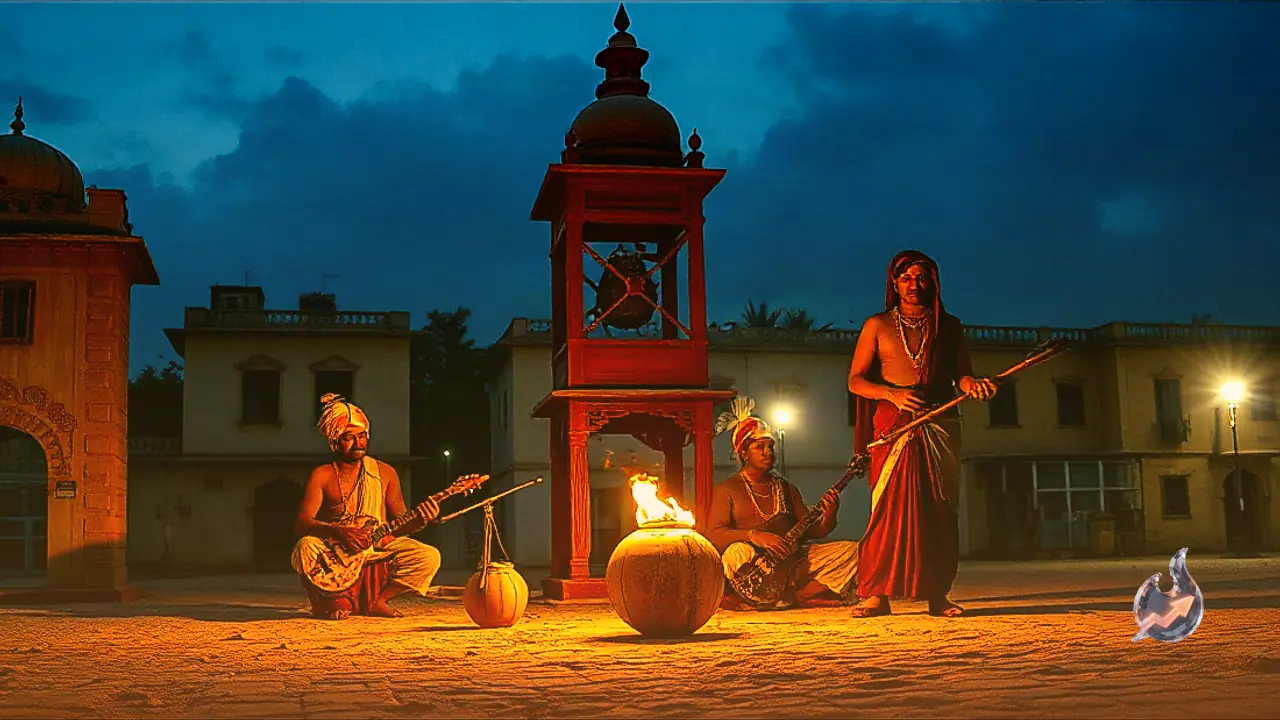
The melodious output of Rasanchauki relies entirely on the precise coordination of five specific traditional instruments. When artists perform in unison, these components create a rich auditory experience
- Dhol: Serving as the primary percussion backbone, this drum uses strong manual strikes to establish the fundamental rhythm.
- Tabli: A smaller drum-like instrument, the tabli is responsible for sustaining a continuous pace and tempo throughout the performance.
- Khurdak: Another traditional percussion instrument, the khurdak provides intricate complementary beats alongside the main rhythm.
- Kara or Jhal: Crafted from metal, these cymbals generate a ringing resonance and metallic clatter that enhances the ensemble's acoustic depth.
- Shehnai: As the primary wind instrument, the shehnai leads the group by providing the central melody and lyrical tunes.
Accompanying Every Stage of the Human Life Cycle
What sets Panchbajna apart is its deep connection to every phase of human life. In the social fabric of Mithila and Magadh, it serves as welcome and invocation music for auspicious events ranging from childhood celebrations and sacred thread ceremonies (Janeu) to weddings and tonsure (Mundan) rituals. The arrival of Rasanchauki at a household threshold is considered highly propitious. However, its repertoire is not limited to joyous occasions. Upon the passing of a distinguished or respected figure in the community, artists play specialized somber tunes to convey collective grief. In essence, the ensemble articulates human emotion from the joy of birth to the final journey of life.
Challenges from Modern Music and National Recognition Efforts
In contemporary times, the rapid rise of electronic sound systems, digital instruments, and DJs has pushed this ancient art form to the brink of extinction. Modern loudspeakers at weddings and public festivities have increasingly displaced traditional Panchbajna artists, threatening their livelihoods and cultural recognition. To counter this decline, preservation initiatives have gained momentum. The Central Government and the President of India recently conferred national awards upon veteran practitioners of such rare folk instruments, aiming to revitalize this vanishing heritage and restore its rightful honor in society.