























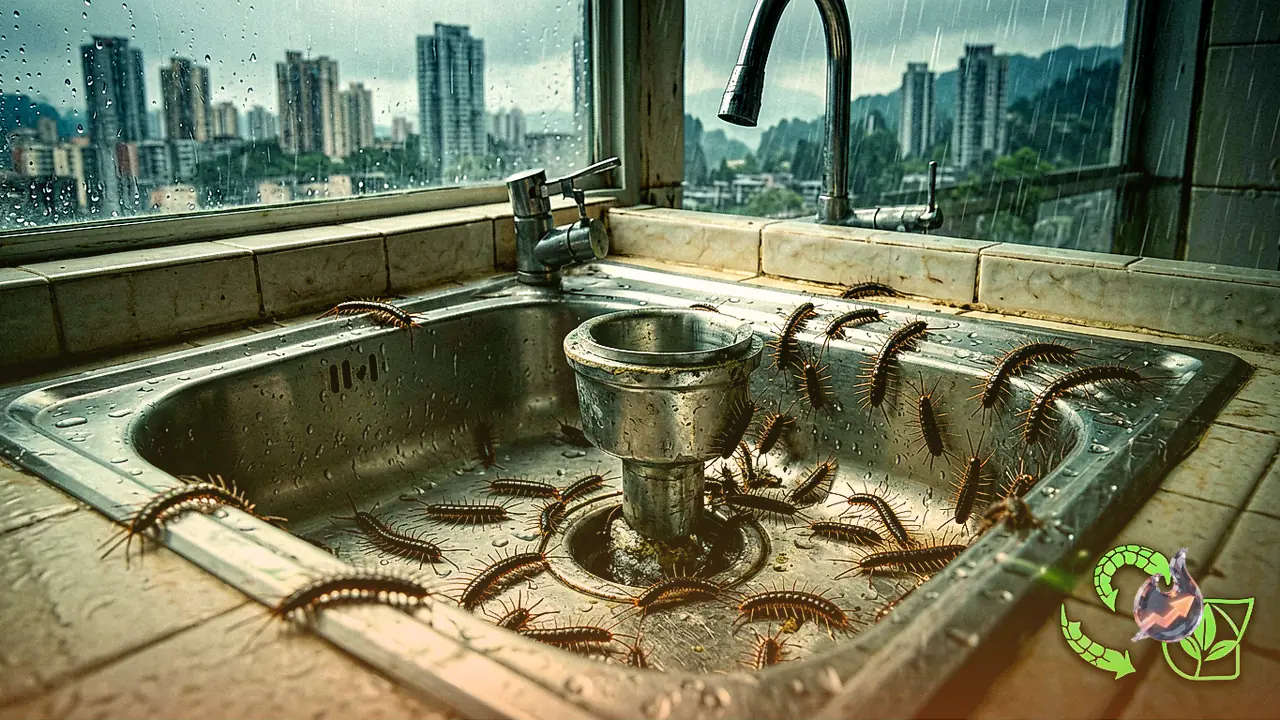

With the onset of the monsoon season, humidity levels rise sharply, creating damp conditions across indoor and outdoor environments. Pests and insects that usually reside under soil or inside small burrows begin crawling out in search of dry shelter. During this period, earthworms, small bugs, and 30-legged centipedes are frequently spotted around residential areas, including living rooms, kitchens, and bathrooms. For individuals who sleep on the floor, these crawling pests present a hazard as they may enter ears or inflict bites. Fortunately, a few straightforward household methods can effectively restrict their entry and keep homes safe.
Why Centipedes Invade Living Spaces in the Rainy Season
Centipedes are naturally drawn toward dark, cool, and moist habitats. When heavy rainfall fills outdoor drains and underground crevices with water, these pests migrate upward through drainage pipes, emerging via kitchen sinks, washroom drains, and utility outlets. This poses a heightened safety risk for people sleeping on floor bedding, as centipedes move actively in the dark and can accidentally crawl into clothing or ears. Taking preventative measures to seal off entry points becomes essential throughout the rainy months.
Using Salt and Vinegar Spray as a Deterrent
Common household table salt serves functions beyond culinary enhancement, acting as a simple pest control agent. To create a natural deterrent against centipedes, mix a small amount of salt into white vinegar inside a spray bottle until blended. Spray this solution along doorstep thresholds, window frames, and around drain openings where pests typically gain access. Additionally, sprinkling dry salt directly onto an active centipede dehydrated and neutralizes the insect rapidly.
Clearing Drains with Camphor Solution
Camphor, commonly utilized in household rituals, possesses strong repellent properties due to its potent aromatic compounds. If centipedes repeatedly appear inside your living space, camphor offers a clean solution. Crush 4 to 5 camphor tablets into a fine powder and dissolve it in a spray bottle containing warm water. Allow the mixture to settle until fully dissolved, then spray it directly down kitchen sinks, bathroom floor traps, and all drainage outlets. The intense smell deters centipedes from climbing up the pipe network.
Applying Neem Oil, Baking Soda, and Cloves
Alternative natural ingredients such as neem oil, baking soda, and ground cloves can also be deployed to secure the home perimeter. The strong scents and natural properties of these substances create an unwelcoming barrier for crawling insects. Apply or spray these remedies along pipe joints, basement corners, and damp wall edges to prevent centipedes from crossing into living quarters.
Maintaining Floor Hygiene and Eliminating Dampness
Alongside targeted natural sprays, maintaining strict cleanliness and minimizing indoor humidity are fundamental to long-term pest management during rains. Always add a disinfectant floor cleaner to the water used for daily mopping. In damp corners or areas exposed to constant moisture, periodically spray a solution of vinegar or Dettol to sanitize surfaces and prevent pest breeding habitats from forming.