






















The monsoon season is widely regarded as an ideal period not only for sowing crops in open fields but also for cultivating fresh vegetables right at home in kitchen gardens, backyards, and rooftop spaces. In particular, climbing vegetables can be successfully grown even in limited spaces by providing them with an overhead trellis structure rather than letting them spread across the ground. According to farmer Ansuman Singh, climbers such as bottle gourd, ridge gourd, bitter gourd, cucumber, and hyacinth bean can be easily cultivated on makeshift machan structures during the rainy season. Furthermore, installing a green shade or shade net above the setup when necessary can offer plants adequate protection against heavy downpours and harsh direct sunlight.
Materials Needed to Build a Machan Structure
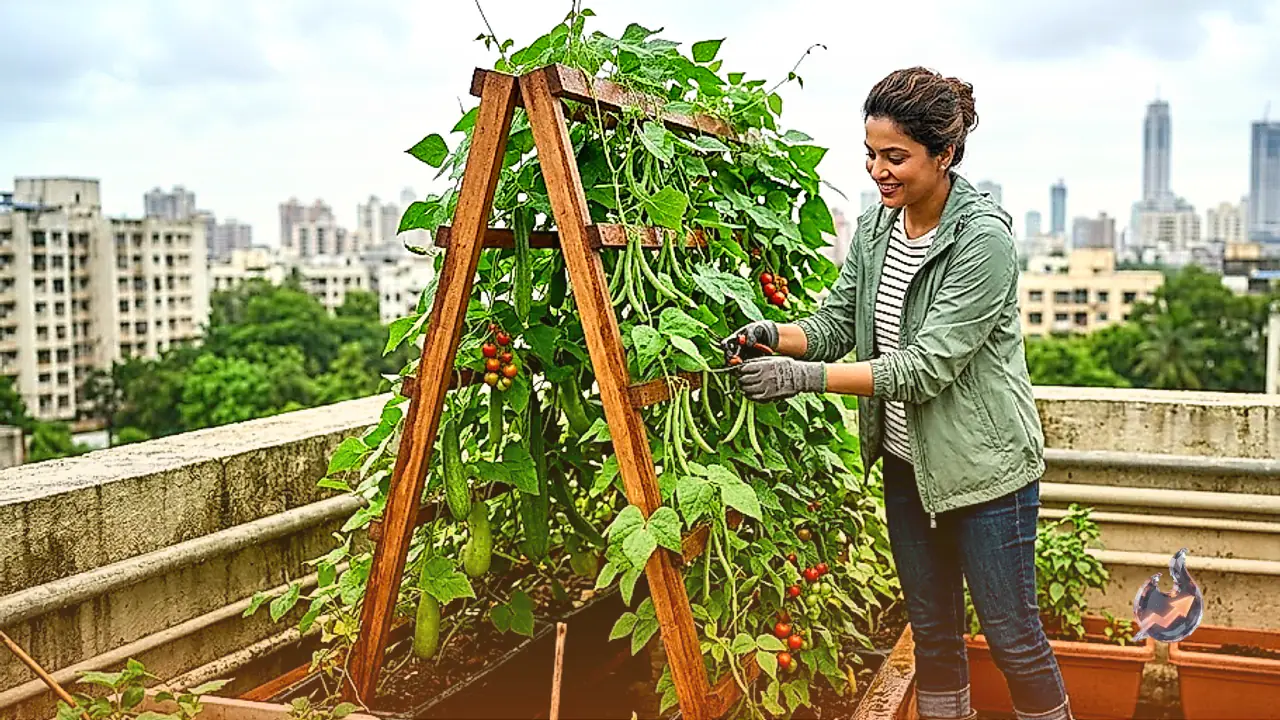
Creating a support structure for climbing plants does not require expensive materials. Frameworks can be easily assembled in backyards or fields using bamboo poles, iron pipes, or sturdy GI pipes. Over this framework, strong nylon ropes, plastic-coated wires, GI wires, or dedicated trellis nets can be stretched to allow vines to climb effortlessly. For smaller kitchen gardens or rooftop setups, sturdy pipes can be fixed on either side of pots or grow bags with a net strung across the top. The structure must be sturdy enough to support the combined weight of heavy vines, developing fruits, and the additional moisture retained during heavy rains.
How to Build Support Structures in Fields and Rooftops
In open fields or gardens, sturdy poles or bamboo sticks are driven into the ground at intervals of two to three meters and connected at the top using pipes, bamboo, or wire. A trellis net or a grid of ropes is then prepared overhead. Plants are positioned directly beneath or along the edges of the structure, and during their early growth phase, the vines are manually guided toward the netting. For rooftop setups, rather than constructing heavy permanent installations, lightweight yet strong pipes and nets should be utilized. Care must be taken to prevent water accumulation inside pots or grow bags, as prolonged waterlogging during the monsoon can severely damage plant roots.
Bottle Gourd and Ridge Gourd as Excellent Options
The high humidity and warm atmospheric conditions characteristic of the monsoon allow bottle gourd vines to grow at a rapid pace. When trained onto an overhead structure, the vine spreads upward, keeping the developing fruits safely away from damp soil. This trellis method is equally beneficial for ridge gourd as well. By preventing the fruits from coming into direct contact with wet mud, the risk of rotting is significantly minimized. First harvests for both of these prolific crops generally begin within approximately 50 to 70 days, providing a steady supply of homegrown produce.
Growing Bitter Gourd and Cucumber Successfully
The warm and humid weather accompanying the monsoon provides a favorable environment for bitter gourd vines. Spreading these vines across an elevated framework gives the plant ample breathing room, which makes identifying and harvesting the ripe fruits much easier. Under favorable growing conditions, bitter gourd can become ready for its very first harvest in about 45 to 60 days. Meanwhile, for those looking to harvest vegetables within a shorter timeframe, cucumbers make an excellent choice. With favorable conditions and proper care during the monsoon, the initial harvest of cucumbers can begin in roughly 40 to 50 days, while keeping them elevated on a trellis prevents soil contact and ensures better aeration for the vines.
Managing Hyacinth Bean and Essential Maintenance Tips
Hyacinth beans belong to the category of fast-growing climbing vegetables and can be conveniently trained over a supportive framework. Depending on the specific variety and weather patterns, the pods are typically ready for picking in about 50 to 70 days, and continuous harvesting encourages the plant to produce fresh new pods. According to guidance, green shade nets can be used above rooftop or backyard setups, ensuring they are not completely sealed so that proper airflow is maintained. Gardeners should keep the structures robust, ensure excellent drainage, regularly guide vines upward, and apply neem oil sprays every 15 days throughout the rainy season to keep pests at bay.