























Whether setting up a new home or shopping for wedding furniture, buying a double bed is a major investment. Storage or box beds have become increasingly popular in modern homes because they maximize space, eliminate the need for an additional large wardrobe, and offer ample room for storing household items. However, showroom sales staff often gloss over technical specifications that determine structural durability. Understanding plywood grades, board construction types, and proper material thickness ensures your investment remains sturdy and long-lasting.
Understanding Board Types: Plywood, Blockboard, MDF, and Particle Board
Four primary types of engineered wood materials are used in manufacturing double beds: plywood, plyboard (also known as blockboard), medium-density fiberboard (MDF), and particle board. Plywood is constructed by gluing thin layers of wood veneers together at 90-degree angles, creating exceptional structural strength. In contrast, plyboard or blockboard features a core made of solid wood blocks or strips sandwiched between thin veneer layers on both sides. In the furniture market, plyboard is also commonly referred to as blackboard.
The Risks of Cheap Materials: Weaknesses of MDF and Particle Board
Showroom displays frequently feature attractive beds at lower prices made from MDF or particle board. MDF is made from compressed cardboard-like wood fibers that absorb moisture rapidly. When exposed to water, MDF swells and degrades quickly, meaning beds built with MDF must be kept strictly away from wet environments. Particle board, on the other hand, is manufactured from compressed sawdust. While particle board furniture is cheap to produce, quick to assemble, and offers a smooth surface finish, its major drawback is a lack of long-term durability, making it prone to structural failure under heavy weight or humidity.
Optimal Choices for Strength: Waterproof Plywood and HDMR Boards
For maximum longevity and structural integrity, beds constructed from waterproof plywood or high-grade blockboard are the best choice. High-density moisture-resistant (HDMR) plywood is considered the top tier in bed manufacturing. HDMR boards are inherently termite-proof and highly resistant to moisture damage. Investing in a double bed made with waterproof plywood or HDMR technology ensures the furniture withstands daily wear without warping, splitting, or deteriorating over time.
Critical Thickness Specifications: Lid, Sides, and Main Frame
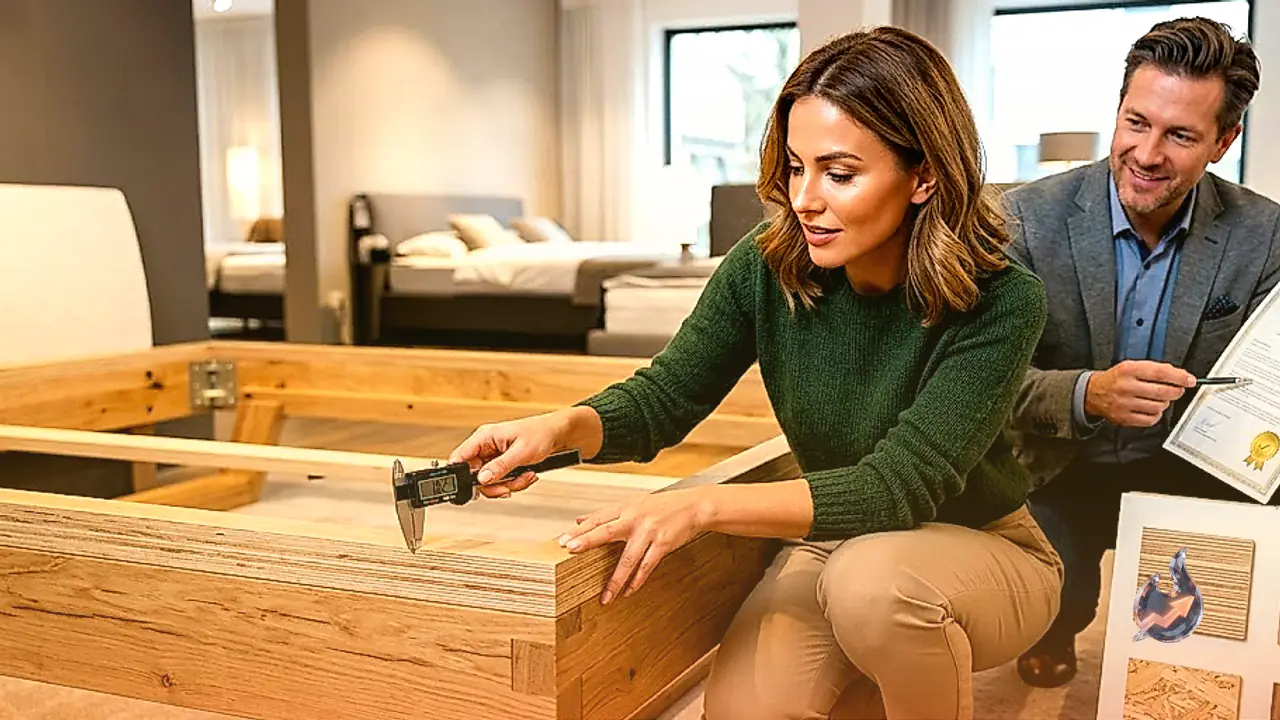
The strength of a bed relies heavily on the thickness of its individual components. When inspecting a double bed at a showroom, examine specific measurements carefully. The top cover or lid of the storage box should be made of 15 mm thick board to support mattresses and heavy weight without sagging. The bottom panel of the box storage requires at least 10 mm plywood. For the side walls of the storage box, plyboard should measure a minimum of 19 mm in thickness. Additionally, the outer frame—including the left, right, front, and back panels—must feature high-quality 18 mm plywood construction. A well-built bed utilizing 18 mm plywood generally costs at least 35,000 rupees.
Insisting on Official Warranty and Guarantee Terms
Never rely solely on verbal assurances from sales representatives when making a purchase. Always insist on receiving an official written warranty card. Branded furniture or beds built from solid wood and high-quality plywood typically carry a 5 to 10 year guarantee or warranty. Before finalizing the sale, verify the exact terms regarding termite protection, moisture damage, and structural coverage to safeguard your purchase.