
























Handcrafted garments represent a beautiful blend of traditional artistry, cultural heritage, and sophisticated style. Whether you own cotton, pure silk, or linen handloom pieces, wearing them offers unmatched comfort and a classic aesthetic. However, the manual weaving process makes these textiles exceptionally delicate. A minor error in cleaning or storing can cause their vibrant colors to fade and their fibers to weaken. To ensure your cherished collection retains its original beauty and longevity, adopting a dedicated maintenance routine is essential.
The Importance of Choosing Mild Cleaning Agents
Using regular, aggressive detergents can quickly ruin the soft texture of handwoven items. Handloom fabrics are constructed using delicate, natural threads that cannot withstand harsh synthetic chemicals. When washing these garments, always opt for a gentle liquid soap, a specialty silk wash, or even a mild baby shampoo. Strong chemical surfactants strip away the natural protective oils of fibers like silk and cause cotton threads to become stiff and coarse. Furthermore, mild agents help lock in the organic dyes, preventing the bleeding of rich shades.
Why Hand-Washing is Superior to Machine Cycles
The mechanical agitation of modern washing machines is far too violent for handcrafted textiles. The high-speed spin cycles can stretch, warp, or completely tear the delicate hand-woven patterns. Therefore, a gentle hand-wash in cold water remains the safest method. Always avoid hot or warm water, as elevated temperatures can lead to significant shrinkage in cotton and damage the natural sheen of silk fibers. Gently swirl the garment in soapy water without twisting or wringing it aggressively.
Protecting Colors from Direct Sunlight
Drying your garments under the harsh afternoon sun is a primary cause of premature fading. Ultraviolet rays act as a natural bleaching agent, rapidly breaking down organic and hand-dyed pigments. To preserve the depth and richness of the colors, always dry your handloom clothes in a well-ventilated, shaded outdoor area. It is also highly recommended to turn the garments inside out before hanging them up, ensuring the outer facing fibers receive maximum protection from ambient light.
Safe Pressing Techniques for Delicate Weaves
Applying excessive heat directly to handloom threads can scorch the fabric and melt delicate fibers. When ironing cotton or silk handloom garments, always adjust your iron to a low or medium temperature setting. To create a protective barrier, place a slightly damp, clean cotton cloth over the garment before pressing it. Alternatively, using a modern steam iron on a gentle setting can relax the wrinkles safely without putting direct metal-to-fabric heat on the intricate weave.
Proper Storage Methods to Prevent Mold and Pests
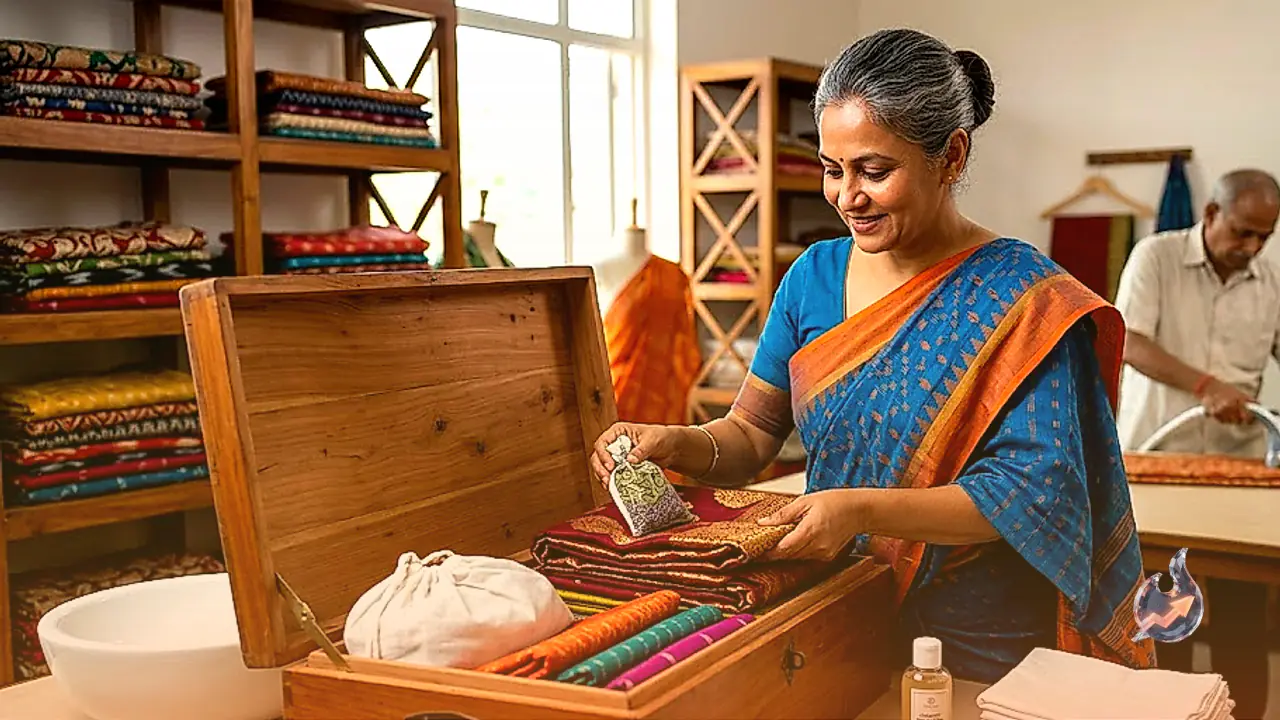
The way you store your handloom collection when not in use is just as critical as how you clean it. Never seal these organic garments inside air-tight plastic bags or synthetic covers. Plastic traps ambient moisture, creating a highly humid environment that promotes the growth of destructive mildew and fungus. Instead, wrap your precious sarees and suits in soft cotton or breathable muslin sheets before placing them in a dry, clean wardrobe. For pest protection, skip chemical-heavy naphthalene balls, which leave stubborn odors and can react with fabric dyes. Instead, use natural alternatives like dried neem leaves or clean camphor blocks to keep insects away safely. Taking these small, careful steps will drastically increase the lifespan of your exquisite handloom pieces, keeping their elegant appeal intact for decades.


