























Enjoying hot, puffed-up chapatis is a favorite part of daily meals in many households, but rolling and cooking fresh rotis right before sitting down to eat isn't always practical. To save time, most families prepare a large batch of rotis at once and store them inside an insulated casserole to keep them warm and soft until mealtime. However, opening the container later often reveals a frustrating surprise: the rotis at the very top and bottom have turned soggy, watery, and unappetizingly sticky.
Understanding Why Rotis Become Soggy Inside Casseroles
The primary culprit behind wet and spongy rotis is trapped moisture inside the sealed container. When steaming hot chapatis straight off the skillet are enclosed in a casserole, the water vapor escaping from them has nowhere to go. As this hot steam hits the cold inner walls and lid of the container, it condenses back into liquid water droplets. This moisture pools at the bottom and drips from the lid, soaking directly into the top and bottom rotis and ruining their texture. Fortunately, simple kitchen adjustments can prevent this condensation trap entirely.
Cool Rotis Slightly Before Sealing the Container
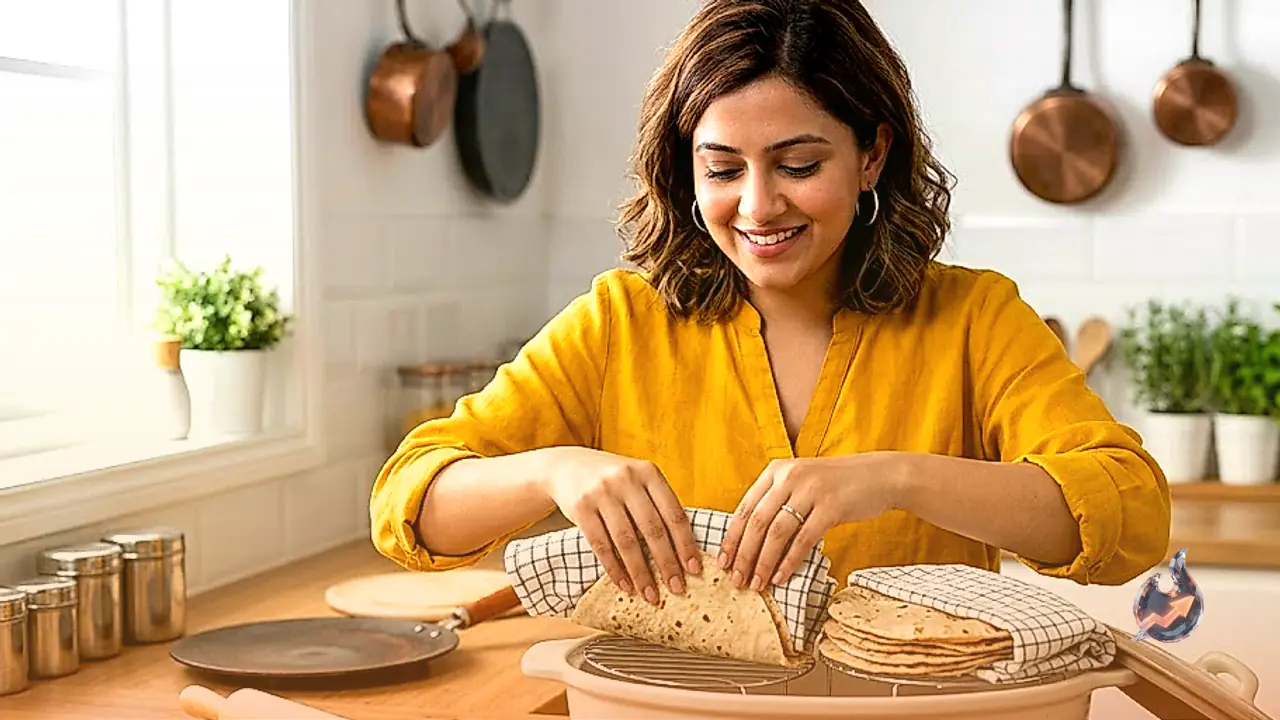
Placing rotis directly into a casserole immediately after puffing them up is a common mistake. Freshly cooked rotis release an intense burst of steam that needs a brief moment to dissipate. Instead of locking them away right away, place hot chapatis on a wire cooling rack or a mesh strainer for a couple of minutes. Once the initial heavy steam releases and the rotis settle slightly, transfer them to the casserole.
Container size also plays a vital role in moisture management. If you are storing a large batch of chapatis, avoid crammed, undersized casseroles. Choosing a slightly larger container provides better air circulation, allowing steam to spread out rather than concentrating on the bread itself.
Use Clean Cotton Cloths and Elevated Stands
A classic and highly effective way to trap moisture is lining the casserole with a clean, dry cotton cloth. Lay the cloth at the base of the container before adding the rotis, and fold the excess cloth over the top layer before closing the lid. Cotton naturally absorbs the rising steam before it turns into water droplets, keeping the rotis soft without getting wet.
To add an extra layer of protection, place a small trivet, shallow plate, or ring stand at the bottom of the casserole under the wrapped rotis. This creates a raised barrier that elevates the chapatis away from the container's floor. Even if condensation collects at the bottom, it won't touch or spoil the bottommost roti.
Protect Rotis with Butter Paper or Aluminium Foil
Butter paper and aluminium foil offer another great solution for keeping rotis dry and fresh. Place a thick layer of butter paper or foil at the bottom of the casserole before putting in the chapatis, and cover the top rotis similarly before securing the lid. This barrier prevents condensed water droplets on the lid and base from coming into direct contact with the rotis, ensuring they stay warm, soft, and completely moisture-free.