























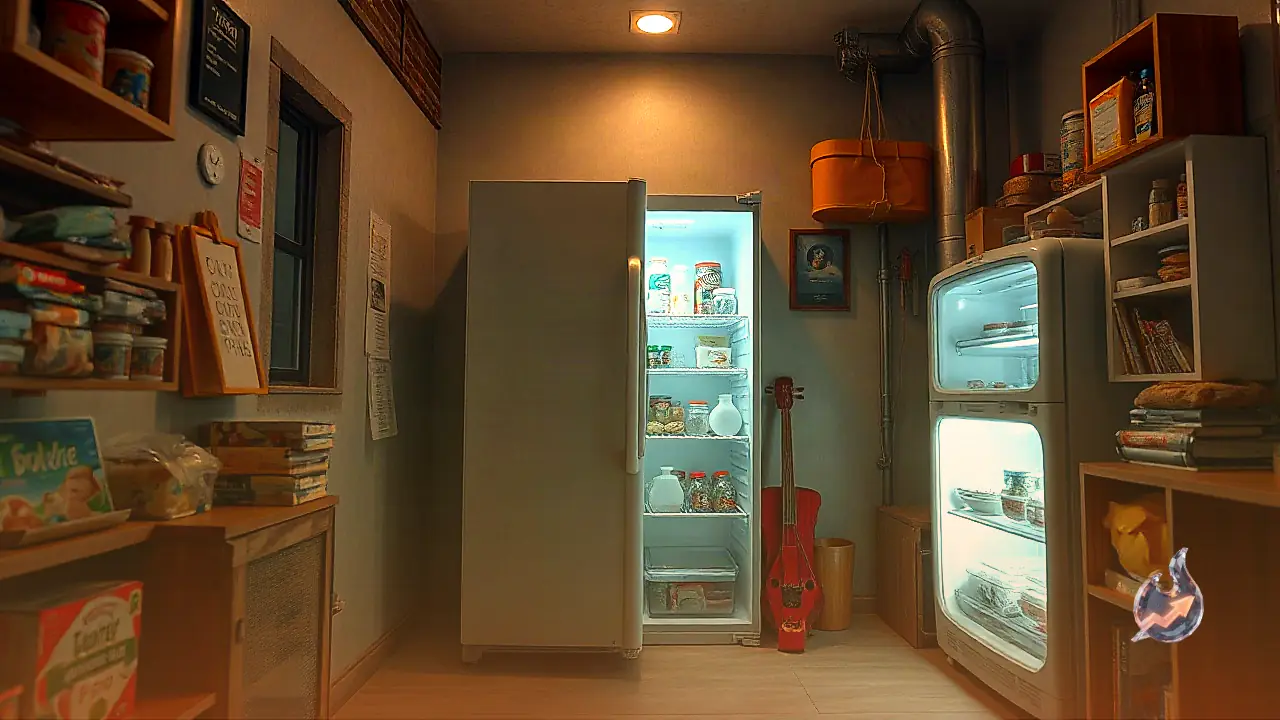

Among all household appliances that run continuously around the clock, the refrigerator holds the most critical position. To lower monthly electricity bills or give the appliance a periodic rest, many households adopt the practice of turning off their refrigerator during the night. Some even recommend switching off the appliance once a week. However, technical analysis and appliance design standards reveal that shutting down a refrigerator on a routine or daily basis causes more harm than good. Unplanned shutdowns not only risk pushing electricity consumption higher but can also lead to severe compressor damage and the spoilage of stored food items.
The Fallacy of Electricity Savings and Compressor Stress
Many consumers operate under the misconception that turning off the refrigerator for a few hours every night yields significant power savings. In reality, the mechanics work quite differently. When the refrigerator is powered off, internal cooling dissipates rapidly and the cabinet temperature rises. Upon reconnecting the power, the compressor must operate at maximum capacity for an extended period to bring the interior back to its designated low temperature. This intensive cooling cycle draws substantial electric current, which often results in higher overall energy usage compared to leaving the unit running non-stop.
Refrigerators are engineered specifically for continuous 24-hour operation. Frequent switching between off and on states places heavy electrical and mechanical stress on the compressor, which is the most vital component of the appliance. Repeated power cycling causes the compressor motor to overheat, accelerating wear and tear over time. Eventually, this bad habit can lead to complete compressor failure, leaving homeowners facing repair or replacement bills amounting to thousands of rupees.
Food Safety Risks and Bacterial Growth
Shutting off the power directly impacts the preservation of food stored inside the cabinet. As internal temperatures rise during power-off periods, the protective cold environment breaks down. Perishable staples such as milk, cooked dishes, fresh fruits, and leafy green vegetables become ideal breeding grounds for harmful bacteria. This causes food to sour, spoil, and emit unpleasant odors rapidly. Consuming such contaminated or degraded food significantly increases the risk of food poisoning and related gastrointestinal illnesses.
Automatic Cut-Off Functionality in Modern Refrigerators
Modern refrigerators available in the market today incorporate intelligent power management features that eliminate the need for manual intervention. These appliances feature an automatic cut-off mechanism that continuously monitors internal cabinet temperatures. Once the pre-set cooling level is attained, the system automatically disengages the compressor. As the internal temperature gradually drifts upward, the sensor signals the compressor to resume operation. Because this cycle happens automatically, manually unplugging or switching off the appliance to save electricity is completely unnecessary.
The Only Three Scenarios to Safely Turn Off Your Refrigerator
Under normal conditions, there is no technical requirement to turn off a refrigerator at fixed schedule intervals throughout the year. However, expert appliance guidelines highlight three specific scenarios where turning off the power is appropriate and safe
- Deep Cleaning and Defrosting: The refrigerator may be safely powered down once or twice a year for a few hours to perform thorough interior cleaning, sanitation, and ice defrosting.
- Extended Vacations or Absence: If the household plans to be away for 2 to 3 weeks or up to a month, all perishable food should be removed, and the unit can then be safely switched off.
- Technical Malfunctions and Maintenance: If the appliance experiences electrical issues, abnormal noise, or cooling faults, it should be switched off immediately to allow qualified technicians to perform repairs.