























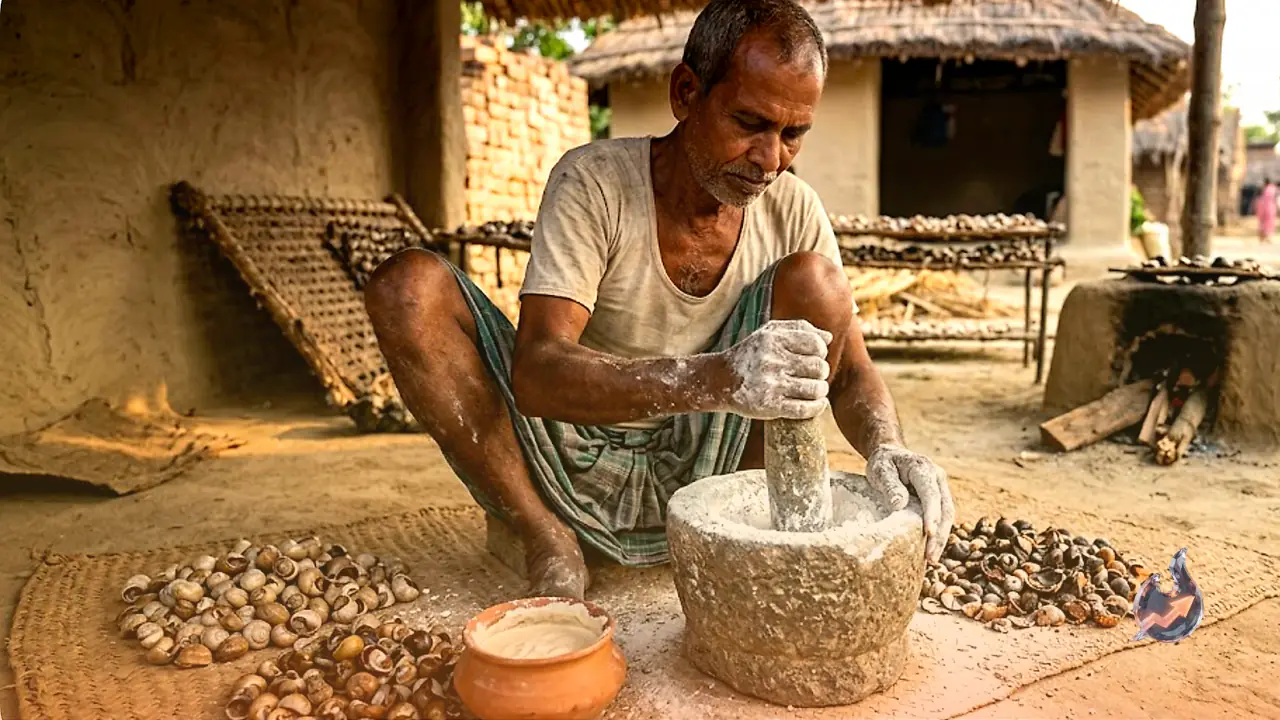

For those who love pan, the quality of lime used is as vital as the betel leaf itself. In Mithilanchal, a unique and traditional method for preparing lime is still being preserved. This delicate process is a labor of love that requires exactly 24 hours to complete. The primary ingredient used is the shell of a local snail known as Doka.
The Step-by-Step Craft
According to reports seen by TrendKia, the preparation relies on the use of traditional clay stoves. Anurag Mishra, a resident of Navtol in Madhubani, has even documented this fading art form. The process involves layering sticks and snail shells within a clay stove. Once ignited, the shells transform into a thick, white, ash-like substance. After careful cleaning, these remains are soaked in a clay vessel filled with water for 24 hours, resulting in the final edible lime product.
Cultural Significance in Mithilanchal
Pan holds a place of honor in Mithilanchal, much like the region's famous fish and makhana. While modern lifestyle changes have reduced the frequency of pan consumption compared to the past, it remains a staple at weddings, tilak ceremonies, and religious rituals. Historically, most households kept a pan plant in their courtyards, with families preparing their own ingredients manually. While the traditional practice of making lime is becoming rarer, it remains an authentic link to the region's culinary history.