






















The moment monsoon rain sets in and the weather shifts, plants seem to switch into a different gear altogether, and gardeners are being told this sudden growth spurt is exactly the window to work with. Anyone hoping to turn their home garden lush and colourful should treat the next few weeks as prime gardening season. Dry, dead twigs on roses and other ornamental plants need to be pruned away right now, and this same stretch of changing weather is being flagged as the single best time to attempt grafting and air-layering to raise new plants. Even a little effort at this stage can leave a garden in full bloom within weeks.
Why this weather shift works in favour of plants
According to progressive young farmer Ranjod Singh, this change in weather is nothing short of a blessing for plants. He explains that rising humidity in the air, combined with temperatures that suit plant growth, pushes new cells to form far faster than usual. That is why pruning roses and other ornamental plants right now triggers new, sturdier branches to shoot out quickly. For gardeners looking to expand their collection, this same period is the most favourable time to try grafting and air-layering, since the survival rate of plants worked on during this season crosses 90 percent.
Why pruning dry branches matters so much
As the weather turns, cutting away dry and diseased twigs becomes essential. Once that dead wood is removed, the plant redirects all its energy into growing fresh leaves and buds instead of sustaining wood that serves no purpose. This is particularly true for roses, where pruning allows sunlight and air to reach the lower parts of the plant far more easily. That, in turn, sharply cuts down the risk of fungus and pest infestations, and the plant rewards the effort with a much heavier flush of flowers.
Grafting lets one plant carry multiple flower colours
For anyone who wants a single plant to bloom in several different colours at once, grafting remains the most effective route. During this season, sap flows faster through plant stems, which allows tissue from two different plant varieties to bond quickly and firmly with each other. Grafting roses and hibiscus at this time means the fresh cuts heal much faster, giving gardeners a good-looking hybrid plant in a shorter span than usual.
Air-layering: growing a new plant without cutting one first
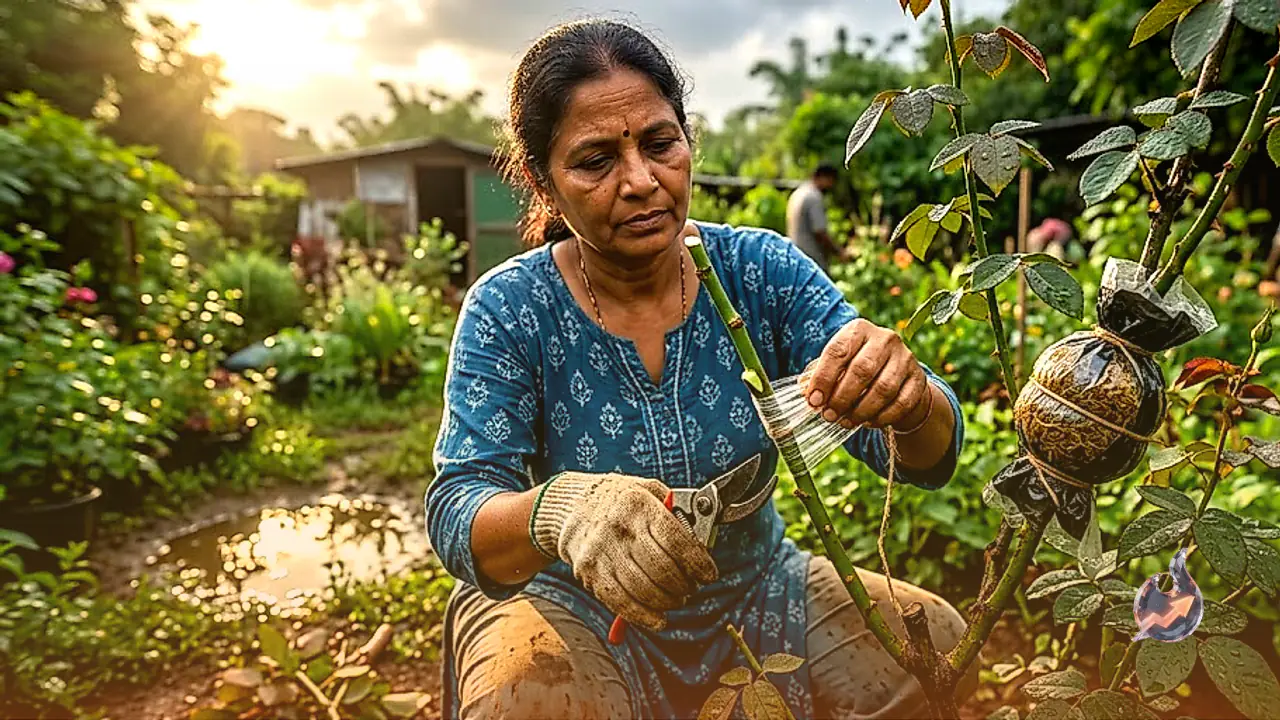
Air-layering, a simple and reliably successful method of raising new plants, works by lightly peeling the bark off a healthy branch of an ornamental plant or a fruit tree, packing that spot with moist cocopeat or soil, and wrapping it in plastic. The humidity of this season pushes fresh roots to emerge from that wrapped section far more quickly than they would in drier weather. Once those roots develop properly over a few weeks, the branch can be cut off and planted directly into a new pot.
Extra plant care needed through the monsoon
With growth accelerating this fast, giving plants the right nutrition becomes just as important. Good quality vermicompost or cow dung manure should be added to plants immediately after pruning or grafting. That is because rainwater keeps washing essential nutrients out of the soil in pots, which makes a dose of liquid fertiliser every 15 days genuinely useful. Gardeners should also make sure water does not collect and stand in pots, since waterlogging causes roots to rot and damages the plant.