























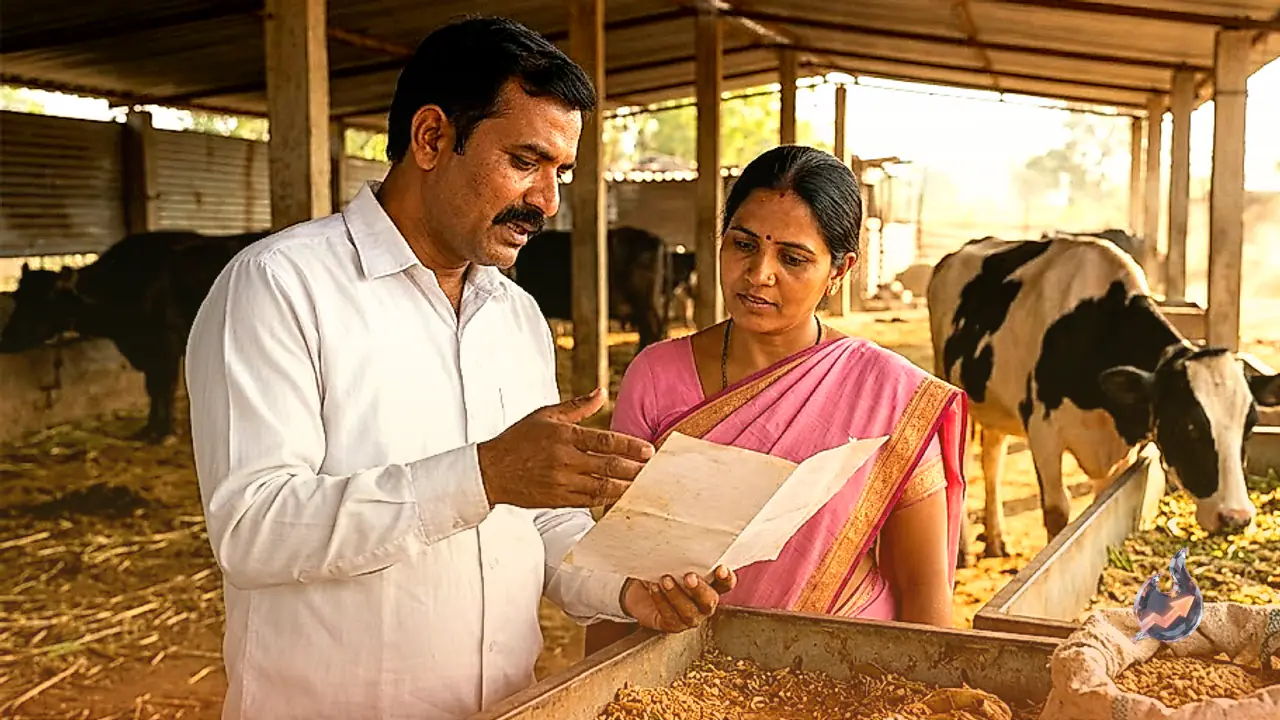

Half of July has gone by, yet the monsoon is still crawling in at a sluggish pace this year. Even without heavy rain, humidity levels have shot up, and it isn't just people who are feeling the strain, milk-producing cows and buffaloes are struggling too. In this kind of weather, falling milk yields, dropping fat content, and animals falling ill are common complaints. According to Dr. Brihaspati Bharti, in-charge of the Satna district veterinary hospital, farmers who pay close attention to feed and care right now can avoid much of this loss. He says a balanced, nutrient-rich diet is the single most important step during this humid stretch, since the right combination of green fodder, grain and nutrients can offset much of the damage caused by heat and a delayed monsoon.
Green fodder holds the real key to milk output
The animal husbandry department is currently encouraging farmers to grow green fodder varieties such as MP Chari and Hybrid Napier, and has already distributed seeds and saplings of these varieties free of cost to several farmers. The advantage is that farmers can grow these crops on their own land and produce nutritious, organic green fodder for their animals right at home, cutting down dependence on the open market. For those who want a year-round fodder supply, making silage, essentially a pickled form of green fodder, is an excellent option. It can be prepared easily at home and fed to animals whenever fresh green fodder runs short.
Increase concentrate gradually, never all at once
Experts advise against suddenly raising the quantity of concentrate, or grain mixture, in an animal's diet. Instead, it should be increased gradually over 7 to 10 days so the animal's digestive system can adjust without trouble. Concentrate is best fed mixed with dry straw and green fodder as a TMR, or Total Mixed Ration. As a general rule, cows should get 1 kilogram of extra concentrate for every 3 litres of milk they produce, while buffaloes need 1 kilogram of extra concentrate for every 2 to 2.5 litres of milk. The grain mix itself benefits from maize, wheat and bran, along with mustard, cottonseed or other oilcakes as a protein source.
Extra care for animals giving more than 15 litres a day
If a cow or buffalo is producing more than 15 litres of milk daily, simply increasing plain grain isn't enough, and can actually backfire by causing an upset stomach or acidosis. For such high-yielding animals, bypass fat and bypass protein are useful, along with roughly 100 grams of baking soda as a rumen buffer. This combination keeps digestion running smoothly and has a direct, positive effect on milk production.
Traditional Baghelkhand ingredients still deliver results
Dr. Bharti points out that flaxseed, mustard, cottonseed and cotton-based concentrate, all easily available in the Baghelkhand region, help raise both milk quantity and fat content when fed correctly. Cottonseed should be soaked overnight in water and boiled thoroughly the next morning to break down gossypol, a harmful compound it contains. Cottonseed cake needs to be soaked in water 4 to 5 hours before feeding. Flaxseed should be lightly roasted and coarsely ground, with only 100 to 200 grams mixed into the grain each day. Mustard is better fed coarsely ground and cooked with porridge rather than whole, and its share should never exceed 10 to 15 percent of the total grain mix. All of these ingredients deliver real benefit only when mixed thoroughly with dry straw and green fodder before feeding.
When green fodder runs short, jaggery and gram flour step in
When enough green fodder isn't available, adding nutritious alternatives to the diet becomes essential. Dr. Bharti explains that cooking jaggery (khand) and gram flour (besan) in water and feeding the mixture gives animals an instant burst of energy along with a good dose of protein. This reduces physical weakness, raises protein and fat levels in the milk, keeps the digestive system strong, and eases the stress that heat and humidity place on the animal. That said, if animals are already getting enough MP Chari or other green fodder, the need for such additional measures drops considerably.
Soaking oilcake correctly matters just as much
Mustard, cottonseed or groundnut cake should never be placed directly in front of an animal to eat. It needs to be soaked 4 to 6 hours before feeding, in a ratio of 1 part cake to 2 to 3 parts water, so it swells properly and its harmful compounds are neutralised. The cake should never be boiled, since boiling destroys the essential protein and nutrients it contains. Once the cake turns completely soft, it should be mixed with dry straw and green fodder before feeding. During this hot, humid season, oilcake should not be left soaking in water for more than 8 to 10 hours, since fermentation and fungal growth become likely beyond that window. With the right feeding practices and a balanced diet, farmers can keep their milk-producing animals healthy through this tough weather and prevent a drop in milk output.