




















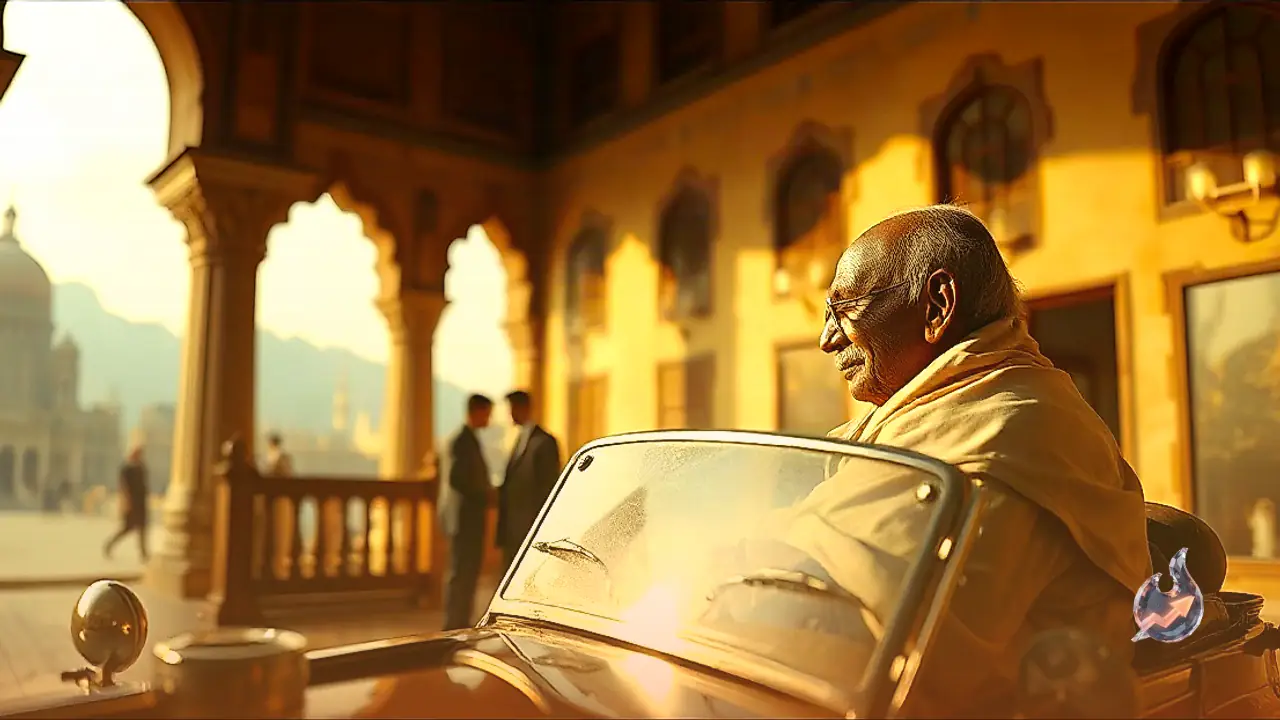

Simplicity, minimal possessions, and conscious restraint toward material extravagance formed the core pillars of Mahatma Gandhi's entire worldview. This rigorous code was not merely an inward discipline that he observed in isolation; he consistently encouraged his intimate circle of comrades and confidants to embrace the same unpretentious standard of living. An extraordinary episode from 1908, set against the backdrop of his civil rights resistance in South Africa, vividly illustrates this principle. Following his release from prison after serving a sentence linked to the Satyagraha campaign, an affluent supporter bought a factory-fresh automobile to celebrate his freedom, yet Gandhi categorically declined to step foot inside the vehicle.
The Prison Release and Hermann Kallenbach's Grand Gesture
The companion at the center of this memorable exchange was Hermann Kallenbach, a German architect and engineer whose professional expertise had earned him considerable commercial prosperity. Deeply captivated by Gandhi's philosophical concepts and ethical clarity, Kallenbach collaborated closely with him across various South African initiatives. In 1908, upon learning that Gandhi was concluding his prison term in connection with the ongoing Satyagraha struggle, Kallenbach resolved to make the day of liberation a celebratory milestone.
Eager to provide his friend with a dignified and effortless journey back home, Kallenbach did not simply arrive alone at the prison premises; he had purchased a brand new car specifically for the occasion. In Kallenbach's estimation, escorting his resilient comrade from the penitentiary gates in modern comfort was a fitting tribute to their cause and camaraderie. However, the moment Gandhi laid eyes on the newly acquired automobile, he firmly and unequivocally refused to get inside.
Gandhi's Critique of Unnecessary Consumption
Gandhi was deeply troubled by the realization that such a lavish sum of money had been expended merely to transport him back to his residence. He pointed out to his devoted friend that at a time when countless members of the broader community were wrestling with dire hardships and struggling to secure basic daily necessities, spending substantial capital on a superfluous commodity was fundamentally improper.
The volume titled 'Everyone’s Gandhi' highlights this exact occurrence as a prime embodiment of Gandhi's devotion to frugal living and purpose-driven spending. According to the historical account in the book, Gandhi urged Kallenbach to return the vehicle directly to the dealership where it had been procured. His challenge was straightforward: if an item is not strictly essential to life, why should extensive financial resources be squandered solely for convenience, display, or outward prestige? This objection did not signify an absolute rejection of modern transportation or fine craftsmanship in every circumstance, but rather a deliberate commitment to disassociate from possessions that serve no fundamental human requirement.
The Case of the Expensive Binoculars at Sea
A remarkably similar confrontation involving material attachments unfolded between Gandhi and Kallenbach during a voyage across the ocean as they were sailing back from England to South Africa. Kallenbach was traveling with a pair of binoculars of exceptional quality, craftsmanship, and expense. While the optical instrument was impressive and visually appealing, Gandhi confronted him with a probing query regarding whether the luxury item was truly indispensable to his personal life.
The two men engaged in an earnest dialogue exploring how few material instruments an individual actually requires to lead an honorable and balanced existence. Gandhi asked whether one ought to hold onto physical objects that contribute nothing essential to one's life purpose. Deeply moved by Gandhi's reasoning, Kallenbach walked over and cast the costly binoculars directly into the open ocean. Rather than mourning the financial loss, records indicate that he experienced an immense sense of relief and unburdened lightness afterward.
Need Prevails Over Price Tag
Both the automobile encounter and the discarded binoculars underscore a unified philosophical lesson. For Gandhi, the primary metric of value was never how much an item cost in monetary terms; the decisive question was always whether the object satisfied a genuine, inescapable need.
Whenever an article existed merely to indulge a recreational whim, broadcast social prestige, or provide superfluous comfort, Gandhi advocated letting it go. His interactions with his close friend Kallenbach reflect this uncompromising filter between genuine utility and artificial desire. In a contemporary society dominated by aggressive advertising, upgrade cycles, luxury gadgets, designer clothing, and high-end hospitality, this century-old dynamic raises a compelling dilemma: does the ability to buy an expensive asset make that asset truly necessary?
Connecting Gandhi's Outlook to Modern Personal Finance
The enduring takeaway from these historical episodes speaks directly to how modern households manage their financial commitments. Irrespective of whether an individual's earnings are modest or substantial, distinguishing clearly between basic necessity and discretionary impulse remains crucial before deploying funds. When a household with limited resources diverts whatever capital remains after meeting essential living costs toward non-essential luxuries, its financial cushion for future emergencies inevitably diminishes.
On the other hand, if a buyer purchases a high-end vehicle that comfortably aligns with their overall financial capacity, handles installment payments effortlessly without strain, and maintains uninterrupted funding for primary household welfare and long-term savings, the financial context is entirely different. Gandhi's timeless encounter serves as an enduring guide to mindful expenditure and disciplined financial discernment.