























Cleaning a house during the rainy season comes with its own unique set of challenges. Even after a thorough cleanup session, it is common to notice that floors turn sticky shortly after being mopped. Walking barefoot across the room often reveals an uncomfortable sense of lingering moisture and dampness underfoot. If this recurring issue is bothering you, the first step is to understand the underlying causes behind it. By adopting correct cleaning methods tailored specifically to different flooring materials like marble, tiles, and wood, homeowners can successfully keep their living spaces dry and clean.
Why Do Floors Become Sticky During the Monsoon Season?
Several distinct factors contribute to the sticky texture of indoor flooring during the rainy months. The primary culprit is exceptionally high humidity in the air, which frequently surges to levels between 80 and 90 percent during this time of year. When this moisture-laden air comes into contact with cold indoor floor surfaces, a thin microscopic layer of water forms through natural condensation.
In addition, the accumulation of improper cleaning products and detergents worsens the problem. Most individuals tend to use excessive amounts of floor cleaner or disinfectant while mopping. Because the surrounding air remains heavily saturated with moisture, these chemical residues fail to evaporate properly and instead accumulate as a film on the surface, causing feet to stick. Furthermore, keeping doors and windows tightly shut during the rains prevents indoor ventilation, trapping moisture inside and keeping the flooring damp for prolonged periods.
Effective Cleaning Hacks for Different Types of Flooring
Every flooring variety features a distinct texture and composition, meaning their maintenance routines must vary accordingly. Tiles are generally tough and durable, but dirt and moisture accumulate rapidly within their grout lines. To clean them effectively, mix half a cup of white vinegar and a single spoonful of dishwash liquid into lukewarm water before mopping. Vinegar contains natural acidic properties that instantly cut through stubborn stickiness and eliminate germs.
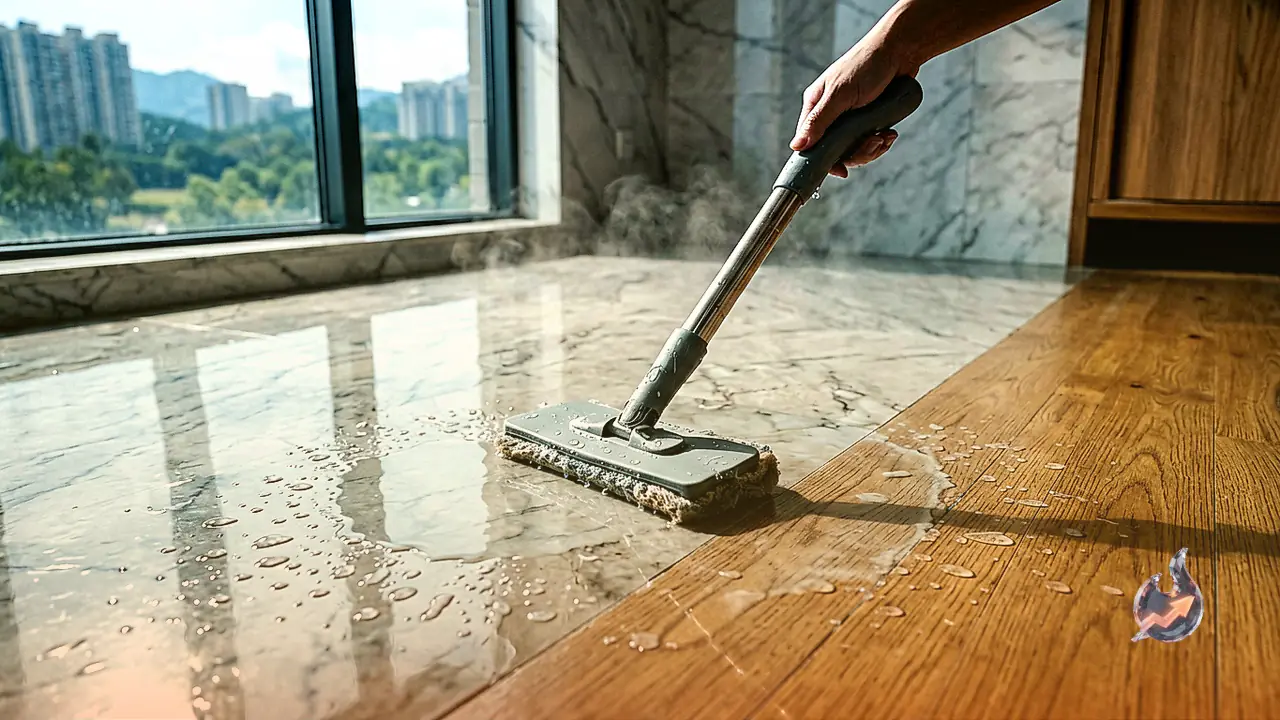
Marble, however, is an extremely sensitive stone. Using harsh chemicals or direct vinegar on marble can permanently strip away its natural shine. The safest approach is to mix a mild pH-neutral liquid cleaner or rock salt into slightly warm water. Always remember to wipe the marble surface dry with a clean cotton cloth immediately after mopping. Wooden flooring is exceptionally vulnerable to moisture damage, as excess water can cause the planks to warp, swell, or develop mold. Limit liquid usage to the absolute minimum on wooden surfaces, opting for a well-wrung microfiber damp mop. Using specialized wooden cleaner sprays is far safer than relying on water.
Four Smart Tips to Prevent Monsoon Stickiness
Keeping indoor floors immaculate during the rainy season requires a few tactical adjustments. First, minimize water usage entirely during mopping by utilizing a spin mop to squeeze out all excess liquid. Immediately after finishing the cleanup, switch on ceiling fans at high speed so that the floor dries completely within minutes. Placing small bowls filled with rock salt or baking soda in the corners of rooms prone to severe dampness helps absorb ambient air moisture. Finally, place thick rubber or coir doormats at every main entrance to prevent outdoor mud and wet footprints from tracking inside the house. Implementing these straightforward practices ensures your home flooring remains dry, spotless, and bright all through the monsoon.