























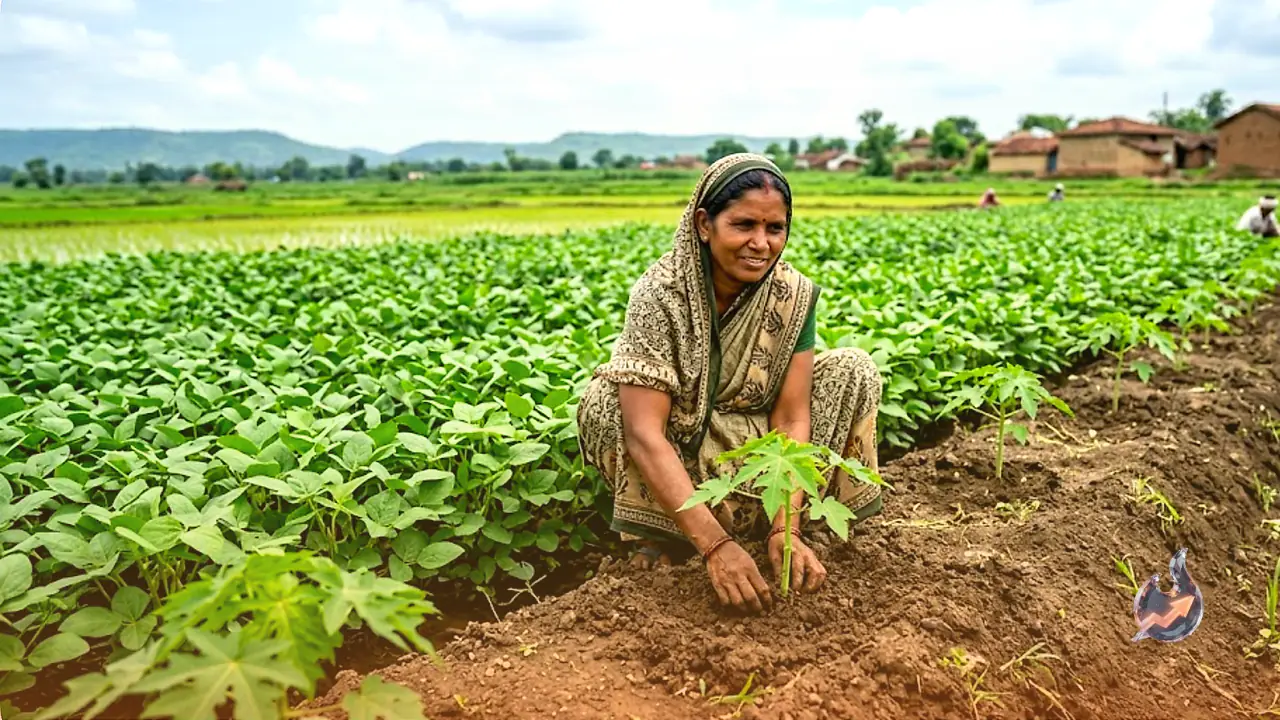

Farmers in Madhya Pradesh's Satna district are turning to an unusual side hustle this monsoon: growing papaya alongside their regular paddy, soybean, sesame and moong crops. Horticulture experts say the rainy season is the ideal window to start a papaya orchard, and July has opened up two clear paths for growers depending on how prepared they already are.
Papaya on the bunds of soybean and paddy fields
Sudha Patel, the horticulture development officer for the Sohawal development block, explains that papaya's biggest advantage is how easily it fits alongside any main crop. Farmers who have already sown paddy, soybean, sesame or moong this season can plant papaya saplings along the raised bunds of their fields and earn extra income without setting aside separate land for it. The opportunity isn't limited to grain and oilseed farmers either. Those who already tend mango, guava or banana orchards can plant papaya in the empty gaps between existing trees, provided there is enough space. The approach squeezes more value out of the same plot of land and opens up a fresh income stream alongside whatever is already growing there.
Missed the June nursery window? July still works
Papaya nurseries are usually raised in June, but a delay of a few weeks is not a dealbreaker. Farmers who already have saplings ready can transplant them directly into the field this month. For those who haven't started at all, the better move in July is to skip direct seed sowing and instead plant out saplings that are already grown. Anyone determined to start an entirely fresh nursery can still sow seeds right now; those seeds take roughly 40 to 45 days to become plantable saplings, which lines up neatly with an August-September transplanting window in the main field.
Taiwan Red Lady and other hybrids driving bumper yields
The rising popularity of papaya farming owes a lot to hybrid varieties that fruit quickly and yield heavily. Taiwan Red Lady, Pusa Taiwan, Pusa Nanha and Pusa Delicious are considered the most dependable choices for farmers chasing better output. Roughly 200 to 250 grams of seed is enough to cover one acre of land. From the point of transplanting, a papaya crop takes about 9 to 10 months to fully mature. Flowering begins within 3 to 4 months of planting, and the fruit ripens and becomes ready for harvest over the following 5 to 6 months. What makes papaya especially attractive as a side income is that a single healthy plant, if properly cared for, keeps producing fruit continuously for 2 to 3 years, giving farmers a steady stream of earnings well beyond the first harvest.
How to raise a papaya nursery in pro trays
Horticulture officials advise against sowing papaya seeds directly in open fields, recommending instead that a nursery always be raised in pro trays first. The process starts with a growing mix of 3 parts cocopeat, 1 part vermiculite and 1 part perlite, packed into a 50 cavity pro tray. Treated seeds are then sown roughly half an inch deep in each cavity and watered lightly with a sprinkler. Under proper conditions, the seeds germinate within 6 to 9 days. With regular light watering and care inside a net house, the saplings are ready for field transplanting in 40 to 45 days. For this July window specifically, experts continue to stress that transplanting saplings that are already raised works far better than sowing fresh seed straight into the field.
Guarding against mosaic disease and boosting yield naturally
Mosaic disease remains the biggest risk in papaya cultivation, making periodic spraying of pesticides and fungicides essential. There is also a home remedy that growers can fall back on. Buttermilk left to ferment in a plastic container for 15 to 20 days, mixed with neem leaves and neem cake, can be diluted in water and sprayed directly on the plants. Cow urine is another remedy commonly used to protect the crop. For stronger growth and higher yield, every plant should also get 10 to 15 kilograms of well rotted cow dung manure. Farmers who get the timing of transplanting right, feed their plants properly and stay on top of disease management can turn papaya into a low cost crop that delivers strong, long running income alongside whatever else they are growing.