























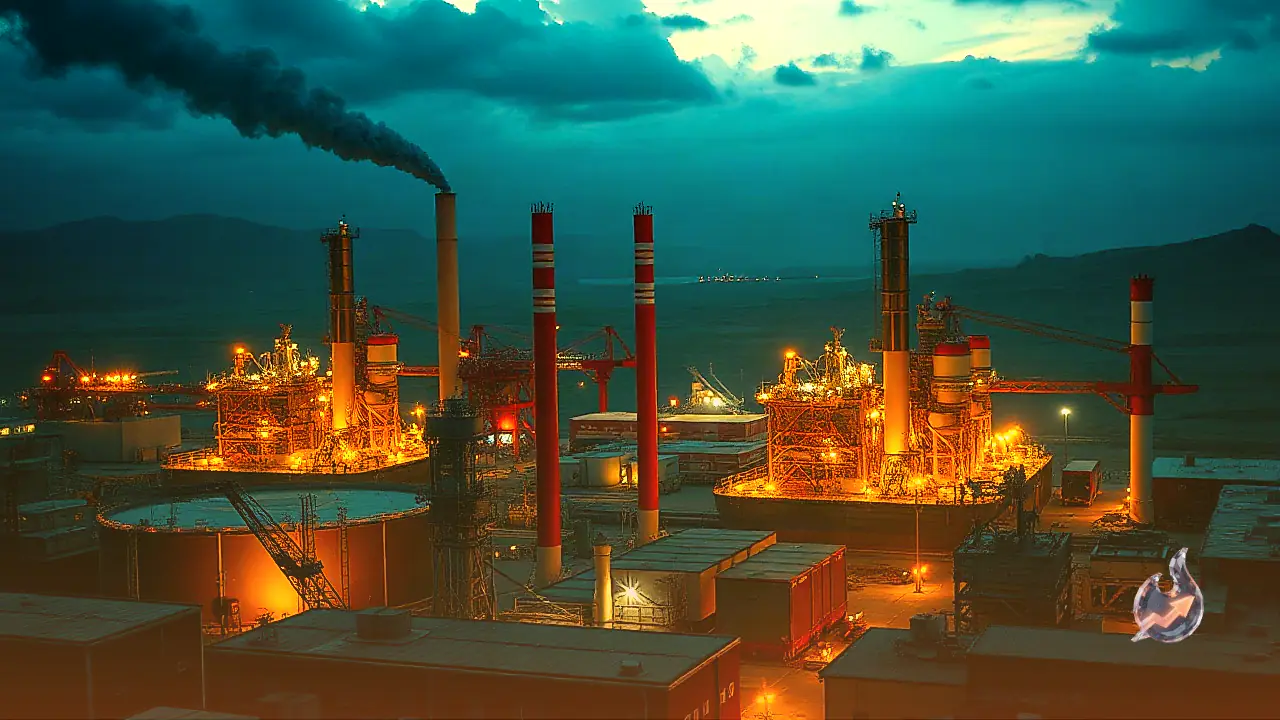

Brent crude is being pulled back toward the $100-a-barrel mark as a fresh wave of attacks on Saudi Arabia's energy infrastructure collides with tightening shipments through the Strait of Hormuz. BNY's Geoff Yu says energy risk has become the single biggest force driving global markets right now, with traders bracing for Brent to trade sustainably above the $100 level.
Saudi Facilities Under Attack
Saudi Arabia has halted operations at several energy facilities in the south of the country after attacks triggered fires and caused injuries on site, escalating the risk to the kingdom's oil supply. According to Yu, the latest strikes follow a string of earlier Houthi attacks on Saudi energy infrastructure, including the Jazan refinery, a 400,000 barrel-a-day plant that had already been sitting offline since July. That means one significant refining unit was already out of action before this latest round of attacks even began, and the fresh damage to southern facilities adds a second front to the disruption. Saudi Arabia is counted among the world's largest oil exporters, so even a partial hit to its facilities ripples quickly through global supply calculations.
The Hormuz Chokepoint Adds To The Squeeze
The damage to Saudi facilities is not happening in isolation. Shipments passing through the Strait of Hormuz, the narrow waterway that carries a large share of the world's seaborne oil exports out of the Middle East, remain constrained because of the ongoing conflict between the United States and Iran. That combination raises the risk of supply losses happening at the same time across more than one major export route out of the region, rather than a single, isolated disruption that markets could absorb more easily. Yu says it is this overlap, Saudi facilities offline on one side and Hormuz shipments squeezed on the other, that is pushing oil prices back up toward the $100-a-barrel mark.
Inflation And Central Banks Caught In The Middle
Yu points out that central banks are reluctant to tighten monetary policy in response to a shock that is coming from the supply side rather than from excess demand. Raising interest rates does little to bring more oil to market; it mainly slows growth and jobs while prices stay high anyway. At the same time, political pressure over the cost of living is building as fuel and energy bills climb, leaving policymakers squeezed between a public demanding relief from rising prices and a set of tools that were not designed to fix a supply shock in the first place. Yu's assessment is that rising oil prices are reinforcing the upside risks to global inflation at a moment when many central banks had hoped the worst of the price pressures was behind them.
Iran And The Houthis Signal Further Escalation
The broader security backdrop is also deteriorating rather than easing. Yu notes that Iran has been signaling a more aggressive military posture, while the Houthis have separately threatened to blockade Saudi oil flows altogether. Neither development has yet translated into a full blockade or a wider conflict, but both add to the sense that the current disruption could deepen rather than fade, reinforcing the upside risks to both energy prices and global inflation that Yu is flagging.
What It Means For Risk Appetite
Beyond the direct hit to oil supply, Yu's reading is that rising crude prices are weighing on broader risk appetite in financial markets. Higher energy costs tend to squeeze corporate margins and household budgets at the same time, a combination that makes investors more cautious about holding riskier assets even when the disruption is confined, for now, to the energy sector. With Brent already retracing back toward $100 a barrel and the underlying causes, the Saudi outages, the Hormuz constraints, and the Iran-Houthi posturing, all still unresolved, Yu's view is that energy risk will keep dictating the tone across markets for as long as the supply picture stays this fragile.