
























The Australian Dollar (AUD) is struggling to hold its ground against the US Dollar and drifting toward the psychologically significant 0.7000 level. A combination of resurgent Middle East geopolitical risk and sharply revised expectations for a Federal Reserve rate increase in December has fueled fresh strength in the Greenback, leaving the AUD on the back foot across the board.
Trump War Threat and Strait of Hormuz Closure Unsettle Markets
On Sunday, US President Donald Trump threatened to restart military action against Iran, casting fresh uncertainty over diplomatic efforts that were already on shaky ground. The threat came precisely as Vice President JD Vance was sitting down with Iranian officials for the first round of talks under an interim peace deal. Compounding the pressure, Tehran announced that it had again closed the Strait of Hormuz, a development that threw the fragile negotiations into further doubt. When the prospect of a prolonged Middle East conflict grows, investors instinctively move away from risk-sensitive assets and seek the shelter of safe-haven currencies like the US Dollar. This dynamic consistently acts as a headwind for the AUD, which is widely regarded as a risk-correlated currency.
Fed Rate Hike Odds Jump from 61% to Over 90% in December
Markets have undergone a sharp repricing of Federal Reserve expectations. According to the CME FedWatch Tool, traders are now assigning over a 90% probability to a rate hike in December, a dramatic shift from the 61% odds recorded just before the Fed's most recent policy decision. This hawkish repricing has handed the US Dollar significant additional momentum. At the same time, the FOMC held its benchmark rate steady at 3.50%-3.75% for the fourth consecutive meeting, exactly in line with market pricing. Fed Chair Kevin Warsh, making his debut at the helm of the central bank, used his first press conference to signal a fundamental rethinking of the communication framework that markets have relied on for the better part of a decade.
The Key Drivers Behind the Australian Dollar
Several interconnected factors govern where the AUD trades at any given moment. Chief among them is the interest rate policy set by the Reserve Bank of Australia (RBA). The RBA fixes the rate at which Australian banks lend funds overnight to one another, which then filters through to broader borrowing costs across the economy. Its primary mandate is to keep inflation within a stable 2-3% band, raising rates when prices run hot and cutting when growth needs support. When Australian interest rates sit high relative to those of other major central banks, foreign capital tends to flow in seeking better returns, which supports the AUD. Lower relative rates do the reverse. The RBA can also deploy quantitative easing, which tends to weaken AUD by expanding credit conditions, or quantitative tightening, which tends to support it by doing the opposite.
China's Economy Exercises an Outsized Influence on AUD
China is Australia's largest trading partner by a wide margin, meaning the health of its economy has a direct and often immediate bearing on the Australian Dollar. When the Chinese economy is growing strongly, it purchases greater volumes of Australian raw materials, goods, and services, driving up demand for AUD as overseas buyers need the currency to settle those transactions. When Chinese growth disappoints relative to expectations, that demand recedes and AUD typically softens in response. Positive or negative surprises in Chinese economic data, whether in trade figures, industrial output, or GDP growth, can therefore move AUD quickly and substantially.
Iron Ore: Australia's $118 Billion Annual Export
Iron Ore is Australia's single largest export, generating approximately $118 billion annually based on 2021 data, with China as its primary destination. Movements in Iron Ore prices therefore have a direct and meaningful bearing on the Australian Dollar. When Iron Ore prices rise, foreign buyers need larger quantities of AUD to pay for shipments, lifting demand for the currency. Higher Iron Ore prices also improve the likelihood of Australia running a positive Trade Balance, which provides the AUD with an additional layer of support. When Iron Ore prices fall, the dynamic reverses: demand for AUD weakens and the currency tends to slide accordingly.
Trade Balance and Market Sentiment Round Out the Picture
The Trade Balance, which measures the gap between what Australia earns from its exports and what it spends on imports, is another variable that shapes the AUD's direction. A trade surplus, where export revenues exceed import costs, signals robust foreign demand for Australian goods, generating net buying pressure on the currency as overseas buyers must acquire AUD to complete their purchases. A trade deficit flips this dynamic and tends to act as a drag on the currency. Beyond the fundamentals, broader market sentiment plays a significant role. During risk-on episodes when investors seek higher returns by embracing riskier assets, the AUD typically benefits from the global appetite for yield. When fear grips markets and capital retreats to safe-haven assets like the US Dollar and Japanese Yen, AUD typically bears the brunt.
GBP, EUR, and Gold: The Broader Market Snapshot
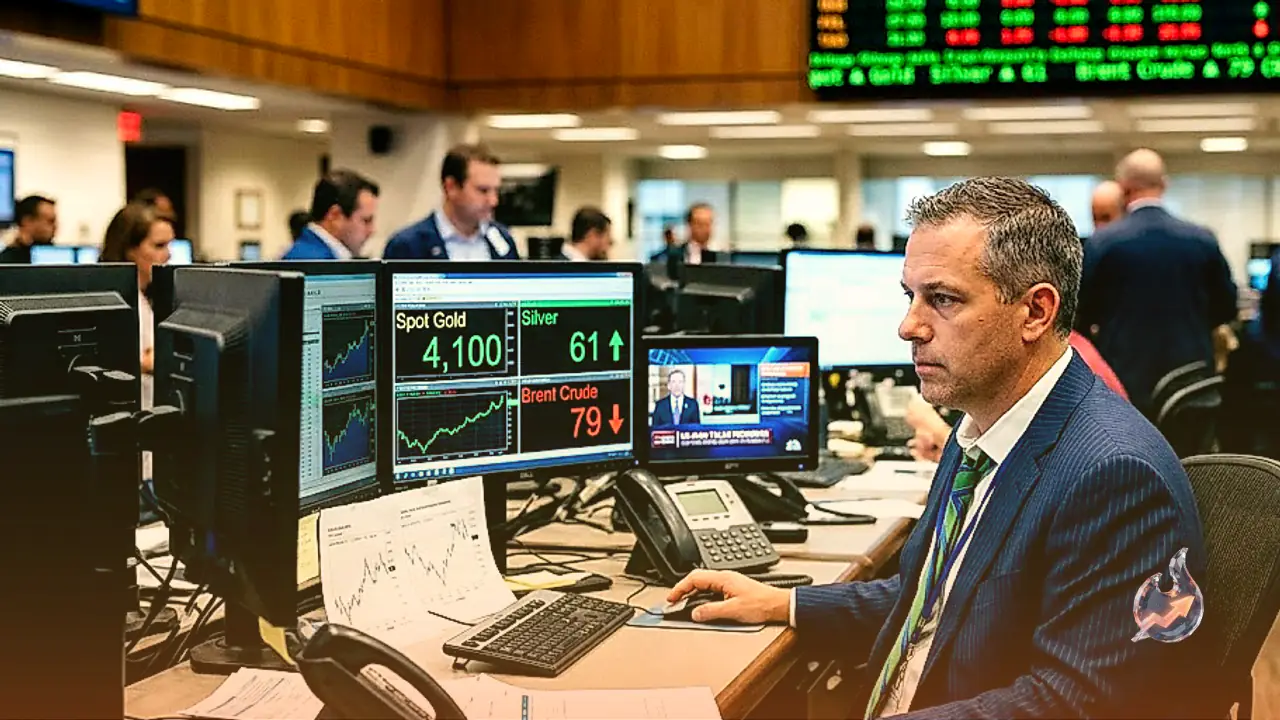
Elsewhere in the currency and commodity markets, GBP/USD managed to recover from a floor near 1.3160 and reclaim the 1.3200 level by the end of the week. Stronger-than-expected UK Retail Sales data provided the British Pound with some support, though the chaotic domestic political environment in the UK is keeping more decisive gains in check for now. EUR/USD staged a modest rebound after slipping to a three-month low below 1.1420, and is now consolidating just above 1.1460, though growing uncertainty over the next round of US-Iran negotiations is limiting any sustained retreat in the US Dollar and keeping the pair's upside capped. Gold, meanwhile, extended its losing streak into a fourth consecutive session, with the precious metal targeting the key $4,100 per troy ounce level as the Fed's hawkish stance and renewed uncertainty around US-Iran talks continue to create persistent headwinds for the safe-haven metal.
US Economy Holding Firm Nearly Four Months Into the Iran War
Despite nearly four months having passed since the start of the Iran war, the US economy has demonstrated remarkable resilience. In the early weeks of the conflict, global energy markets were severely disrupted and Oil prices spiked sharply as supply fears took hold. More recent diplomatic engagement between Washington and Tehran has helped ease some of those concerns about a prolonged energy supply shock, providing markets with a degree of relief even as the broader geopolitical picture remains deeply unsettled.