




















External Affairs Minister Sushma Swaraj transformed Indian diplomacy by embedding a deep sense of humanitarian commitment into the functioning of the Ministry of External Affairs. Throughout her tenure, her central principle remained clear: no matter where an Indian citizen was stranded across the globe, the diplomatic machinery of the country would move swiftly to ensure their safe return home. She remained accessible to citizens in distress, famously declaring that even if an Indian national were stranded on Mars, the Indian embassy would extend all possible assistance. This people-centric philosophy was put to a crucial test when the alarming plight of Uzma Ahmad, an Indian woman trapped in Pakistan, reached her desk in New Delhi. Through unyielding political will and meticulous diplomatic execution, her administration managed to secure Uzma's safe repatriation against formidable odds.
Meeting in Malaysia and Deception in Pakistan
The sequence of events began in Malaysia, where Uzma Ahmad met a Pakistani national named Tahir Ali. On 1 May, she traveled with him to Pakistan. However, upon arriving in Pakistan, Uzma discovered a distressing truth that had been kept hidden from her. Tahir Ali was already married and was the father of four children. Realizing the scale of the deception, Uzma quickly understood that she had fallen into a dangerous position. The surroundings she found herself in offered no safety, rapidly becoming a perilous environment with no direct or easy path of escape.
Forced Marriage at Gunpoint and a Daring Escape Plan
While in Pakistan, Uzma was subjected to harsh coercion and harrowing treatment. She was forced to contract a marriage at gunpoint. When she resisted and refused to acquiesce, she suffered multiple forms of physical and psychological abuse. Despite the extreme pressure, Uzma remained focused on finding a way out. Reaching the Indian High Commission in Islamabad presented immense logistical and safety challenges. To navigate these hazards, a married couple working at the Indian High Commission demonstrated remarkable presence of mind by posing as Uzma's brother and sister-in-law. By gaining Tahir Ali's trust through this arrangement, they successfully enabled Uzma to enter the secure premises of the Indian High Commission.
Citizenship Verification and Sushma Swaraj's Firm Stance
Once inside the Indian High Commission, Uzma recounted the full details of her plight to the diplomatic officials. The following day, officials established direct contact with External Affairs Minister Sushma Swaraj to brief her on the developments. Recognizing the sensitivity of the diplomatic situation, Sushma Swaraj issued immediate instructions to rigorously verify Uzma's credentials as an Indian national. Officials carried out a thorough check of her passport details while simultaneously conducting an address verification for her brother living in India. Sushma Swaraj insisted that every step of the rescue effort be backed by clear legal and authentic documentation. Once her Indian citizenship was fully verified, the minister sent an unequivocal directive to the High Commission in Islamabad. She ordered that even if circumstances demanded keeping Uzma inside the diplomatic compound for one or two years, her safety must never be compromised under any circumstances, establishing that the citizen's security was the government's top priority.
Legal Hurdles, High-Stakes Border Run, and Final Return
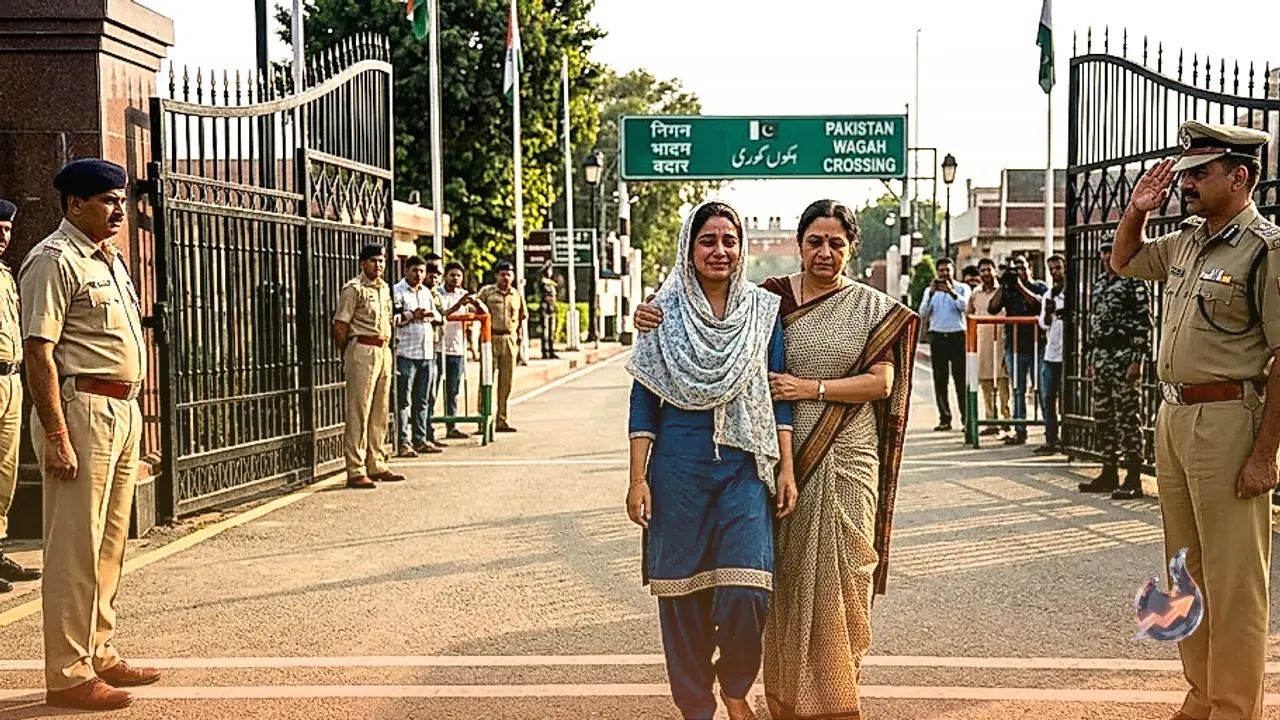
As legal and diplomatic steps were initiated, security tensions around the mission escalated. Tahir Ali, accompanied by four associates, continuously loitered outside the High Commission building, creating a hostile environment. While Indian officials aimed to arrange her return to India as quickly as possible, adherence to formal legal procedures remained mandatory. The certified copy of the High Court order was received only around 2:30 PM, leaving barely one hour before the closure of the Wagah border checkpoint. Given the tight timeline and associated risks, officials decided to keep Uzma safely inside the High Commission for an additional night. At approximately 2:30 AM the following morning, officials dispatched from the Indian High Commission with Uzma to head toward the Wagah border. They arrived at the border around 7:30 AM, roughly two hours before the border gates were scheduled to open. At 9:30 AM, Uzma officially crossed back onto Indian soil, bringing the rescue mission to a successful conclusion.
Political Journey from Ambala to Delhi and a Lasting Legacy
Sushma Swaraj's career in public service was marked by pioneering achievements. Born on 14 February 1952 in Ambala, Haryana, she completed her undergraduate degree in Sanskrit and Political Science from Sanatan Dharma College in Ambala Cantt. She subsequently earned her law degree from Punjab University. Entering active politics during the 1970s, she actively opposed the Emergency. Later joining the BJP, she held numerous key responsibilities, becoming Haryana's youngest cabinet minister at the age of 25. In 1998, she assumed office as Delhi's first woman Chief Minister. Later in her career, she served as India's External Affairs Minister, becoming the second woman to hold this position. During her tenure, she personally oversaw numerous humanitarian missions, bringing back stranded Indians from countries including Bangladesh and Yemen. She passed away on 6 August 2019 at the age of 67, leaving behind a legacy remembered for compassionate diplomacy and public service.