



















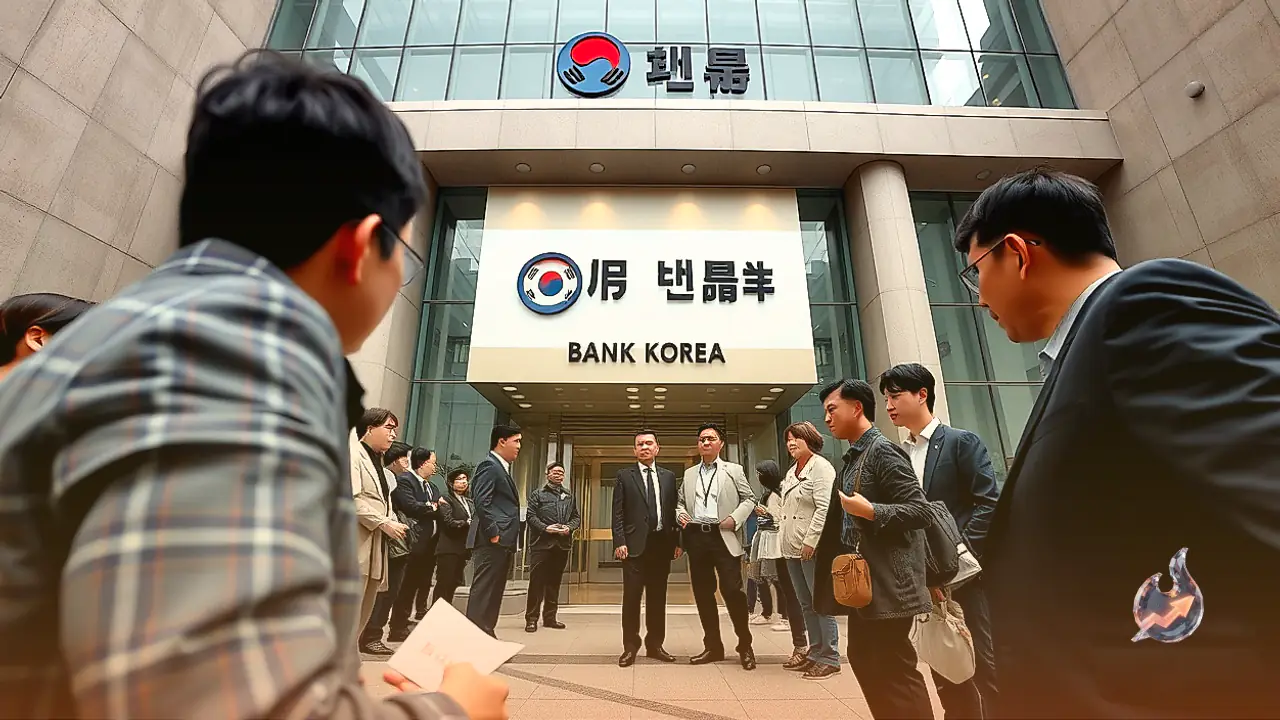

South Korea's central monetary authority is widely projected to exercise caution and hold borrowing costs unchanged in the near term. Standard Chartered economist Chong Hoon Park has highlighted that the Bank of Korea is on track to maintain its benchmark policy rate at 3.00 percent across both its October and November sessions. This expectation persists even as the domestic economy grapples with an uneasy combination of persistent price pressures and resilient gross domestic product expansion.
Sticky Core Inflation Versus Tech Expansion
The macroeconomic picture in South Korea reflects contrasting underlying forces. Core consumer inflation remains persistently sticky, refusing to retreat swiftly toward long-term targets. At the same time, strong momentum within the artificial intelligence sector and robust global demand for semiconductors continue to propel industrial output and broader growth. Such sustained expansion alongside sticky living costs would conventionally trigger additional policy tightening from central bankers.
Indeed, market observers recognize an increasing possibility that policymakers could entertain an interest rate increase at their November meeting. Financial analysts will closely parse the upcoming October policy review to detect any tangible recalibration in the central bank's broader risk assessment. An explicit tilt toward prioritizing price containment could heighten the stakes for late-autumn policy debates, though acute financial headwinds present an immediate counterbalance.
Stock Market Slide Tightens Credit Conditions
The decisive justification for near-term policy restraint originates in the domestic capital markets. A severe downturn across the South Korean stock benchmark, the KOSPI, has generated notable tightening across broader financial conditions. When equity valuations drop sharply, credit access stiffens and capital costs climb organically, effectively delivering monetary tightening without requiring central bankers to lift the benchmark rate themselves.
Because of this market stress, the baseline projection remains a firm hold at 3.00 percent through the remainder of the autumn cycle. The long-term rate trajectory mapped out by Standard Chartered anticipates monetary tightening will eventually resume, but not until 2027. Projections outline an initial 25-basis-point rate hike in early 2027, followed swiftly by an identical 25-basis-point increase during the first half of that year. These complementary adjustments would ultimately settle South Korea's terminal policy rate at 3.50 percent by the close of 2027.
Currency Fluctuations Under Federal Reserve Guidance
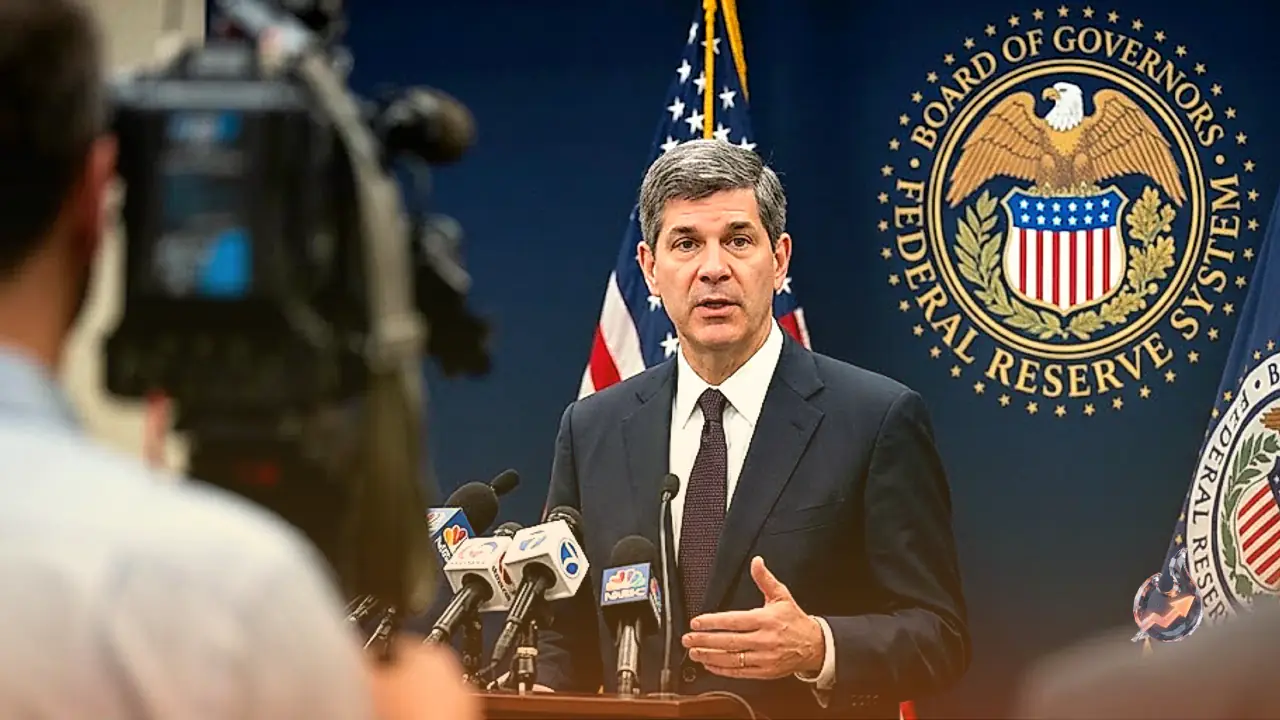
Parallel shifts emerged across international currency and asset markets during Friday's Asian trading session. The Australian dollar gathered upward momentum, climbing progressively toward the 0.6950 threshold against the greenback. Fresh selling pressure mounted against the US dollar following public commentary from Federal Reserve Chair Warsh, which failed to offer forward guidance on borrowing costs.
Chair Warsh reaffirmed an uncompromised commitment to securing price stability across the American economy, yet deliberately withheld forward-looking projections regarding the terminal trajectory of monetary tightening. This lack of explicit policy guidance triggered broad-based dollar liquidations. In tandem, the USD/JPY currency pair slipped beneath the critical 158.00 psychological support zone as traders adjusted their greenback exposure.
Precious Metals and Digital Asset Headwinds
In the commodities arena, spot bullion oscillated within a constrained band immediately beneath the milestone level of $4,200 per troy ounce. Gold displayed erratic fluctuations as market participants balanced a fractional softness in the US dollar index against a tentative stabilization in sovereign US Treasury yields. The conflicting signals kept precious metal traders in a holding pattern ahead of decisive macro releases.
Concurrently, digital asset markets continued to navigate persistent turbulence throughout the initial stretch of October. Bitcoin slid below the $80,000 threshold earlier in the week, reflecting dampened investor enthusiasm and broad institutional hesitation. While the premier cryptocurrency managed a modest recovery back toward $82,000 on Friday, prevailing macroeconomic friction and cooling retail demand continue to exert measurable resistance against sustained upward price momentum.