























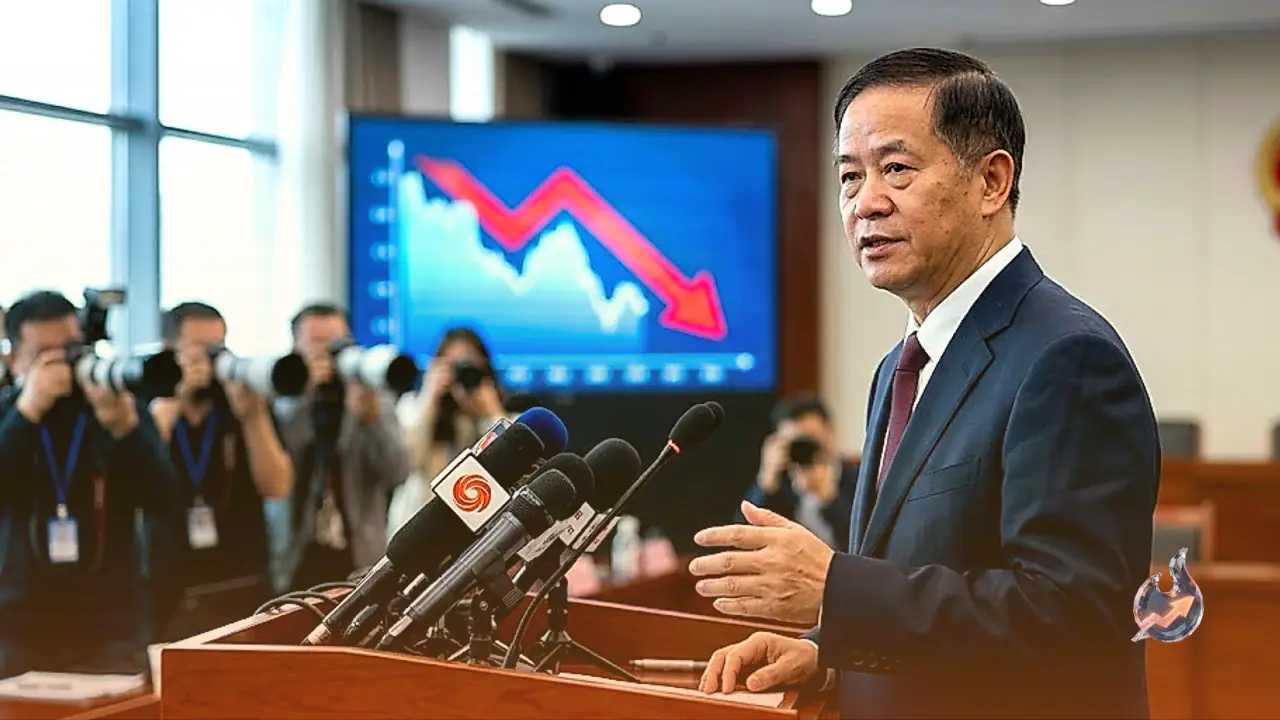

China's currency is drifting higher, and Beijing looks perfectly content to let it happen, just not in a hurry. On Friday the People's Bank of China set the daily reference rate for the onshore yuan noticeably stronger than expected, pushing the fix below the closely watched 6.80 level for the first time since February 2023. The offshore yuan (USD/CNH) dipped soon after, taking its cue from the lower fix. To OCBC currency strategists Sim Moh Siong and Christopher Wong, the message is unmistakable: policymakers are willing to allow further yuan appreciation, but they want to dictate the speed of that climb rather than hand it over to the market.
What a stronger fix really tells us
The daily fix is the rate around which the onshore yuan is allowed to trade, which makes each setting a direct read on the central bank's thinking. On Friday it was set at 6.7989, below 6.80 and lower than the previous 6.8036. In plain terms, the authorities gave the yuan a little more room to firm up against the dollar. When the fix moves lower, in the yuan's favour, it signals that officials are not uncomfortable with a stronger currency and are prepared to let it appreciate gradually.
Why the gap to consensus matters
The full picture, however, is not captured by the 6.80 milestone alone. The fix was still 51 pips weaker than the Bloomberg consensus of 6.7938. In other words, the central bank kept the yuan slightly less strong than the market had expected. That gap is where the real story lies. Sim Moh Siong and Christopher Wong argue that it suggests policymakers are comfortable with further yuan appreciation but remain mindful of the pace. More fixes below 6.80 should continue to support the yuan, yet the distance between market expectations and the actual fix will stay the key clue to reading the central bank's true bias.
The technical picture
On the charts, USD/CNH was last trading around 6.7820. The daily chart still shows mild bullish momentum while the RSI looks flat, which means two-way trade remains likely and no one-directional move is guaranteed. Support sits at the 6.75/76 area, while resistance is seen at 6.80 and then at 6.8320 (the DMA). The overall takeaway is that the yuan has room to strengthen, but every step is likely to come at a measured, controlled pace.
Live market data show USD/CNY hovering near 6.77, down about 0.31% from a previous close of 6.79. Its 52-week range runs from 6.76 to 7.21, and the current price is sitting near that lower end, underlining how far the yuan has firmed recently. On the live readings, the 14-day RSI stands at 41, a neutral zone that is neither overbought nor oversold. Near-term support is seen around 6.76 with resistance around 6.80, closely matching the levels flagged in the strategists' note.
A jittery backdrop across global markets
The yuan's move landed against a shaky start to the week for markets everywhere. The British pound came under extra selling pressure early on, dragging GBP/USD to fresh three-day lows near 1.3350 as the dollar firmed and tensions in the Middle East showed no sign of easing. EUR/USD accelerated its own pullback, sliding toward two-week lows around 1.1380 as the greenback held its ground amid steady geopolitical strain.
Gold was under marked pressure on Monday too, breaking below the key $4,000 per troy ounce level to trade near monthly lows. The retreat in the precious metal came as the dollar recovered and worries mounted over the US-Iran conflict. The crypto market broadly corrected on the same day as risk-averse sentiment set in following fresh military attacks between the US and Iran. Bitcoin hovered above $63,000 with a weak technical structure, while Ethereum traded below $1,800, its next key support seen near $1,700.
Oil added to the unease, climbing nearly 4% as Brent crude pushed above $79 per barrel. The jump followed further attacks between the US and Iran in the Gulf, along with statements from the Iranian regime that it had closed the Strait of Hormuz. Rate expectations swung just as sharply. Markets opened July with a December hike as the base case, then spent five trading sessions unlearning and relearning it. A 57K payrolls print bled the tightening bets out of the strip, while a re-shut Strait of Hormuz pushed them back in. Wednesday's minutes from the June FOMC meeting landed in the middle of that round trip, describing a world that had already stopped existing. Against all that turbulence, the yuan's carefully managed firming shows how deliberately China is steering its currency.