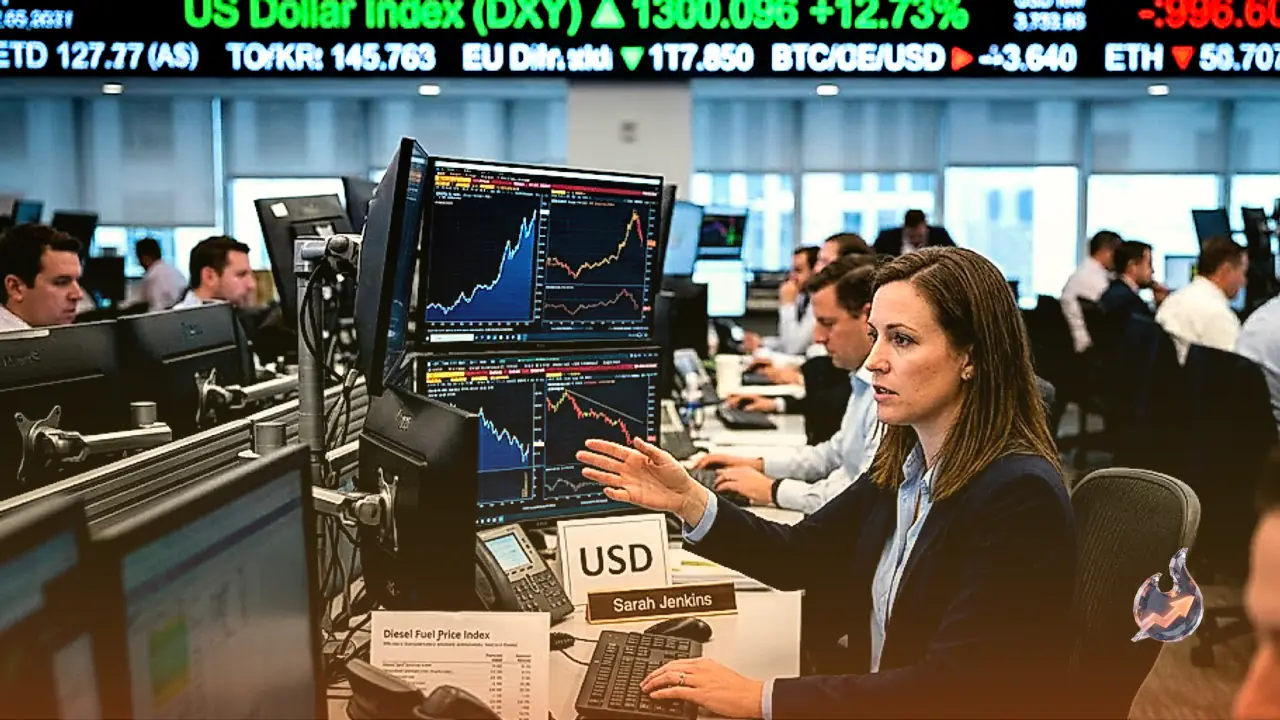

























The Swiss Franc (CHF) weakened significantly against the US Dollar (USD) on Monday as traders reacted to a surge in hostilities across the Middle East. At the time of reporting, the USD/CHF pair was trading around 0.8126, marking a 0.50% gain for the day and hitting its highest level since June 25.
Geopolitical Instability and Market Reactions
Over the past weekend, the United States (US) and Iran exchanged further missile and drone strikes. The situation escalated sharply after Tehran claimed it had once again closed the Strait of Hormuz. This development has triggered a rally in oil prices and fueled widespread concerns regarding global inflation. Despite the heightened geopolitical uncertainty, the Swiss Franc has failed to attract the sustained safe-haven demand that is typically expected during such volatile periods. In fact, the currency has depreciated by more than 5% against the US Dollar since the start of the US-Iran conflict in late February.
The Role of the Swiss National Bank
Pressure on the Swiss Franc is also mounting due to the Swiss National Bank’s (SNB) clear willingness to intervene in the foreign exchange market to curb excessive currency appreciation. Data published on June 30 indicated that the SNB purchased 3.94 billion CHF worth of foreign currency during the first quarter of 2026. Analysts suggest that the central bank remains focused on using FX intervention as a policy tool to discourage speculative buying and prevent the CHF from appreciating beyond desired levels.
Upcoming Economic Catalysts
Market participants are now turning their attention toward Tuesday’s release of the US CPI report and the scheduled congressional testimony by Fed Chair Kevin Warsh. For now, the recovery of the Greenback is weighing on other major currencies, with the British Pound (GBP/USD) sliding toward three-day lows near 1.3360. Similarly, the EUR/USD pair is facing renewed selling interest and is currently confronting the key 1.1400 mark.
Commodities and Crypto Markets
Gold has also shown signs of weakness, trading closer to the critical $4,000 per troy ounce mark. The decline in the yellow metal is largely attributed to the solid performance of the US Dollar and ongoing uncertainty in the Middle East. The cryptocurrency market is similarly experiencing a broad correction; Bitcoin (BTC) is hovering just above $63,000, while Ethereum (ETH) continues to trade below $1,800. Oil prices have surged by nearly 4%, with Brent crude trading above $79 per barrel, reflecting the volatile start to the week as markets grapple with the renewed closure of the Strait of Hormuz.