






















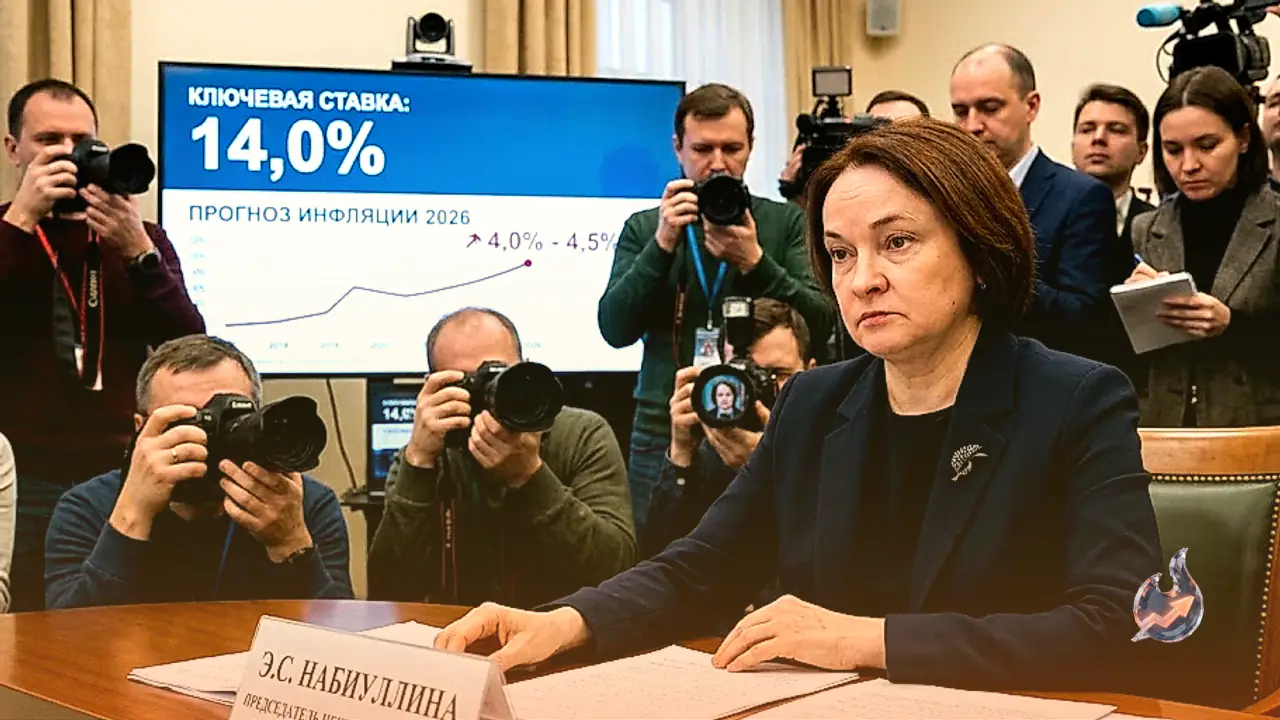

The Russian Central Bank (CBR) recently implemented a 25 basis point reduction in its key policy rate, bringing it down to 14.0%. This monetary easing arrives despite the institution revising its 2026 inflation projections upward and warning of underlying stagflationary macroeconomic conditions. The decision has ignited discussions among market watchers regarding the central bank's policy credibility and potential political pressures influencing its trajectory.
Rate Cut Amid Upgraded Inflation Projections
Commerzbank’s Tatha Ghose highlighted that the rate reduction caught many by surprise, though it remained within the broader spectrum of plausible outcomes. The central bank elevated its 2026 inflation forecast to a range of 6.0%-7.0%, shifting upward from the previous 4.5%-5.5% estimate. Officials attributed this adjustment largely to a substantial surge in fuel prices, while maintaining a long-term stance that inflation will eventually converge back toward the 4% target by 2027.
Justifying the Easing and Persistent Risks
To defend the policy shift, the monetary authority pointed toward contained underlying price pressures. Data indicated that SAAR inflation averaged 5.0% in the second quarter, easing down from 8.7% in the first quarter, while core inflation moderated from 6.2% to 4.2%. Furthermore, metrics tracking underlying price changes reportedly continue hovering within the 4% to 5% annualized bracket.
However, this rationale faces skepticism from market analysts. Recent inflation figures accelerated through June and July, touching 5.9% by July 20. Concurrently, inflation expectations among households, businesses, and financial participants have drifted upward. The central bank itself acknowledges that if these elevated expectations persist, they could obstruct any sustainable deceleration in consumer price growth.
Political Pressure and Artificial FX Valuation
Financial markets typically react negatively to central banks that lower borrowing costs while simultaneously raising inflation forecasts, as such moves undermine institutional credibility and weigh on currency valuations. While Russia does not operate under standard market norms, the underlying principles of monetary independence remain a focal point. Analysts point out that USD/RUB and EUR/RUB function as artificial exchange rates, meaning this specific policy manoeuvre is unlikely to inflict a noticeable impact on the Ruble's market valuation.
Meanwhile, broader foreign exchange markets continue to experience routine fluctuations. The GBP/USD pair reversed direction during the second half of Monday's session, trading in negative territory near the 1.3300 handle after beginning the week with bullish momentum. Declining crude oil prices, following a temporary pause in Middle East hostilities, constrained the greenback's gains and provided support for the currency pair to hold its ground.
Similarly, the EUR/USD pair relinquished its bullish momentum, trading with modest gains below 1.1400 during Monday afternoon trade. Market participants remain cautiously optimistic regarding a potential de-escalation in the Middle East following a temporary halt in strikes, though uncertainty persists regarding whether diplomatic channels between the United States and Iran can yield a lasting resolution.