























Wall Street looked set for a brighter open on Thursday, with futures tied to the major US indices climbing in European trading as a fresh burst of optimism in chip and artificial intelligence names did the heavy lifting. Dow Jones futures edged up 0.15% to trade near 52,350, while S&P 500 futures gained 0.80% to around 7,490 and Nasdaq 100 futures jumped 2.25% to roughly 30,180.
The mood was a sharp turnaround from Wednesday's mixed regular session, when losses in heavyweight technology stocks dragged on the indices. That left the Nasdaq 100 down 0.4% and the S&P 500 off 0.1%, even though the Dow Jones managed to squeeze out a 0.34% gain.
Chip and AI stocks lead the charge
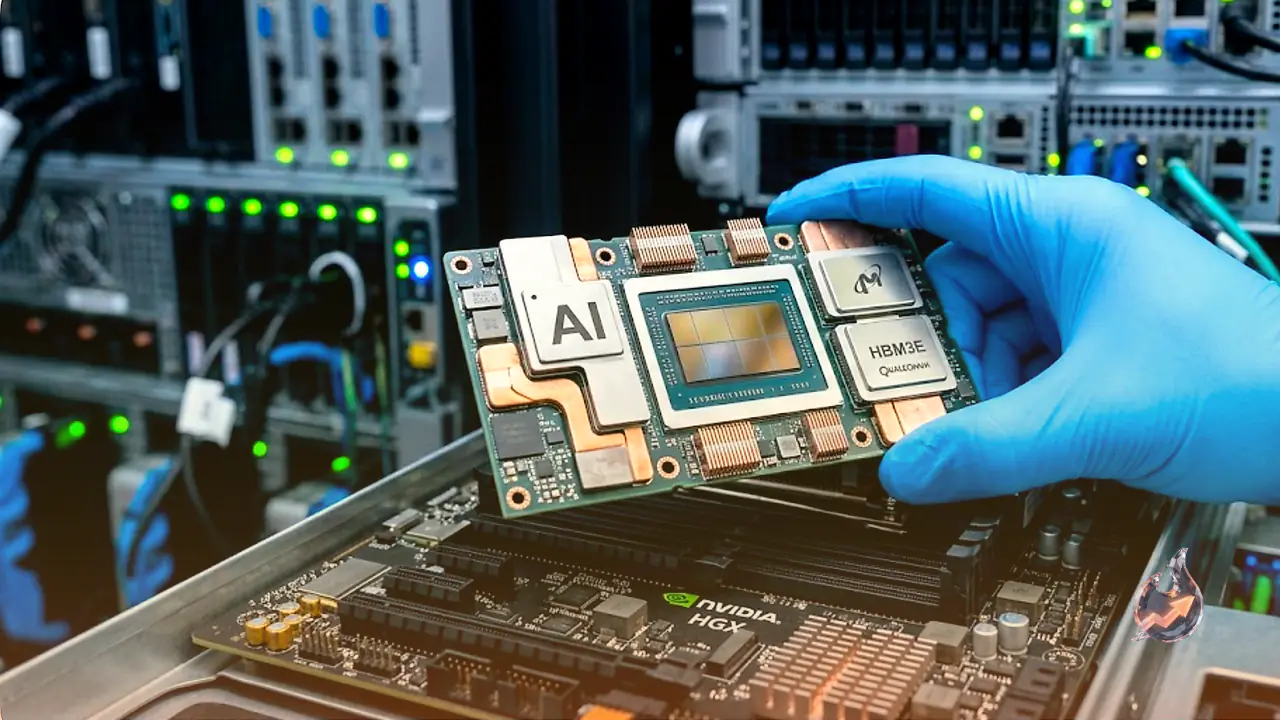
The latest leg higher was driven largely by strong semiconductor outlooks that revived interest in the artificial intelligence sector. Micron Technology soared more than 15% in after-hours trading after beating third-quarter expectations and issuing a massive revenue forecast of $50 billion for the current quarter, well above analysts' $43.58 billion estimate.
Qualcomm also rallied 13% after aggressively lifting its fiscal 2029 non-handset revenue target to $40 billion. The enthusiasm spread across the wider chip industry, pulling up other related names such as SanDisk, Western Digital and Marvell Technology.
All eyes on the PCE inflation report
With futures pointing higher, traders have shifted their focus to the upcoming US Personal Consumption Expenditures (PCE) report, the Federal Reserve's preferred inflation gauge. Economists expect the headline index to accelerate to 4.1% year-over-year in May, up from April's 3.8% print. Core PCE, meanwhile, is projected to edge up to an annual rate of 3.4%, a sign that underlying price pressures remain sticky.
What the Dow Jones Industrial Average is
The Dow Jones Industrial Average is one of the oldest stock market indices in the world, made up of the 30 most heavily traded stocks in the US. Rather than being weighted by market capitalization, it is price-weighted, calculated by adding up the prices of its constituent stocks and dividing the total by a factor that currently stands at 0.152. The index was created by Charles Dow, who also founded the Wall Street Journal. Over the years it has drawn criticism for not being broadly representative, since it tracks just 30 large companies, unlike wider benchmarks such as the S&P 500.
What moves the Dow
A range of factors drive the Dow Jones Industrial Average. The biggest is the combined performance of its component companies, revealed through quarterly earnings reports. US and global macroeconomic data also play a part, as they shape investor sentiment. Interest rates set by the Federal Reserve matter too, because they affect the cost of credit that many large corporations depend on. That makes inflation, along with other figures that feed into the Fed's decisions, a major influence on the index.
Dow Theory and reading the trend
Dow Theory is a method, developed by Charles Dow, for identifying the primary trend of the stock market. A central step is to compare the direction of the Dow Jones Industrial Average and the Dow Jones Transportation Average, and to act only on trends where both move the same way. Volume serves as a confirming signal. The theory relies on peak and trough analysis and lays out three phases of a trend: accumulation, when smart money begins buying or selling; public participation, when the broader public joins in; and distribution, when smart money steps out.
Ways to trade the Dow
There are several ways to trade the index. One is through ETFs, which let investors treat the Dow as a single security instead of buying shares in all 30 companies, with the SPDR Dow Jones Industrial Average ETF (DIA) being a leading example. Futures contracts allow traders to bet on the index's future value, while options give the right, but not the obligation, to buy or sell it at a set price down the line. Mutual funds, in turn, let investors own a slice of a diversified basket of Dow stocks and gain exposure to the index as a whole.