
























Geopolitical skirmishes in the Middle East and high-stakes central bank policies are steering global commodity and financial markets into highly volatile territory. While escalations near crucial maritime chokepoints have sent shockwaves through energy sectors, some market strategists believe that unorthodox logistics will help mitigate the worst of the crude oil supply shocks. Concurrently, currency markets are showing signs of strain, gold is retreating from record territory, and digital assets are maintaining a cautious but positive posture ahead of critical monetary policy updates.
The Strait of Hormuz Conflict and Covert Shipping Solutions
A critical assessment of the ongoing maritime tensions reveals that while the Strait of Hormuz remains a dangerous flashpoint, the global oil trade is proving remarkably resilient. Analysts Charlie Lay and Dr. Henry Hao of Commerzbank have shared crucial insights on how the energy market might navigate these turbulent waters. They observe that although hostilities in this vital passage have triggered a sharp spike in Brent crude prices, a diplomatic resolution between the warring factions appears highly improbable at this stage.
However, the lack of a formal peace agreement does not necessarily seal the fate of global energy security. The research team suggests that a gradual de-escalation of physical supply disruptions is likely to unfold over the coming months. This recovery in Gulf region oil shipments will largely be driven by tankers executing covert transits through the strait. These stealth shipping operations, often involving turned-off transponders or alternative route planning, will allow crude to continue flowing to global markets. In contrast, the outlook for refined petroleum products and natural gas is far more problematic. Disruptions in both transportation networks and production facilities are expected to persist, keeping these supplies constrained for a much longer period.
Supply Shocks Intensify Amid Geopolitical Disruption
The delicate balance of the oil market was thrown into further disarray by a series of dramatic events over the weekend. Early Asian trading sessions have once again placed crude oil at the center of investor attention. Although Wall Street experienced a relief rally on Friday as Brent crude prices retreated from the USD 110 threshold, that optimism was short-lived. A subsequent shutdown of a key Saudi pipeline, the seizure of Perim Island by Houthi forces, and the sudden postponement of crucial diplomatic talks regarding the Strait of Hormuz have reignited intense supply anxieties among global buyers.
Looking at the numbers, Brent crude oil recorded a 2.8% decline on Friday, settling at USD 104.61. Despite this single-day drop, the energy benchmark recorded an impressive 8.7% gain over the course of the week. This surge followed a nearly 8% increase during the preceding week, resulting in a staggering cumulative gain of 17% over a two-week period. This rapid price appreciation underscores how sensitive global supply chains remain to sudden military and political shifts in the Middle East.
Currency Markets React to Central Bank Speculation
The ripple effects of energy instability and macroeconomic policy anticipation are highly visible in foreign exchange markets. The AUD/USD currency pair experienced downward pressure during Monday's Asian trading session, touching a one-and-a-half-week low around the 0.7140 level. Although the pair lacked strong downward momentum to break lower, spot prices hovered just above the mid-0.7100s, marking a daily decline of approximately 0.25%.
Simultaneously, the USD/JPY pair found support at the start of the week. Buyers stepped in to push the pair closer to the 154.00 level during Asian trading, clawing back a portion of the losses suffered on Friday. Nevertheless, spot prices remained confined within a familiar trading range that has held for over a week. The currency pair remains very close to the nearly seven-month low reached last Tuesday. Traders in this sector are largely keeping their positions limited as they await major central bank meetings scheduled for later in the week.
Gold Slides as Dollar Strengthens Ahead of Federal Reserve Meeting
Precious metals have also felt the heat of a surging US currency. Gold prices tumbled past the $4,300 mark on Monday, driven down by a massive wave of demand for the US Dollar. Investors are aggressively positioning themselves ahead of the Federal Reserve's critical monetary policy decision scheduled for this Wednesday.
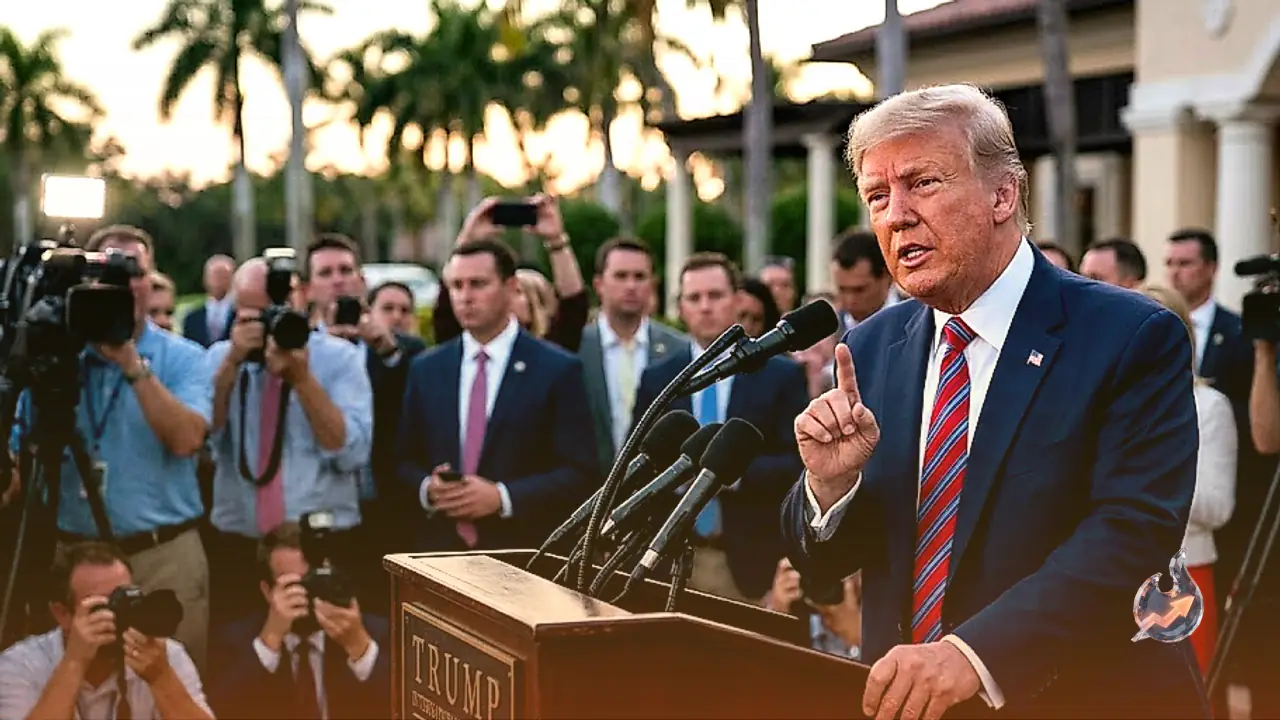
The primary catalyst for this shift is the rising expectation of a potential interest rate hike. Recent inflation data, specifically the Producer Price Index (PPI) and Consumer Price Index (CPI) reports, have fueled hawkish bets among market participants. Wall Street will be looking closely at the Federal Reserve's updated dot plot, which outlines policymakers' future interest rate projections. This document will be absolutely pivotal in determining whether the US Dollar can sustain its upward momentum. Furthermore, the political backdrop is growing increasingly tense; Kevin Warsh, who is being considered for an influential role, faces a stern test of his policy independence as Donald Trump continues to apply pressure on the central bank to implement lower interest rates. For the greenback to continue its rally, the central bank must fully validate the market's hawkish expectations.
Cryptocurrency Markets Demonstrate Resilience
While traditional commodities and currencies grapple with intense volatility, the digital asset ecosystem is displaying a stable, slightly bullish performance. Bitcoin was seen trading higher on Monday, hovering near the $77,884 mark. This upward movement aligned with broader positive sentiment across the wider cryptocurrency space.
Other major digital currencies have mirrored this supportive trend. Ethereum managed to hold onto its key support level at $2,521, while Ripple maintained its footing at $1.38. Both assets are currently following Bitcoin's neutral-to-bullish trajectory, showing that crypto investors are maintaining their positions despite the macroeconomic storms brewing in traditional fiat and energy markets.