























The global financial landscape is closely watching the upcoming decisions of the US Federal Reserve, as market expectations begin to shift toward a more conservative monetary policy path. Following the address delivered by Chair Kevin Warsh at the Jackson Hole symposium, projections for the central bank's next moves have undergone a notable adjustment. Analysts are now pointing toward a 25 basis point (25bp) interest rate hike in September as the highly likely outcome. This shift in perspective is not merely a short-term reaction but is increasingly justified by the macroeconomic data that has emerged since the high-profile symposium. Current assessments of labor market trends and inflation trajectories suggest that the central bank may not need to embark on a prolonged series of consecutive interest rate hikes, challenging the traditional assumption that a single rate hike is always followed by subsequent increases.
Market Expectations and the One and Done Scenario
Under normal economic circumstances, market participants operate under the assumption that when the Federal Reserve decides to raise interest rates, it rarely does so in isolation. Historically, a single hike is viewed as the beginning of a larger tightening cycle. Reflecting this conventional wisdom, financial markets are currently pricing in an additional two and a half rate hikes following the highly anticipated policy move scheduled for September 16. This September 16 hike is widely regarded by market participants as an all-but-assured event. However, despite these aggressive market bets, current analysis suggests a different reality: a "one and done" scenario where the September hike is the sole adjustment for the foreseeable future. Projections for both employment and inflation do not support the necessity of an extended series of rate hikes, indicating that the central bank might pause immediately after the September meeting to assess the lagging impact of its monetary policy.
Analyzing the Economic Indicators behind the Policy
A deeper look into the macroeconomic data reveals the underlying reasons for this projected pause in rate hikes. Since the Federal Reserve last updated its official economic forecasts, several key data points have indicated a cooling of the US economy. Firstly, the Gross Domestic Product (GDP) report for the second quarter came in weaker than market analysts had anticipated. Secondly, despite an unexpected positive surprise in the August employment figures, the overall trend in job creation has clearly begun to soften. On the inflation front, there are encouraging signs of deceleration, even though the year-on-year rate remains above the Federal Reserve's long-term 2% target. Several structural factors are expected to contribute to the convergence of inflation toward this 2% target by next year. These include weak wage growth, upcoming tariff refunds, and a stagnant housing market that is projected to slow down shelter inflation. However, this path toward lower inflation is not entirely without risks, with volatile energy prices representing the primary threat that could disrupt the downward trajectory of consumer prices.
The US Dollar and Global Foreign Exchange Reactions
The shifting expectations for Federal Reserve policy have direct implications for the US dollar and global currency markets. While some might expect a rising interest rate environment to trigger a massive rally in the greenback, analysts believe that the US dollar does not need to rally significantly from its current levels. This is because the expected September rate hike is viewed as a policy recalibration rather than the commencement of a brand-new tightening cycle. Consequently, the long-term projection for the US dollar remains on a downward trajectory through next year. This decline is expected to become particularly pronounced during the second quarter of next year, a period when US inflation is projected to return to its target. Once inflation is stabilized, money markets are highly likely to shift their focus away from policy tightening and instead prepare for monetary easing, putting downward pressure on the dollar.
Performance of Major Currency Pairs
In the immediate foreign exchange markets, these macroeconomic expectations are reflected in the price action of major currency pairs
- The AUD/USD pair experienced downward pressure during Monday's Asian trading session, touching a one-and-a-half-week low around the 0.7140 region. Despite this drop, the pair lacked follow-through selling momentum. Spot prices eventually stabilized to trade just above the mid-0.7100s, representing a decline of approximately 0.25% for the day.
- The USD/JPY pair attracted buyers at the beginning of the week, climbing closer to the 154.00 mark during the Asian session. This upward movement reversed a portion of the losses recorded on Friday. However, the pair remains largely confined within a familiar trading range that has held for over a week, staying within striking distance of a nearly seven-month low touched last Tuesday. This range-bound trading comes as currency traders globally await key central bank events scheduled for later in the week.
Gold Slides as Cryptocurrencies Show Resilience
The impact of these financial shifts extended across the commodity and digital asset markets. Gold accelerated its downward trend on Monday, sliding close to the $4,250 mark per troy ounce. This decline pushed the precious metal near multi-week lows, driven by a sharp rebound in both the US dollar and US Treasury yields across the curve. The retracement in gold prices is heavily influenced by steady market speculation regarding a Fed interest rate increase, alongside reignited inflation worries sparked by a parallel rally in crude oil prices.
Meanwhile, the cryptocurrency market displayed notable resilience and upward momentum. Bitcoin edged higher on Monday, trading near the $77,884 level, moving in tandem with broader gains observed across the wider digital asset market. Other leading cryptocurrencies followed a similar neutral-to-bullish path, with Ethereum holding its key support level at $2,521 and Ripple maintaining its position at $1.38.
Inflation Reports, Dot Plot, and Political Independence
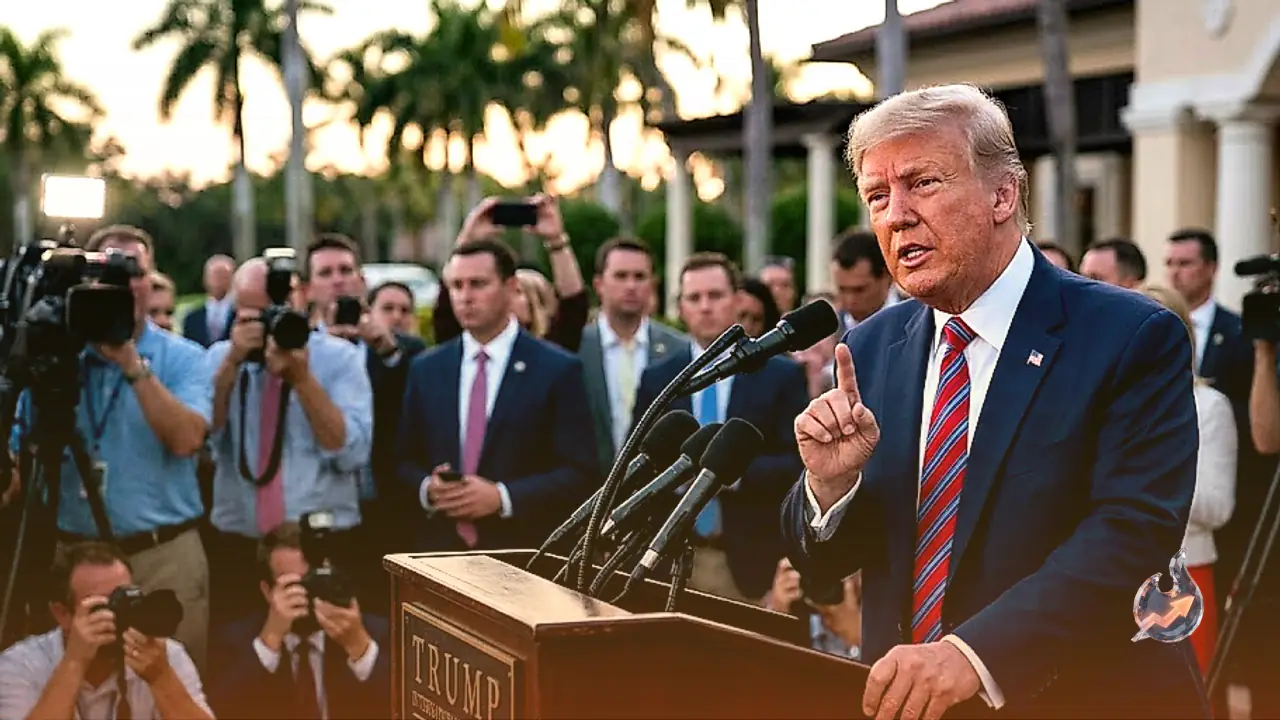
Market expectations for a Federal Reserve rate hike have intensified following the recent releases of the Producer Price Index (PPI) and Consumer Price Index (CPI) reports. Moving forward, the Federal Reserve's updated dot plot will be of paramount importance, serving as a crucial catalyst for how the US dollar reacts in the coming weeks. Furthermore, the political backdrop adds an extra layer of complexity. Chair Kevin Warsh's central bank independence faces a major test as Donald Trump continues to exert pressure for lower interest rates. For the US dollar to extend its recent gains, the Federal Reserve will need to fully satisfy the hawkish expectations currently priced into the financial markets.