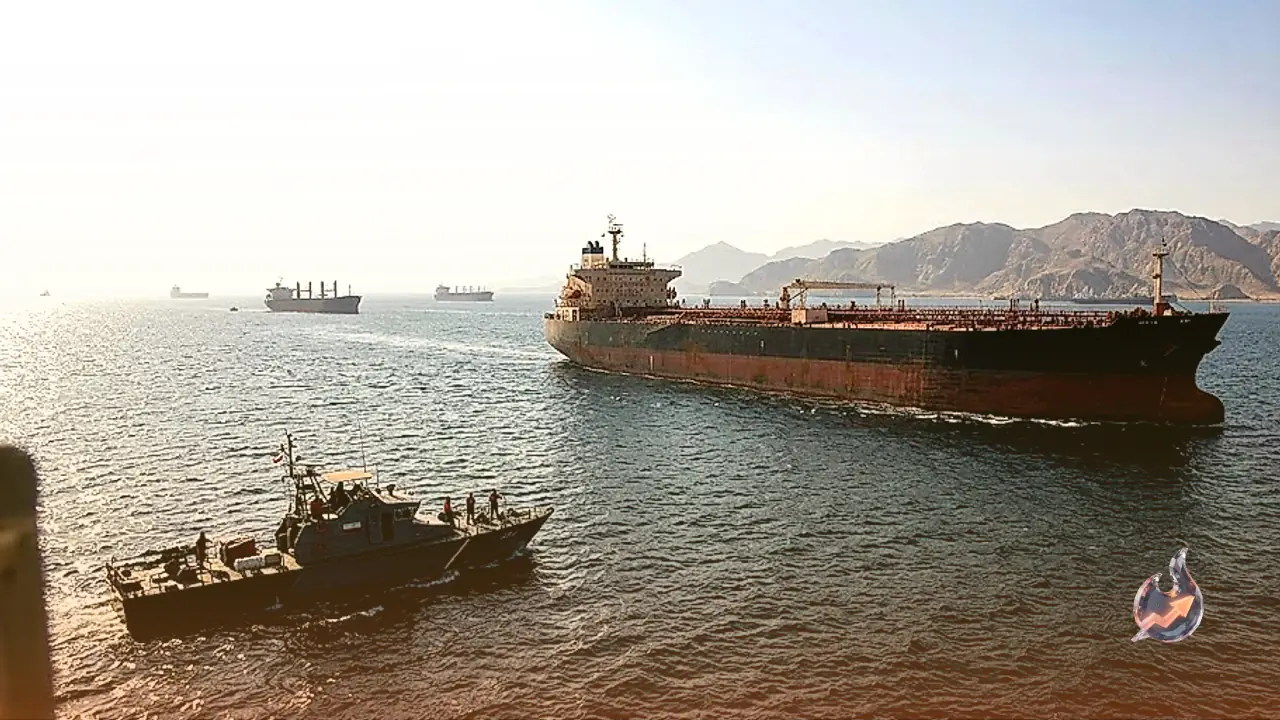

























Crude oil prices witnessed a renewed upward push as traders digested escalating geopolitical strife across key transit corridors. During Asian trading hours on Tuesday, West Texas Intermediate, widely known as WTI crude, traded near $98.40 per barrel, rebounding after posting modest declines in the prior session. The price recovery comes as participants in global energy markets carefully assess mounting disruptions across the Middle East and Eastern Europe alongside practical initiatives aimed at keeping oil tankers moving.
Maritime Attacks in the Persian Gulf and Red Sea Chokepoints
The security landscape surrounding critical Middle Eastern waterways has worsened over recent days. Iran has maintained a visible grip on the vital Strait of Hormuz, while international maritime agencies documented multiple strikes on commercial merchant vessels traversing regional waters. At the same time, military exchanges intensified between Saudi Arabia and Iran-aligned Houthi forces based in Yemen. Compounding the situation, armed forces in Eastern Europe renewed reciprocal strikes targeting vital energy infrastructure across both Russia and Ukraine.
These targeted strikes across commercial maritime routes triggered an immediate and sharp drop in crude transport volumes. Tracking data compiled by analytics company Kpler revealed that crude shipments passing through the Middle East tumbled to a seven-day average of approximately 8.5 million barrels per day last week. That marks a dramatic plunge from the pace of more than 20 million barrels per day recorded during the preceding week, driven by at least 10 documented strikes and safety incidents involving merchant vessels. The immediate threat prompted several vessel operators to alter routes or delay sailings.
Stabilization Initiatives and Sanction Adjustments
Even with substantial disruptions to commercial lanes, energy authorities are reporting early signs of operational recovery. US Energy Secretary Chris Wright noted that overall crude transport out of the Persian Gulf has clawed back to roughly 80% of levels seen prior to the war, although the movement of refined fuel products continues to face tight logistical constraints. To prevent broader supply shortfalls in international markets, the Trump administration has moved to authorize transactions involving sanctioned tankers, aiming to integrate legal oil transport from an estimated 1,600 vessels operating within the global dark fleet.
In parallel, President Trump granted a sanctions waiver on Russian oil shipments, which has significantly relieved fuel procurement anxieties for India, a major global buyer of Russian crude. The decision is viewed as a supportive diplomatic maneuver that stabilizes New Delhi's energy access while clearing the path for renewed momentum toward an elusive bilateral trade agreement between the United States and India.
Understanding WTI Crude and the Cushing Hub
West Texas Intermediate represents a cornerstone grade in the global physical and derivatives trade for petroleum. Alongside Brent and Dubai Crude, WTI serves as one of the three foundational pricing benchmarks for worldwide energy transactions. Petroleum engineers and traders classify WTI as a light and sweet crude owing to its low density and relatively low sulfur content. These intrinsic physical qualities make it exceptionally well suited for refining into high-value consumer fuels, including gasoline and diesel, with lower processing costs.
Sourced predominantly from oil fields across the United States, WTI crude is gathered and distributed through a massive logistics complex situated at Cushing, Oklahoma. Commonly referred to throughout the industry as The Pipeline Crossroads of the World, Cushing houses immense storage tank farms and serves as the physical delivery mechanism for futures contracts. As a result, spot and futures movements in WTI function as an essential barometer for macroeconomic energy trends reported by financial media worldwide.
Core Drivers Influencing Petroleum Valuations
The valuation of WTI crude adheres to fundamental marketplace dynamics governed by aggregate supply and demand. Broad-based international economic growth typically spurs industrial production and consumer travel, creating upward momentum for fuel consumption and lifting prices. Conversely, periods of slowing macroeconomic activity dampen industrial demand and place downward pressure on prices. Outside of fundamental consumption, sudden shocks caused by armed conflicts, territorial disputes, and trade embargoes frequently disrupt supply routes, introducing steep risk premiums into market pricing.
Currency movements play an equally pivotal role in shaping crude valuations. Because international oil contracts are predominantly priced and settled in US Dollars, shifts in the greenback directly alter fuel affordability for international consumers. A weaker dollar effectively reduces the local currency cost of purchasing oil for foreign buyers, boosting consumption. In contrast, a strengthening dollar raises import expenses for non-dollar economies, which can soften underlying demand. Beyond currency effects, production quotas agreed upon by major exporting nations continually steer supply expectations.
Inventory Reports as Market Indicators
Energy traders rely heavily on regular inventory readings to gauge the immediate tightness of the physical market. The American Petroleum Institute, an industry trade body, issues its confidential inventory assessment every Tuesday afternoon, followed by the official government figures released on Wednesday morning by the Energy Information Administration. These reports track net weekly additions or withdrawals from national crude and product stockpiles.
A documented decrease in commercial inventories signals that refining consumption is outpacing new arrivals, typically exerting upward pressure on benchmark prices. Alternatively, accumulating stockpiles point to slackening demand or oversupply, dampening price levels. Historically, findings from the two organizations track each other closely, aligning within a 1% margin roughly 75% of the time, though institutional traders regard the EIA figures as the definitive standard due to its standing as an official statistical agency.
The Strategic Influence of OPEC and OPEC+
The Organization of the Petroleum Exporting Countries functions as a consortium of 12 oil-rich nations that coordinate their output policies during formal biannual assemblies. By raising or lowering mandatory member production ceilings, OPEC exercises direct leverage over available global supplies. Decreases in assigned quotas restrict crude availability on international exchanges, creating price appreciation, whereas increases in volume allotments can dilute prices.
Over the past decade, this coordination has expanded under the OPEC+ framework, which incorporates 10 non-member crude producers, foremost among them the Russian Federation. By aligning production strategies between historical Middle Eastern exporters and non-OPEC suppliers, the extended alliance commands significant influence over global oil balances and market stability.
Broader Market Movements in Currencies and Gold
The geopolitical frictions supporting crude oil coincided with distinct moves across international foreign exchange and bullion markets. The Australian Dollar posted a second consecutive session of advances against the US Dollar, trading up more than 0.50% at 0.6980. The Australian currency drew momentum from strengthening risk appetite alongside higher-than-expected economic figures from China, where retail sales and GDP growth numbers showed renewed resilience.
Meanwhile, the US Dollar stayed under pressure against the Japanese Yen, with USD/JPY hovering defensively around 158.00 during Asian trading hours. A recent decline in benchmark US Treasury yields pulled the dollar toward a two-week trough. Supportive remarks from Bank of Japan Governor Kazuo Ueda, coupled with the persistent threat of currency intervention by Japanese authorities, limited yen selling. Nevertheless, market expectations regarding Federal Reserve interest rate policy and elevated geopolitical uncertainties helped cushion broader dollar downside.
In precious metals, gold experienced a downward drift, sliding toward $4,135 per ounce early Tuesday. Even as energy costs fluctuated, resilient US bond yields weighed on the zero-yielding metal. Spot gold has faced repeated resistance above the $4,200 threshold, remaining trapped within a narrow consolidation band despite a background of geopolitical conflict that typically bolsters haven assets. Traders are now withholding aggressive bets as they await guidance from next week's Federal Reserve monetary policy gathering.