























Crude oil prices took another sharp leg lower on Wednesday, with West Texas Intermediate (WTI) shedding more than 3% as tankers that had been stuck in the Strait of Hormuz began flowing back into the market. The selling came after the United States and Iran reached an interim peace agreement, and at the time of writing WTI was changing hands near $70.20 a barrel, its weakest level since early March, when the conflict between the two countries first erupted.
That price tag means the contract has now handed back nearly all of the gains it built up during the Middle East war, as traders unwind their fears of a major supply shock. Adding to the downward pressure, the US has agreed to temporarily roll back its oil sanctions on Iran, a move set to push even more barrels onto global markets.
Tankers stream out of Hormuz
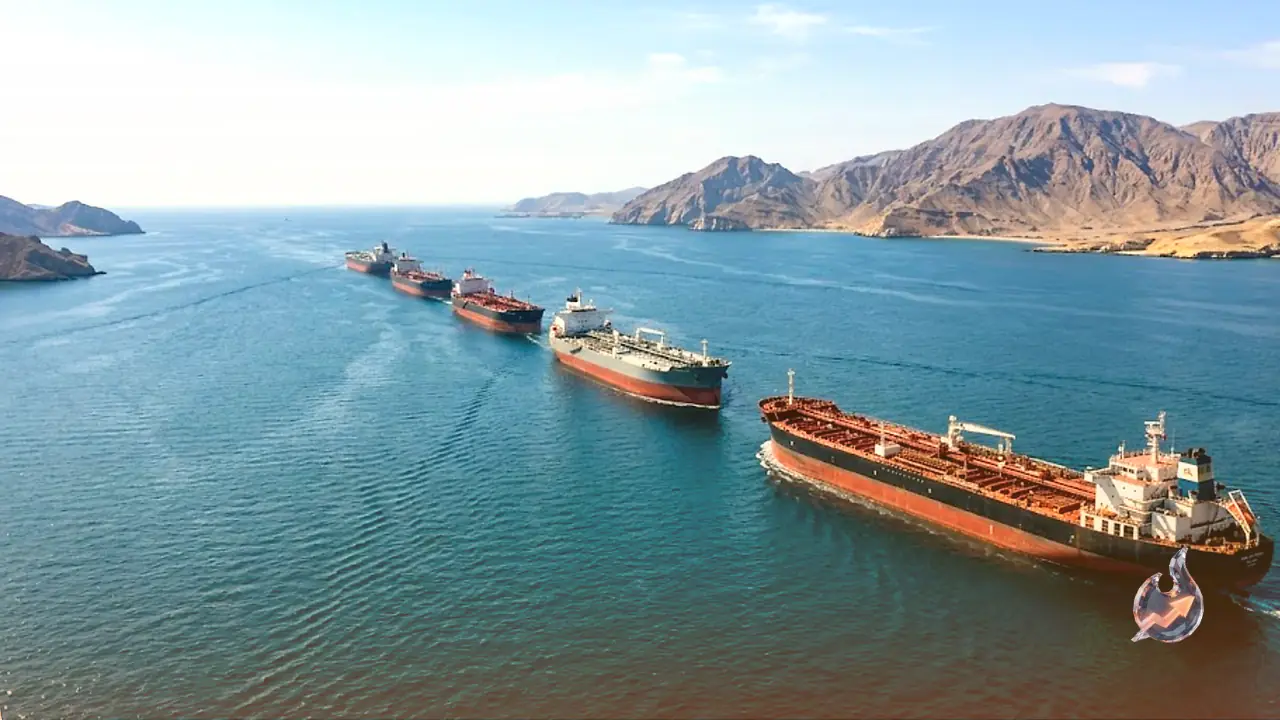
The scale of the unclogging was spelled out by US Energy Secretary Chris Wright on Wednesday. "Roughly 72 ships have exited the Strait of Hormuz in the last 24 hours, amounting to 20 million barrels of oil," he said. Wright cautioned, however, that a full return to normalcy in Hormuz will take a few weeks.
A deal that is not done yet
For all the relief in the market, Washington and Tehran have still not signed a final agreement. The most recent round of talks moved things forward, but the two sides remain split over Iran's nuclear program and what happens next at the Strait of Hormuz.
Tehran has made clear that the waterway is unlikely to go back to the way it operated before the war. Iran and Oman are both expected to start charging tolls on ships passing through the strait. US President Donald Trump pushed back on Wednesday, warning that the negotiations could fall apart altogether if Iran goes ahead with those toll plans.
Inventory draw fails to lift prices
Even a steep fall in American crude stockpiles did little to slow the slide. Figures from the Energy Information Administration (EIA) showed inventories dropped by 6.088 million barrels last week, a bigger decline than the 5.1 million barrels analysts had penciled in. Still, the draw was lighter than the 8.262 million-barrel drop recorded the previous week, leaving the data without enough punch to turn prices around.
What WTI crude actually is
WTI is one of the world's leading grades of crude oil, traded on international markets and standing alongside Brent and Dubai Crude as one of the three major benchmarks. The name is short for West Texas Intermediate. It is described as "light" and "sweet" thanks to its low gravity and low sulfur content, qualities that make it a high-quality oil and easy to refine. Pumped in the United States, it is routed through the Cushing hub, often called "The Pipeline Crossroads of the World." Its price is one of the most widely quoted figures in the oil market.
What moves the price
Like any commodity, WTI ultimately trades on supply and demand. Strong global growth tends to lift demand and prices, while a weak economy does the reverse. Political turmoil, wars and sanctions can choke off supply and send prices higher. The production calls made by OPEC, the bloc of major oil-producing nations, are another heavyweight influence. The US Dollar matters too, because oil is mostly priced in dollars: a softer greenback makes crude cheaper for other buyers, and a stronger one makes it dearer.
Why the inventory reports matter
The weekly stockpile reports from the American Petroleum Institute (API) and the EIA can swing WTI prices because they reveal how supply and demand are shifting. A drop in inventories often signals stronger demand and can lift prices, while a build points to extra supply and tends to drag them down. The API releases its numbers every Tuesday and the EIA follows the next day. The two usually land within 1% of each other about 75% of the time, with the EIA figures seen as more trustworthy because they come from a government agency.
The role of OPEC
OPEC, the Organization of the Petroleum Exporting Countries, brings together 12 oil-producing nations that set production quotas for their members at meetings held twice a year. Those decisions regularly ripple through WTI prices. Cutting quotas tightens supply and tends to push prices up, while raising output does the opposite. The wider grouping known as OPEC+ adds ten more producers from outside the cartel, the most important being Russia.