







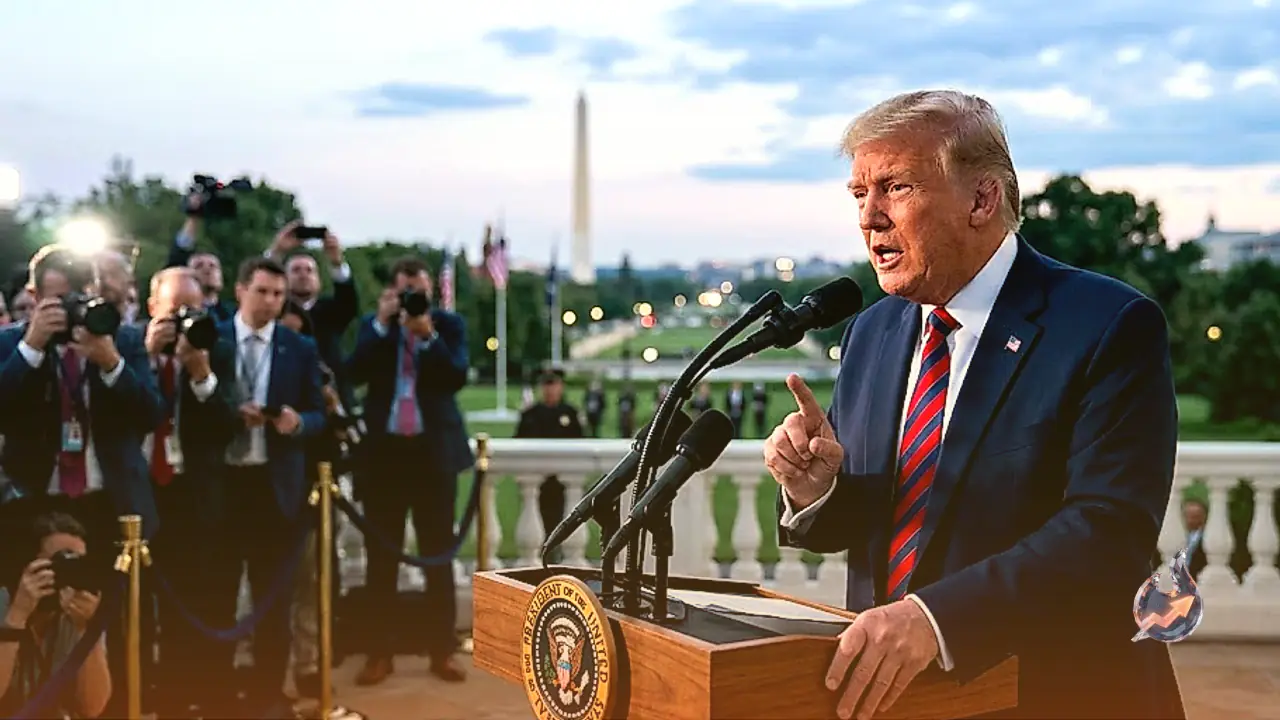
















Amid escalating geopolitical tensions in the Middle East, US President Donald Trump commented on the trajectory of military operations against Iran, stating that the renewed campaign will not continue for too long. However, Donald Trump cautioned that the United States remains fully prepared to launch additional strikes against Iranian targets if necessary. The statement has drawn sharp focus from international observers and financial market participants who are closely evaluating the potential economic fallout of renewed military action.
Details of Iranian Military Developments and US Response
Outlining the rationale behind recent military actions, US President Donald Trump pointed to specific defensive concerns regarding Iran's military capacity. He stated that Iran had been actively attempting to construct a specialized rocket system designed to drop naval mines, confirming that US forces successfully neutralized and eliminated the asset. Furthermore, Trump indicated that Iranian forces were working to reconstruct damaged radar networks and missile defense systems. The preventive US strikes were intended to disrupt these reconstruction efforts, with Washington maintaining a ready posture to execute follow-up attacks should security threats persist.
Geopolitical Uncertainty and the Dynamics of Risk-On vs Risk-Off Markets
Military confrontations and geopolitical instability routinely shift investor behavior across global financial markets. Market analysts categorize these behavioral shifts into two primary regimes: risk-on and risk-off environments. During a risk-on period, market sentiment is predominantly optimistic, leading investors to allocate capital toward higher-yield, risk-bearing assets. Equity markets generally rally, industrial commodities appreciate, cryptocurrencies gain value, and currencies of major commodity-exporting nations strengthen due to expected economic expansion.
Conversely, a risk-off environment develops when investors seek protection against economic or geopolitical uncertainty. Capital rapidly migrates away from volatile assets into traditionally defensive havens. Sovereign government bonds experience increased buying pressure, gold prices advance, and established safe-haven currencies including the US Dollar (USD), Japanese Yen (JPY), and Swiss Franc (CHF) experience capital inflows.
Foreign Exchange Market Movements and Major Currency Pairs
The combination of military warnings and macroeconomic signals produced divergent trading patterns across global foreign exchange markets. Today, the US Dollar (USD) demonstrated its strongest performance against the New Zealand Dollar (NZD). Key developments among major currency pairs include
- GBP/USD Trajectory: The British Pound continued its multi-day corrective phase against the US Dollar, although it managed a minor rebound after testing four-week lows near 1.3470 on Wednesday. The correction in Cable persisted despite a relatively subdued performance in the broader Greenback index and ongoing geopolitical headwinds.
- EUR/USD Trajectory: The Euro alternated between gains and losses against the US Dollar around the 1.1600 threshold following the close of European trading on Wednesday. The pair recovered from earlier two-week lows near 1.1560 as US Dollar momentum experienced a temporary pause.
- Commodity Exporter Currencies: Currencies such as the Australian Dollar (AUD), Canadian Dollar (CAD), New Zealand Dollar (NZD), Russian Ruble (RUB), and South African Rand (ZAR) typically appreciate during risk-on phases due to their heavy dependence on raw material exports and industrial demand.
- Safe-Haven Currencies: In risk-off conditions, the US Dollar gains strength due to its status as the primary global reserve currency and the perceived safety of US Treasury instruments. The Japanese Yen benefits from substantial domestic holding of government debt, while the Swiss Franc attracts capital due to strict Swiss banking regulations and investor protection mechanisms.
Gold, Crude Oil, and Record Diesel Crack Spreads
Commodity markets reacted directly to the heightened security environment and currency fluctuations. Gold continued its upward trajectory, aiming for the $4,400 per troy ounce benchmark on Wednesday. The precious metal's recovery was supported by modest dips in the US Dollar, steady geopolitical concerns, and mixed movements in US Treasury yields.
In energy markets, West Texas Intermediate (WTI) crude oil benchmark prices rose for a third consecutive trading session, marking five positive sessions out of the past six. WTI crude climbed to its highest price level since July 24 during Asian trading hours on Wednesday.
Substantial pressure was also evident in refined fuel products. The US diesel crack spread, which measures the differential between ultra-low sulphur diesel futures and WTI crude oil, surpassed $100 per barrel for the first time on record, reaching an intraday peak slightly above $102.00 per barrel. The unprecedented spread highlights underlying supply constraints in the global distillate market.
Cryptocurrency Consolidation and Market Pullbacks
In contrast to the gains observed in traditional energy and precious metals, digital assets faced downward momentum on Wednesday as market participants maintained a cautious posture. Bitcoin (BTC) experienced broad consolidation, hovering near its technical support zone around $77,000.
Meanwhile, Ethereum (ETH) remained under selling pressure, drifting downward toward the $2,400 level. Ripple (XRP) similarly traded lower across sessions. Crypto traders appear to be taking a wait-and-see approach, assessing how macroeconomic conditions and geopolitical conflicts will impact overall market liquidity.