
























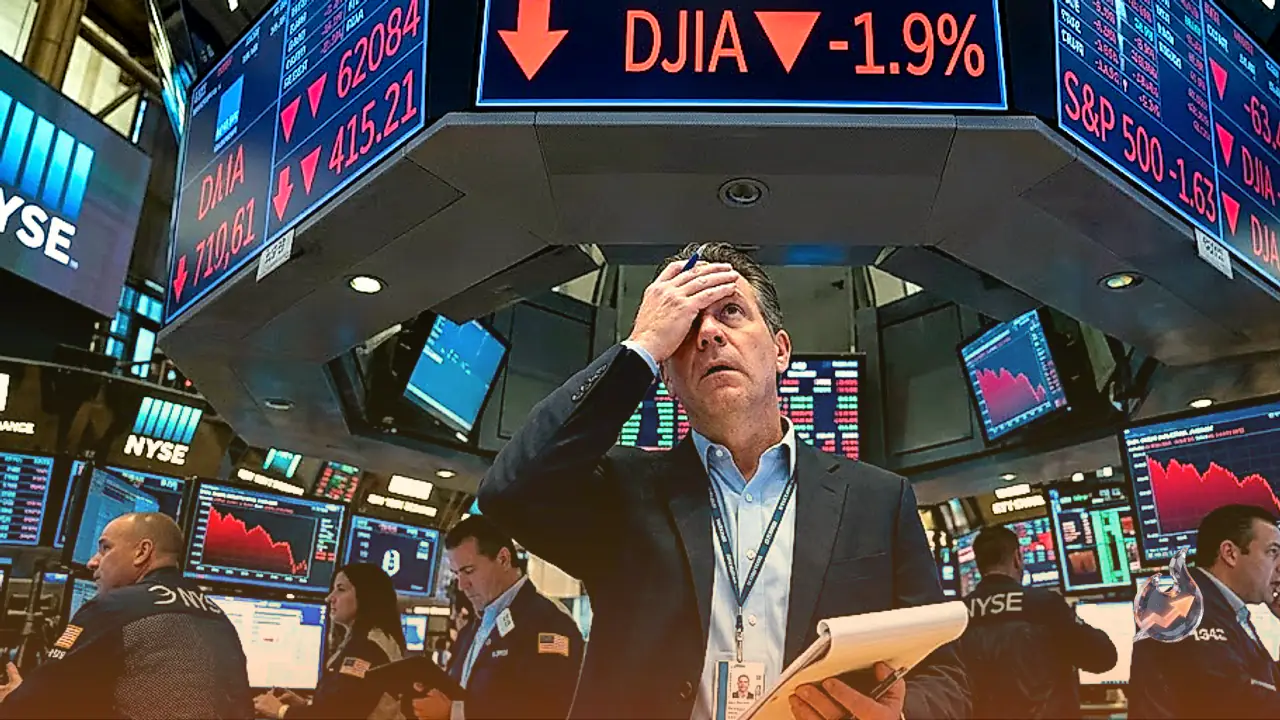

Wall Street took a hard hit on Wednesday as investors pulled back from riskier bets ahead of the Federal Reserve's looming policy decision, an event the entire global market is waiting on. Adding to the anxiety were a fresh climb in crude oil prices and a renewed flare-up of tensions in the Middle East. Technology and industrial names bore the brunt of the selling, and traders stayed on edge as they awaited quarterly results from several major technology firms.
The Dow Jones Industrial Average buckled within the opening stretch of trade. By 12:13 PM GMT-4 on July 29, the index had shed 903.04 points, or 1.71%, to sit at 51,844.28. It began the session at 52,674.21, a level that also marked its high for the day, before sliding to a low of 51,814.32. Having closed the prior session at 52,747.32, the benchmark simply extended that downward run.
Tech and chip stocks under the heaviest strain
The pain was not limited to the Dow. The broader S&P 500 and the Nasdaq Composite also spent the day in the red as investors trimmed their exposure to risk assets. The selling was sharpest among technology shares, and semiconductor stocks stayed weak on the back of softness among chipmakers around the world.
The Fed decision is the week's biggest trigger
The Federal Reserve's rate announcement stands out as the single largest catalyst for global markets this week. While most participants expect the central bank to leave its benchmark rates untouched for now, all eyes are fixed on the policy statement and on Chair Jerome Powell's remarks for clues about where rates head next.
Any hint that borrowing costs could stay high for a longer stretch would hurt growth-sensitive corners of the market, including technology, real estate and consumer discretionary shares. Investors are also trying to gauge how worried policymakers still are about inflation, even after price pressures have shown some signs of cooling in recent months.
Oil's rebound stirs fresh unease
Crude oil played its own part in rattling nerves. Fresh developments in the Middle East revived worries over global energy supplies and pushed prices higher again. Brent crude bounced back after suffering one of its steepest multi-day drops in years, while US West Texas Intermediate (WTI) crude climbed back toward the $83-a-barrel mark.
The recovery in oil came after reports that the United States had thwarted an Iranian strike aimed at American military bases in the region. Comments that followed from US President Donald Trump then stoked further uncertainty across global markets. He warned of a forceful response while still leaving room open for diplomacy.
Inflation worries creep back in
With oil turning higher, the specter of inflation has returned to the front of investors' minds. Costlier energy can push up transportation, manufacturing and input costs, which in turn could tangle the Federal Reserve's policy path even further, caught as it is between supporting the economy and keeping a lid on prices.


