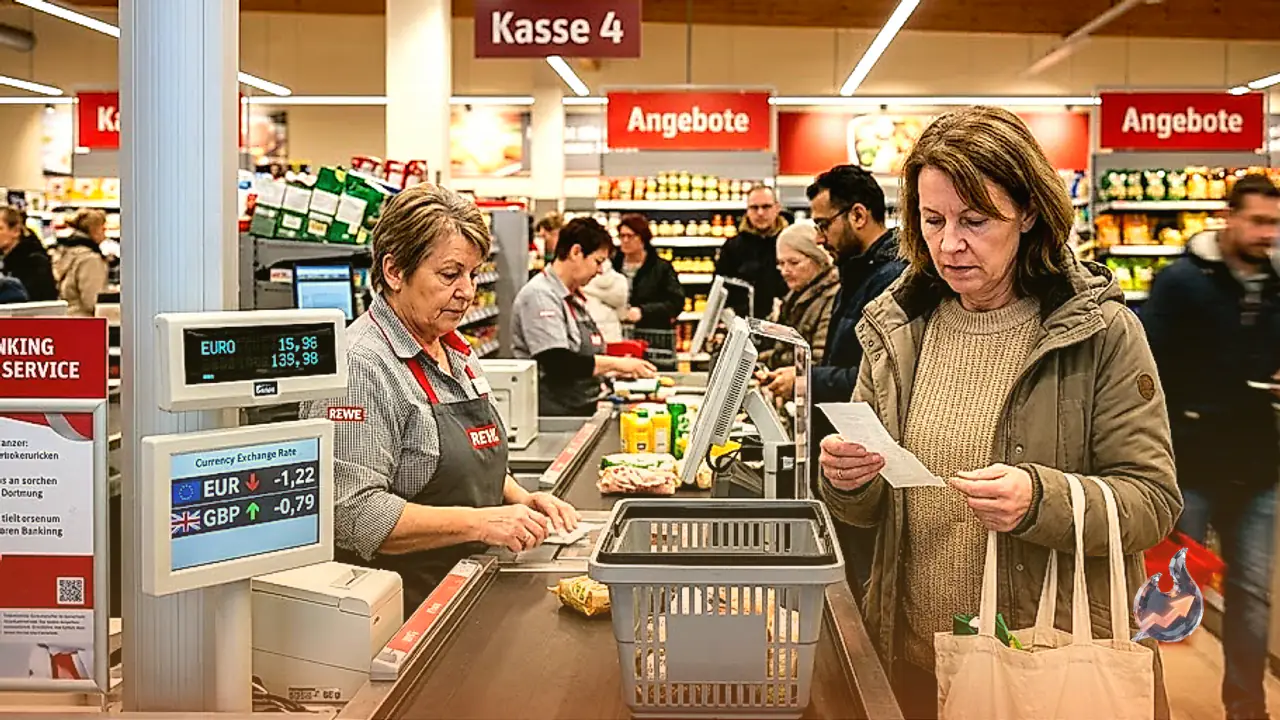























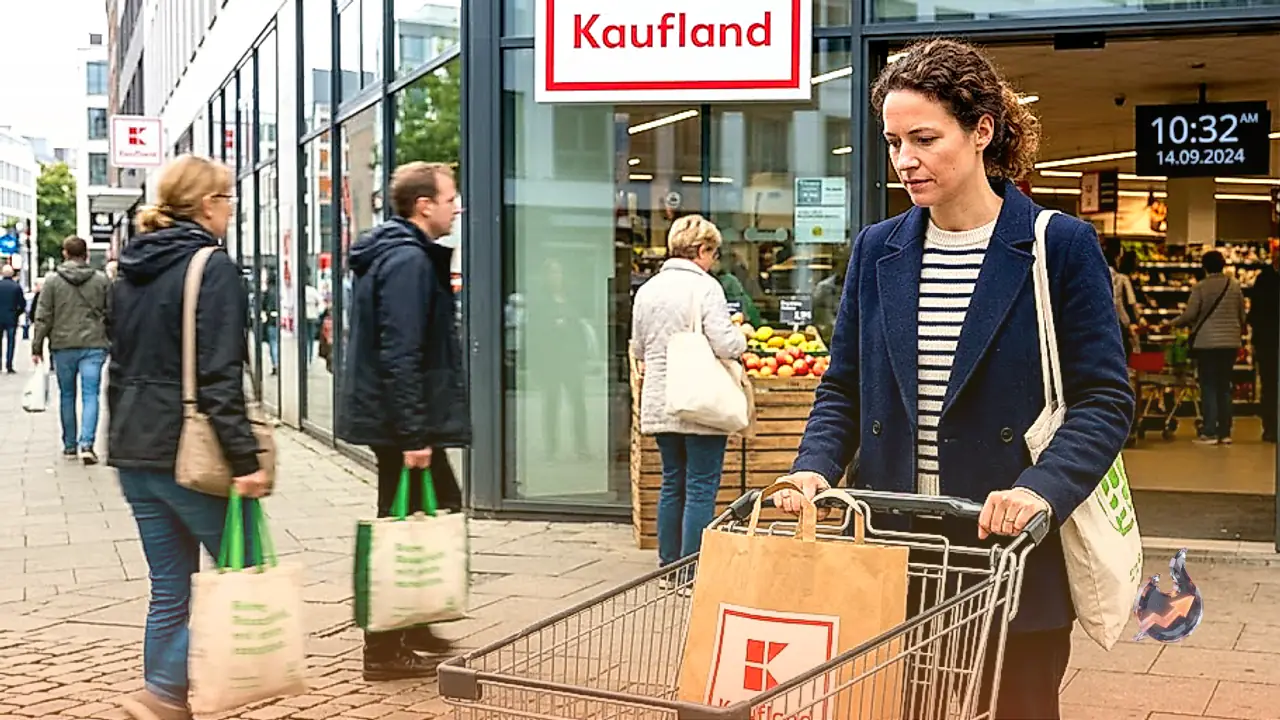

Consumer activity in Europe's leading economy showed modest progress in August, according to the latest official metrics released by Destatis, the federal statistical agency. German retail turnover climbed 1.3 percent on a month-on-month basis, recovering from a sharp downturn seen earlier in the summer. However, the rebound fell short of consensus projections among analysts, who had widely anticipated an expansion of 2.0 percent for the period. The outcome follows a steep contraction recorded in July, when retail sales tumbled by 3.4 percent month-on-month.
Looking at the broader yearly performance, retail spending across Germany fell 0.4 percent compared to the same month a year earlier. While remaining in negative territory, this figure represented a notable stabilization from July, when annual retail turnover plunged by 2.5 percent. Because private consumption serves as an essential engine of German macroeconomic momentum, these consumer figures provide critical insight into domestic demand across the wider Eurozone.
The Euro's Systemic Footprint in Global Forex Trading
The single currency shared by 20 member states of the European Union occupies a cornerstone position across the international monetary framework. The Euro ranks as the world's second most actively traded currency, trailing only the US Dollar in overall turnover. Back in 2022, the Euro was involved in approximately 31 percent of all foreign exchange transactions across the globe, commanding a daily trading volume exceeding $2.2 trillion.
Among currency pairings, EUR/USD represents the single largest cross in the world, generating an estimated 30 percent of aggregate global forex turnover. Beyond this primary channel, other Euro-denominated pairs capture substantial trading activity, including EUR/JPY with roughly 4 percent of total market volume, EUR/GBP accounting for 3 percent, and EUR/AUD generating about 2 percent. Because of this massive liquidity, shifts in German and continental macroeconomic indicators ripple quickly across international exchange desks.
Monetary Policy Mechanics at the European Central Bank
Operating from Frankfurt, Germany, the European Central Bank stands as the ultimate monetary authority for the Eurozone. The central bank establishes official borrowing costs and oversees aggregate monetary strategy across the bloc. Under its core statutory mandate, the ECB must preserve price stability, a mission that requires balancing inflationary pressures against broader economic expansion. Its primary policy mechanism rests on raising or cutting official interest rates. Higher baseline rates, as well as shifts in forward rate expectations, typically buoy the purchasing power and appeal of the Euro against competing currencies.
Key monetary determinations are formulated by the ECB Governing Council, an administrative body that gathers eight times per year. Decisions are reached collectively by the central bank governors representing individual Eurozone nations alongside six permanent executive board members, a group led by ECB President Christine Lagarde. The strategic direction set at these meetings shapes capital flows across European sovereign debt and commercial banking markets.
Macroeconomic Indicators, Inflation, and Currency Valuation
Tracking the cost of living remains a decisive determinant for Euro valuation, monitored primarily through the Harmonized Index of Consumer Prices, or HICP. Whenever regional inflation overshoots expectations, particularly above the central bank's defined 2 percent target, policymakers face pressure to lift interest rates to restore price balance. Yield premiums generated by higher regional interest rates make the Eurozone a more lucrative destination for international yield-seeking capital, bolstering currency demand.
Beyond consumer prices, an extensive array of real-economy readings continuously shapes foreign exchange sentiment. Indicators such as Gross Domestic Product, Manufacturing and Services Purchasing Managers' Indexes, labor market surveys, and consumer confidence reports offer vital barometers of underlying momentum. Robust economic health tends to reinforce the Euro by drawing sustained foreign direct investment and allowing the central bank to sustain restrictive policy settings. Conversely, soft economic readings undermine the currency. Figures stemming from Germany, France, Italy, and Spain warrant particular scrutiny, given that these four economies collectively generate roughly 75 percent of the total output in the euro area.
Trade Dynamics and Developments Across Cross-Asset Markets
Another fundamental measure steering the single currency is the trade balance, which calculates the difference between total export receipts and expenditure on incoming imports over a specific timeframe. When a country's industrial sector produces high-value goods that foreign purchasers actively seek, the resulting commercial demand generates buying pressure for that domestic currency. Consequently, an expanding trade surplus provides solid structural appreciation, whereas persistent trade deficits exert downward pressure.
Parallel movements across global markets reflected distinct regional influences. The AUD/USD pair hovered near two-month troughs around 0.6950 during Wednesday's Asian trading window, weakened by soft Australian underlying CPI data that damped expectations for further Reserve Bank of Australia policy tightening. Chinese PMI releases similarly provided little upside impetus to the Australian Dollar, even as the US Dollar's broader rally paused. Concurrently, the USD/JPY cross remained compressed below 157.00, where expectations of a hawkish Bank of Japan and the threat of currency intervention supported the Japanese Yen despite disappointing domestic industrial production and retail numbers.
In commodities, gold traded just under the $4,200 threshold as it consolidated an earlier recovery from an eight-week trough of $4,110 recorded in Asia, with traders exercising caution ahead of crucial US ADP employment figures and core Personal Consumption Expenditures price metrics. In the cryptocurrency sphere, Aave pulled back below $161 following a surge of more than 10 percent during the previous session, amid on-chain evidence of short-term profit-taking. Despite the retracement, sentiment received a lift as Aave founder Stani Kulechov explored a potential AAVE token-burn mechanism under the proposed Aavenomics 3.0 framework.