























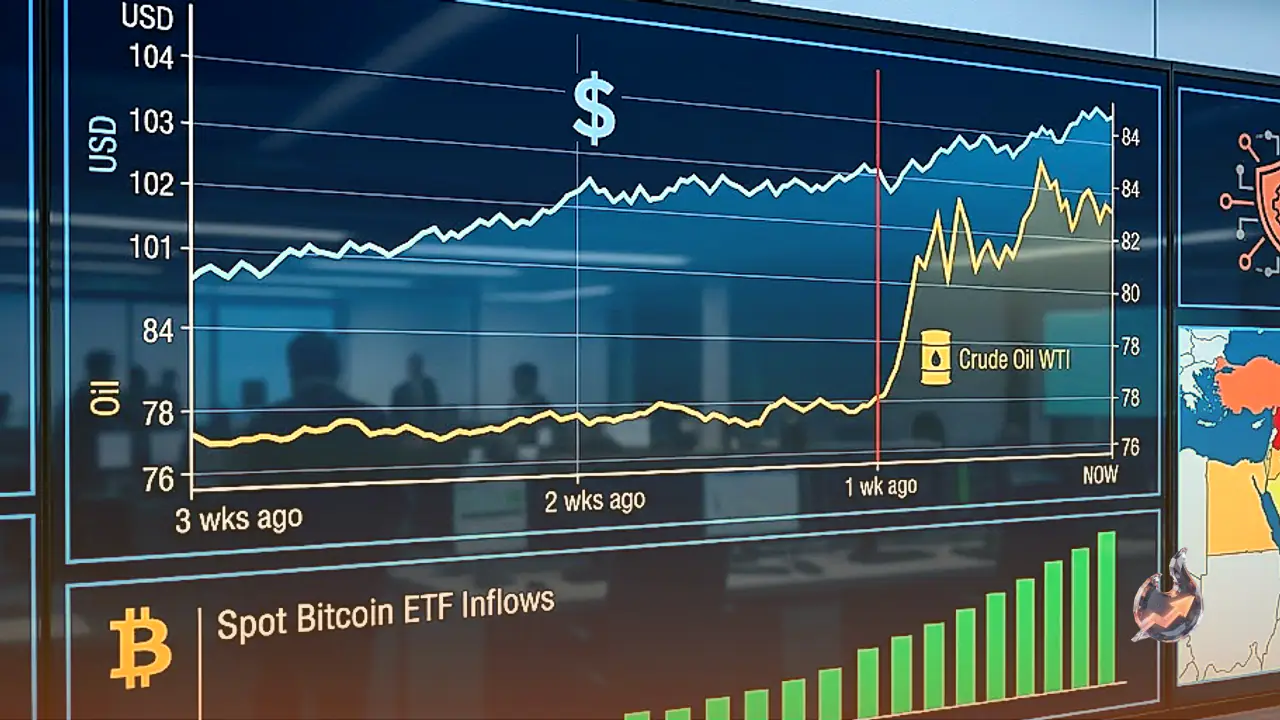

Global financial markets are witnessing a complex interplay of resilient currency trends, escalating geopolitical conflicts, and shifting dynamics in digital assets. As the week progresses, the trajectory of major global assets is being heavily influenced by macroeconomic data and central bank policies. The broader currency landscape reveals uneven performances, yet underlying currents suggest sustained momentum in specific areas. Investors are closely monitoring inflation metrics, interest rate decisions, and geopolitical flashpoints to gauge the next significant market movements across traditional and emerging financial sectors.
The Resilient US Dollar and Economic Outperformance
The US Dollar continues to hold onto the majority of the gains it has accumulated throughout the week, even though its overall performance across different currency pairs has shown some unevenness. According to market analysis from BBH, the near-term risk for the USD remains distinctly skewed to the upside. This bullish outlook is anchored by three primary pillars supporting the currency's valuation. Firstly, the ongoing economic outperformance of the United States provides a solid fundamental baseline. Secondly, the unwavering resolve of the US Fed to drive inflation back down to its target rate of 2% is effectively keeping hawkish interest rate expectations firmly priced into the market. Lastly, there is a consistently strong foreign demand for long-term US securities, highlighting global investor confidence in American debt instruments. Looking ahead, the financial community is bracing for the July PMI readings from major global economies, which are scheduled for release tomorrow. These crucial Purchasing Managers' Index figures will serve as a definitive test to determine whether the notable growth advantage currently enjoyed by the United States remains intact against its international peers.
European Currencies: Diverging Trajectories for the Pound and Euro
During Thursday's European trading hours, the currency markets highlighted a noticeable divergence between major European forex pairs. The GBP/USD exchange rate experienced a stalling of its recent rebound, remaining suppressed below the critical 1.3400 threshold. The upward mobility of the British Pound is currently being capped by a combination of factors, including a modest bounce in the US Dollar and recently published UK inflation data that arrived cooler than market expectations had anticipated. Furthermore, escalating tensions in the Middle East are fostering a risk-averse environment that limits the Pound's potential for significant upside movement.
Conversely, the EUR/USD pairing has successfully maintained its upbeat momentum for a second consecutive day. The Euro managed to hold its ground above the 1.1400 level during the same European trading session on Thursday. This sustained support for the Euro comes as market participants cautiously position themselves ahead of the upcoming interest rate decision from the European Central Bank. Investors and analysts alike will be scrutinizing the central bank's communications, keeping a very close eye out for any subtle hints or explicit forward guidance regarding the possibility of further rate hikes in the region.
Commodities in Focus: Oil Surges Amid Conflict While Gold Retreats
The commodities sector is currently characterized by heightened volatility, heavily influenced by geopolitical friction and macroeconomic policy expectations. In the energy markets, US crude oil prices have experienced a significant upward surge, climbing toward the $90 mark to establish a fresh six-week high. This aggressive price movement is directly linked to a further escalation of geopolitical tensions between the US and Iran. The rising cost of crude oil is subsequently fueling broader inflation fears across the global economy. As energy costs contribute heavily to inflationary pressures, these developments are actively bolstering expectations that the US Fed will be compelled to implement further interest rate hikes.
Meanwhile, the precious metals market is reacting to these shifting monetary expectations. Gold is currently holding onto a pullback, hovering near the prominent $4,100 round figure during Thursday's European trading session. Because gold is a yieldless asset, it inherently struggles to attract investment when interest rates rise. Consequently, the increasingly hawkish bets regarding the Fed's monetary policy trajectory are weighing negatively on the bullion's valuation, preventing it from mounting a sustained rally in the current macroeconomic climate.
The Cryptocurrency Landscape: Institutional Inflows and Traditional Finance Convergence
The digital asset ecosystem is navigating its own unique set of market conditions, balancing short-term price corrections with highly encouraging signs of long-term structural maturation. Matt Hougan, the CIO at the prominent asset management firm Bitwise, has presented a compelling thesis regarding the future trajectory of digital assets. According to Hougan, the primary catalyst for the next major crypto bull market could be the accelerating convergence between blockchain-based financial infrastructure and established traditional finance mechanisms. In a comprehensive analytical report published late Tuesday, Hougan argued that the broader cryptocurrency sector may currently be exhibiting the early, formative signs of a definitive market bottom. To illustrate this relative resilience and decoupling from certain traditional tech assets, he highlighted a significant performance metric. Bitcoin has actually gained 9% in value since July 1, achieving this positive performance even as the tech-heavy NASDAQ 100 index experienced a notable 6% decline over that exact same timeframe.
Despite this broader structural optimism and relative strength against specific equity indices, the immediate price action for the flagship cryptocurrency reflects an ongoing period of market consolidation. Bitcoin is currently extending its market correction, actively trading below the $65,800 mark following a modest price decline recorded during the previous day's trading session. However, the underlying institutional appetite appears to remain incredibly robust, seemingly detached from the digital asset's fading short-term spot price strength. Notably, spot Bitcoin Exchange Traded Funds (ETFs) listed in the US markets continued to successfully attract substantial institutional capital inflows on Wednesday. This consistent and unwavering institutional demand officially marked the seventh consecutive day of positive net inflows for these regulated ETF products. This trend powerfully underscores a growing, normalized integration of Bitcoin into traditional and regulated investment portfolios, with institutional buyers seemingly looking past immediate, day-to-day spot price fluctuations to focus on long-term portfolio allocation strategies.