






















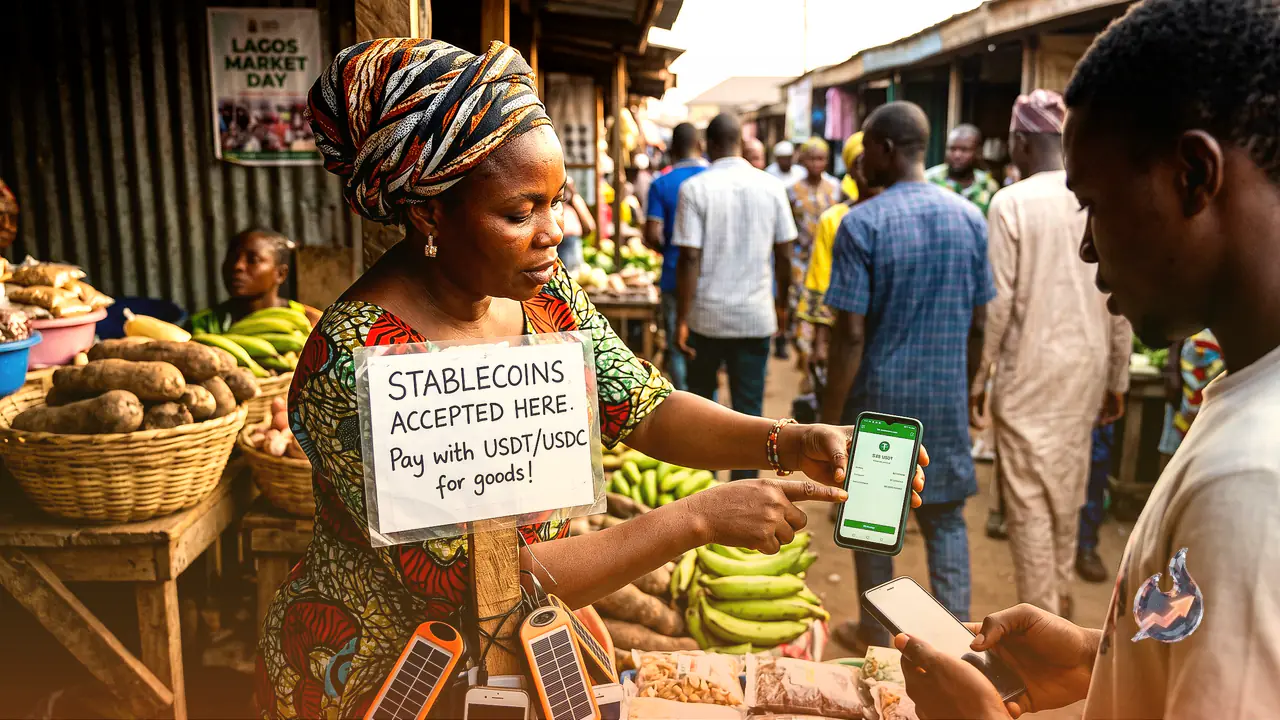

The speed at which dollar-pegged stablecoins have taken hold in Nigeria has done two things at once. It has put their genuine benefits on display, and it has made the dangers tied to these digital assets far easier to see than before. That is the takeaway from a new report by the International Monetary Fund.
What the numbers reveal
IMF researchers say stablecoins have grown into a serious and meaningful channel for cross-border payments. According to the report, Nigeria took in roughly $59 billion in crypto-asset inflows between July 2023 and June 2024. On top of that, the country alone accounts for 60% of all stablecoin inflows into sub-Saharan Africa since 2019.
The upside the IMF acknowledges
The report does not deny that stablecoins bring clear benefits. These include greater financial inclusion, meaning access to financial services for more people, and cheaper cross-border payments. That combination is steadily undercutting the older, conventional remittance channels that people have long relied on to move money.
Where the real worry lies
Still, the IMF points to two big concerns: monetary sovereignty and financial integrity. The report argues that dollar-pegged stablecoins could amount to a digital form of dollarization, which would weaken a country's own monetary policy. At the same time, traditional financial monitoring systems struggle to capture these transactions effectively, and the anonymity they offer raises the risk of illicit finance.
Why a crackdown would fall short
The report is blunt about one point: trying to stamp out stablecoin use is unlikely to work well. In its words,
“Attempts to suppress stablecoin use are likely to be only partly effective.”Instead, it calls for a pragmatic approach, one that leaves room for innovation while managing risks.
The path the IMF recommends
To counter what it calls digital dollarization, the authors stress the need to safeguard monetary stability, and they praise recent macroeconomic reforms along with tighter monetary policy. Their other risk-management ideas include strengthening oversight, improving data by combining blockchain analytics with reporting on naira-stablecoin conversions, and upgrading existing payment infrastructure so that reliance on unregulated channels such as stablecoins is reduced.
A familiar warning
This is not the first time the IMF has taken aim at stablecoins. Over the past several years it has repeatedly cautioned that these assets could stifle central bank control and amplify financial crises. Just last week, the institution urged close monitoring of crypto adoption in Nepal, flagging the risk of circumvention of capital controls and large-scale deposit outflows.