














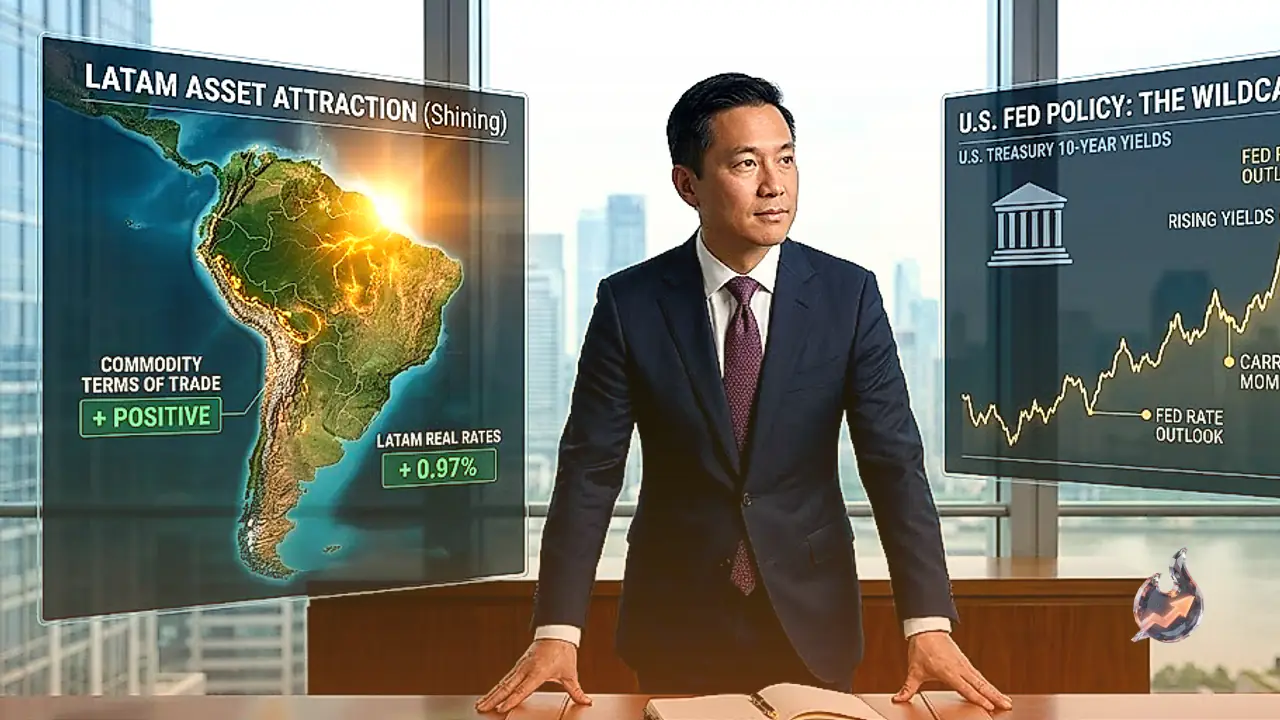

Latin America's exporters are once again enjoying a favourable backdrop, and that is quietly rebuilding the investment case for the region's currencies and bonds. Geoff Yu at BNY believes energy and soft commodity exporters across the region are benefiting from better terms of trade, a shift that tends to show up either in stronger currencies or in the growing appeal of local government debt. Yet the same view carries a clear warning: an unusually unpredictable Federal Reserve and climbing U.S. yields are blunting the momentum behind the classic carry trade, keeping hedge ratios high.
Commodity strength and a powerful real-rate anchor
The core of the argument rests on terms of trade, the relationship between the prices a country earns for its exports and the prices it pays for its imports. For energy and soft commodity exporters across Latin America, that balance has been tilting in their favour. According to Yu, the recent conflict lifted energy exporters sharply in the second quarter, and he expects a similar move to repeat. "Market apprehension over the wider risk and growth environment should not detract from Latin America's evident advantages," he wrote.
He argues that as long as the region's real-rate anchor, the cushion provided by high inflation-adjusted interest rates, stays firm, any improvement in terms of trade will feed through either into stronger currencies or into the appeal of local bonds. Governments hunting for extra fiscal space, he notes, tend to prefer the second route, favouring duration over currency strength because it gives them more breathing room on their finances.
The carry trade is struggling despite flat positioning
Tactically, Yu says the case for holding Latin American assets is clear, yet the carry trade, the strategy of borrowing in a low-yielding currency to buy a higher-yielding one, is visibly losing steam even though positioning is flat. When that momentum fades, investors are no longer being paid enough extra yield to justify the currency risk they take on. His preference is for fixed income, which he believes now offers a stronger risk-reward balance than the currencies themselves. Even so, he expects hedge ratios to stay elevated until investors get better visibility into what the Fed intends to do. Some central banks, such as BanRep, remain aggressively hawkish.
The Warsh Fed wildcard
The bigger complication is the shape of the Fed itself. Yu suggests that a Federal Reserve led by Kevin Warsh may choose to abandon forward guidance by design, deliberately withholding the signals markets rely on to anticipate policy. If that happens, investors would be forced to keep hedge ratios structurally high. Combined with rising U.S. yields, a less predictable central bank leaves far less room for the carry trade to work.
Pressure spreads to the pound and the euro
The strain is not confined to emerging markets. GBP/USD broke below the 1.3300 mark on Monday to hit fresh multi-week lows. Falling crude oil prices after a pause in the Middle East conflict, together with a recent soft UK inflation reading, appear to argue against any Bank of England tightening ahead of the bank's meeting later in the week.
EUR/USD, meanwhile, lost its bullish momentum and slipped back below the 1.1400 region at the start of the week. Hopes of a de-escalation in the Middle East lent the pair some support, though uncertainty lingers over whether the United States and Iran can reach a lasting solution.