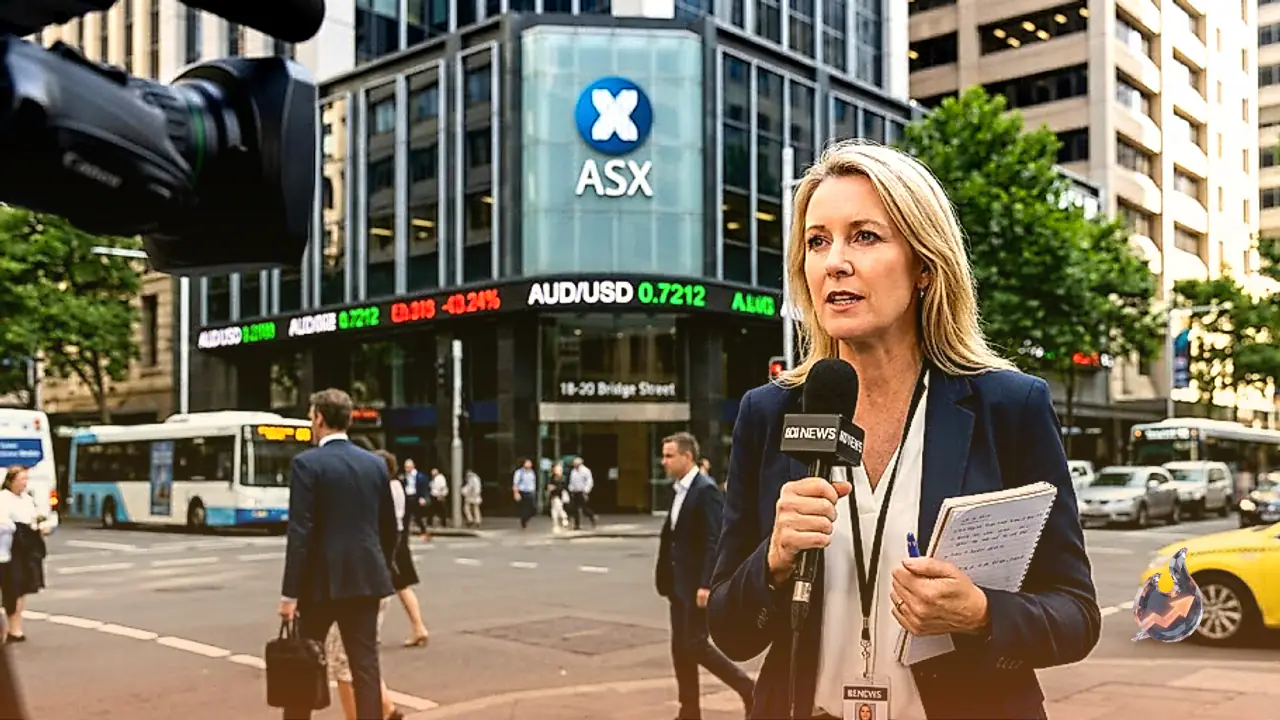

























Global financial markets are currently navigating a treacherous and highly volatile crosscurrent of escalating geopolitical conflicts and pivotal monetary policy decisions. As diplomatic and military tensions in the Middle East continue to flare with no immediate resolution in sight, the most immediate and visible casualty has been the stability of global energy markets. Oil prices have embarked on a relentless and aggressive upward trajectory, threatening to derail the delicate economic recoveries in major importing nations. This rapid surge in foundational commodity costs is forcefully reigniting deep-seated inflation fears, completely complicating the calculus for major central banks worldwide who had hoped their tightening cycles were nearing an end. Against this incredibly volatile macro backdrop, foreign exchange currency traders are hyper-focused on the European Central Bank's upcoming and highly anticipated interest rate announcement. Meanwhile, the US Dollar continues to demonstrate renewed vigor across the board, most notably against the Japanese Yen, which has shockingly capitulated to valuations unseen in four decades, forcing government officials to issue stark warnings.
Crude Oil Markets Jolted by Supply Chain Fears
The recent intensification of hostilities across the Middle Eastern theater has sent massive shockwaves through the global commodity complex, with crude oil predictably bearing the absolute brunt of the market's acute anxiety. Financial analysts at Deutsche Bank have published commentary highlighting the sheer, unadulterated velocity of this recent upward price movement. According to their in-depth research, the global benchmark Brent crude experienced a massive 3.36% jump to settle at $94.07 per barrel earlier this week, only to extend those already aggressive gains by an additional 1.96% to reach a staggering $95.94 per barrel by the following morning. This rapid, gap-up appreciation underscores the market's extreme sensitivity to any potential physical supply chain disruptions.
Crucially, the underlying structure of the futures market strongly suggests that institutional participants view this as a structural shift rather than a transient, headline-driven phenomenon. The Deutsche Bank analysts astutely pointed out that investors are now actively pricing in a significantly longer period of elevated petroleum costs. This is evidenced by the six-month Brent futures contract, which registered a gain of 0.59% to hit a one-month peak of $81.74 per barrel yesterday as well. This forward pricing behavior indicates a pervasive expectation of sustained market tightness rather than a short-lived spike. Fueling these deep-seated supply anxieties is the strategic geopolitical maneuvering by key sovereign producers. Specifically, market fears were exacerbated by reports that Saudi Arabia has actively redirected crucial oil exports toward the Red Sea port of Yanbu, adding a severe layer of logistical concern to an energy market that is already operating under strained baseline conditions.
Live market data for US Crude Oil (CL=F) further corroborates this relentless bullish momentum and paints a picture of a market fully controlled by buyers. The commodity is currently trading at a robust $89.39, marking a notable 2.95% increase from its previous daily close of $86.83, trading comfortably within its expansive 52-week range of $54.98 to $119.48. Technical indicators extracted directly from the daily candlestick charts reflect an overwhelmingly powerful uptrend. The 14-period Relative Strength Index (RSI) sits elevated at a reading of 68, indicating strong momentum while just skirting the edge of traditional overbought territory. The Moving Average Convergence Divergence (MACD) metric stands at an impressive 1.29 against a signal line of -1.13, generating a firmly bullish histogram of 2.42 that shows no immediate signs of deceleration. Price action has confidently breached the upper Bollinger Band (configured at 20 periods with 2 standard deviations), which currently sits at $89.12, confirming the sheer anomalous strength of the current rally.
Furthermore, the broader moving averages paint a picture of undeniable long-term strength; with the 50-day exponential moving average ($82.43) having crossed significantly above the 200-day exponential moving average ($75.40), the asset has formed a definitive golden cross pattern. The Average Directional Index (ADX) reads at 27, confirming the presence of a legitimate trending environment. Fast stochastic lines are practically maxed out at 98 against a signal of 95. For active traders managing risk, the 14-day Average True Range (ATR) highlights a daily volatility of $3.90, serving as a critical metric for setting stop-loss buffers. The daily pivot point rests at $88.85, with immediate upside resistance levels mapped out at $90.39 (R1) and $91.38 (R2), while downside support guards the asset at $87.86 (S1) and $86.32 (S2).
Euro Holds Ground as ECB Rate Decision Looms
Amidst the chaos enveloping the global energy sector, the foreign exchange market's undivided attention is squarely fixed on Frankfurt, Germany, the central headquarters of the European Central Bank. The Euro has remarkably managed to sustain its upbeat momentum for a second consecutive day, holding firmly and confidently above the critical 1.1400 threshold against the US Dollar during the bustling European trading session. This impressive resilience comes as institutional traders strategically position their portfolios ahead of the ECB Governing Council's imminent monetary policy announcement. Market participants will be meticulously parsing every single word from the central bank's press release and subsequent press conference, particularly searching for any forward guidance or subtle hints regarding the definitive trajectory of future rate hikes.
The European Central Bank operates as the supreme reserve bank for the entirety of the Eurozone block. Its overarching, legally mandated primary objective is to maintain absolute price stability, which the institution defines as keeping inflation running at a target of around 2% over the medium term. The central and most powerful tool deployed by the ECB to achieve this mandate is the direct adjustment of benchmark interest rates. Generally speaking, an environment of relatively high interest rates tends to attract foreign capital seeking higher yields, thereby strengthening the Euro currency on the open market, whereas aggressively lowering rates will typically exert significant downward pressure on the currency's valuation. The pivotal monetary policy decisions are formulated and executed by the ECB Governing Council during highly secretive meetings held exactly eight times a year. These monumental decisions are made collaboratively by the respective heads of the Eurozone's various national central banks alongside six permanent executive board members, a group currently spearheaded by the highly influential President of the ECB, Christine Lagarde.
The Arsenal of Central Banking: Quantitative Easing and Tightening
When traditional interest rate levers are deemed insufficient to achieve the mandate of price stability, typically when rates are already at or near zero, the European Central Bank possesses the extraordinary authority to enact a radical policy tool known as Quantitative Easing (QE). This highly unconventional monetary policy is the mechanical process by which the ECB literally prints new Euros digitally and utilizes this freshly created capital to systematically purchase financial assets, predominantly sovereign government debt or highly rated corporate bonds, directly from commercial banks and other massive financial institutions. By intentionally flooding the financial system with excess liquidity, QE aims to lower long-term borrowing costs and stimulate sluggish economic activity. However, QE usually results in a significantly weaker Euro due to the massive expansion of the aggregate money supply. QE is considered an absolute last resort measure. The ECB famously leaned heavily on this dramatic mechanism during the existential depths of the Great Financial Crisis spanning 2009 to 2011, deployed it again in 2015 when deflationary forces kept inflation stubbornly low, and utilized it on a massive scale most recently to cushion the devastating, unprecedented economic blow of the global COVID-19 pandemic.
Conversely, Quantitative Tightening (QT) represents the exact mechanical reversal of the Quantitative Easing process. It is cautiously undertaken only after a prolonged period of QE, specifically when a robust economic recovery is demonstrably underway and dangerous inflation starts rising above target levels. Whilst in a QE regime the European Central Bank aggressively purchases government and corporate bonds from financial institutions to provide them with vital liquidity, during a QT cycle the ECB abruptly stops buying any more new bonds, and critically, stops reinvesting the principal cash maturing on the massive stockpile of bonds it already holds on its bloated balance sheet. This deliberate, methodical withdrawal of liquidity from the broader financial system serves to combat runaway inflation and is usually interpreted by currency markets as a highly positive, or bullish, fundamental catalyst for the Euro's valuation. Market analysts and economists are working overtime to decipher these interconnected macroeconomic mechanisms. Eren Sengezer, an economist at heart who specializes in the rigorous assessment of the short-term and long-term impacts of macroeconomic data releases, central bank policy shifts, and volatile political developments on financial assets, exemplifies the deep analytical rigor currently required to navigate these turbulent institutional markets.
Japanese Yen Collapses and Pound Sterling Falters
While the Euro stubbornly awaits its fate, the Japanese Yen is experiencing nothing short of a historic capitulation. The USD/JPY currency pair saw a very brief, shallow corrective phase earlier in the week, but that localized weakness was exceptionally short-lived. The pair quickly recovered its aggressive upward trajectory to close the trading day virtually unchanged, towering above the 163.00 handle. During the subsequent European session, the US Dollar gained immense, unstoppable traction against the Yen, propelling the pair to trade effortlessly above 163.30, representing the Japanese currency's absolute lowest valuation in roughly four agonizing decades. The sheer velocity of this currency depreciation has triggered immediate, high-level governmental concern in Tokyo. Early Thursday, Satsuki Katayama, the Japanese Finance Minister, issued a stern verbal intervention to the press, reiterating forcefully that the government stands unequivocally ready to take decisive action on foreign exchange as needed, a clear threat of direct market intervention to prop up the failing Yen.
Elsewhere in the European theatre, the British Pound has struggled mightily to maintain its footing. The GBP/USD pair's recent nascent rebound abruptly stalled out, leaving it languishing heavily below the 1.3400 level during active European trading hours on Thursday. The Pound's upside potential remains severely capped by a combination of a modest resurgence in broad US Dollar strength across the board and the release of notably cooler-than-expected UK inflation data. This localized disinflationary signal has softened market expectations for aggressive Bank of England rate hikes, leaving the currency highly vulnerable amidst the broader, escalating Middle East tensions that are driving a flight to safety.
Safe Havens and Precious Metals in Flux
Looking at the broader currency matrix, the US Dollar has proven to be an unstoppable juggernaut this week. Analysis of percentage changes across listed major currencies confirms that the US Dollar was undeniably the strongest performer, exerting maximum dominance particularly against the Swiss Franc. The complex heat map of major currencies highlights this pervasive Dollar strength, acting as the undisputed base currency of choice in a highly uncertain global environment.
This overarching strength of the greenback is exerting tremendous pressure on precious metals. Gold is currently desperately trying to hold a pullback near the psychological $4,100 round figure during Thursday's European session. The traditional flight-to-safety bid for Gold is being actively counteracted and completely overwhelmed by the very same Middle Eastern tensions that are driving up crude oil prices. As US crude oil prices climb relentlessly to a fresh six-week high toward the $90 threshold, fueled directly by a further, dangerous escalation of tensions between the US and Iran, the resulting surge in energy costs is simultaneously stoking intense global inflation fears. These deeply entrenched inflationary expectations are, in turn, heavily bolstering market bets that the US Federal Reserve will be forced to implement further, highly aggressive interest rate hikes. These hawkish Fed bets are disastrous for precious metals, directly weighing negatively on the yieldless bullion, as investors rotate into higher-yielding cash equivalents.
Cryptocurrency Market Eyes Traditional Finance Convergence
In a stark and fascinating divergence from the anxieties currently plaguing fiat currencies, sovereign bonds, and traditional commodities, the cryptocurrency sector is exhibiting remarkable signs of structural resilience. According to a comprehensive research report published late Tuesday by Bitwise Chief Information Officer Matt Hougan, the digital asset ecosystem may be quietly laying the groundwork for its next major, paradigm-shifting bull market cycle. Hougan's core, heavily researched thesis argues that the next massive wave of adoption will be driven by the rapidly growing technological convergence between native blockchain-based financial infrastructure and the established, legacy architecture of traditional finance.
Hougan pointed to compelling empirical market evidence suggesting that the broader cryptocurrency complex may be showing definitive early signs of a macro market bottom. He highlighted a striking divergence in relative performance metrics. Since July 1st, Bitcoin, the flagship digital asset, has quietly accumulated a robust 9% gain. This highly positive price action is particularly noteworthy because it occurred simultaneously with a significant 6% decline in the tech-heavy NASDAQ 100 equity index, indicating a potential, highly sought-after decoupling of digital assets from traditional risk-on technology equities.
Despite this underlying macro optimism, specific legacy altcoins remain trapped in highly technical, localized trading patterns. Ripple's native token and the Stellar network's native asset are both currently trading with extreme caution as they hover dangerously around key, multi-year technical levels. XRP is actively engaged in a direct, high-stakes test of overhead structural resistance precisely at its 50-day Exponential Moving Average (EMA), a level it must definitively clear to re-establish bullish momentum. Concurrently, XLM remains mired in a protracted, agonizing consolidation phase, hovering precariously around the heavily defended $0.187 support zone. Meanwhile, a deep dive into the associated derivatives data paints a picture of a market in extreme flux. The data is thoroughly mixed but carries a subtle, undeniable bearish tilt, heavily suggesting that active institutional traders remain deeply cautious and are keeping the next major directional move shrouded in absolute uncertainty.